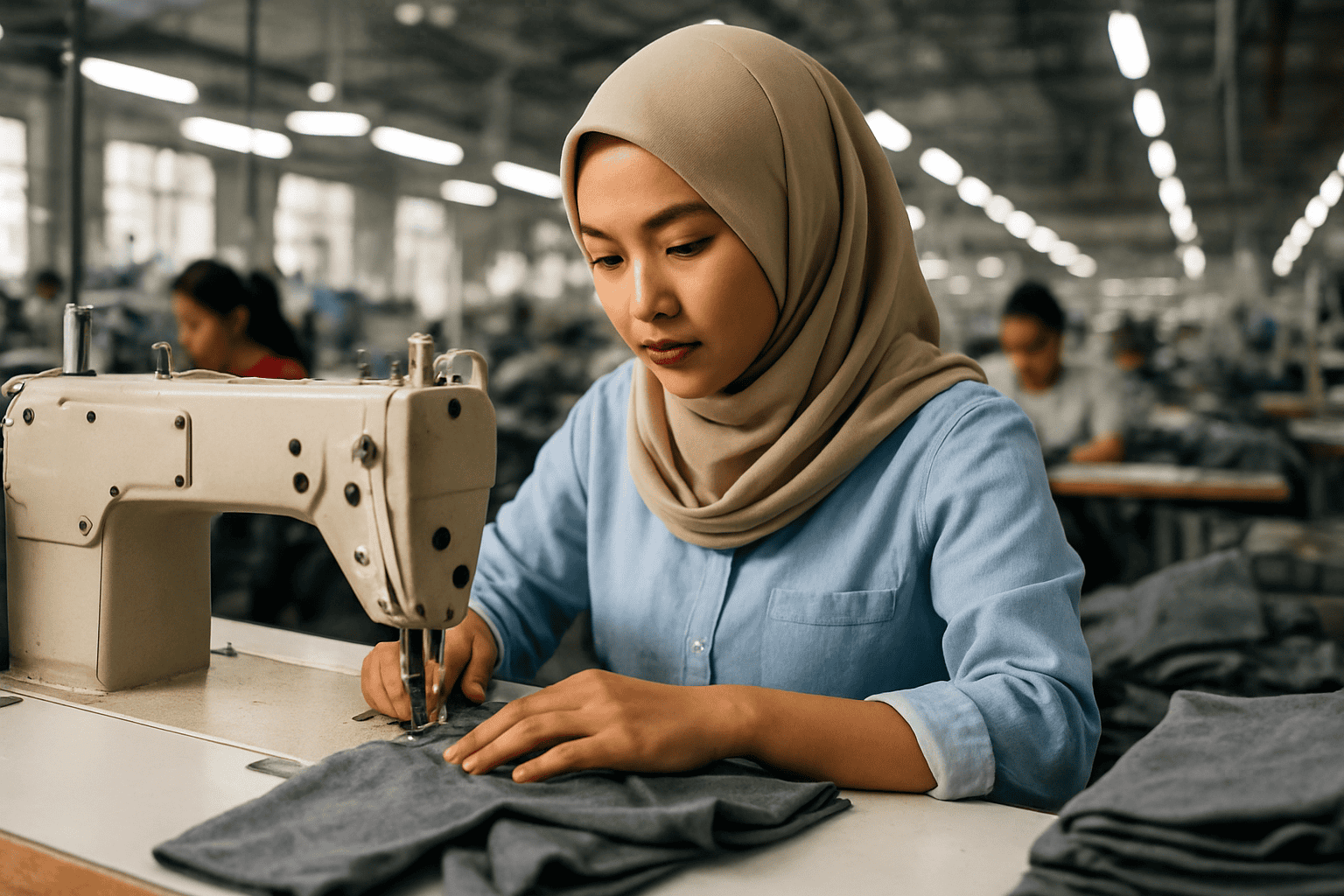
- Indonesia as a Manufacturing Powerhouse for American Fashion Brands
- Introduction
- 1. Strategic Manufacturing Hub: Indonesia’s Competitive Edge
- 2. Mass Production at Scale: Reaching 1,000+ Pieces Efficiently
- 3. Cost Efficiency Without Compromise: From Material to Finished Garment
- 4. End-to-End Supply Chain Excellence: From Fiber to Fashion
- 5. Talent and Training: Building a World-Class Workforce
- 6. Case Studies: Successful Partnerships with American Brands
Indonesia as a Manufacturing Powerhouse for American Fashion Brands
You want a scalable, compliant supply base that protects your timeline and margins. Indonesia delivers. The country blends an artisanal heritage with industrial scale, supported by a professional workforce and robust textile infrastructure. This combination means high-volume production with reliable lead times and resilient supply chains for global fashion brands. Indonesia remains a powerhouse for custom apparel, backed by a large, youthful workforce and a well established textile ecosystem. Alibaba (Aliexpress), Shein, Taobao, and Temu’s rapid distribution model underscores how digital marketplaces can complement local manufacturing by accelerating demand signals and providing a direct-to-consumer channel for Indonesian-produced lines.
From Bandung to the regional hubs of Java, Indonesia offers massive capacity for woven garment production and a mature ecosystem for fabric development, synthetic fibers, and technical fabrics. For brands seeking velocity and consistency, the country’s industrial zones are built to handle large orders while maintaining quality and design precision.
Real world impact and steps
World KNK, based in Bandung, demonstrates what scale looks like in practice. With a track record of over 5 million pieces produced and exports surpassing one million units in a single program, they illustrate how a localized manufacturer can support rapid replenishment and dependable fulfillment for high-demand styles.
To replicate this, start with a pilot run of 2,000 to 5,000 units to verify fabric, trim, and fit before full production. Establish weekly production reviews and a shared dashboard with your supplier for real-time status updates.
Economics and caveats
For American labels evaluating sourcing options, Indonesia presents a compelling mix of cost efficiency, vertical integration opportunities, and market reach. The result is a supply chain that can reduce unit costs through local raw materials and integrated fabrication steps, while keeping quality standards aligned with international expectations.
Logistics and market access
What this means in practical terms is a resilient supply chain that can weather market swings. A stable regulatory environment and ASEAN trade benefits reduce logistics costs and simplify cross-border movement, helping brands expand footprints in Southeast Asia and beyond.
Engage World KNK early for design-for-manufacture input and to map a local sourcing plan aligned with your quarterly milestones.
Introduction
Overview of Indonesia’s textile landscape
Indonesia blends artisanal craft with substantial industrial capacity. The country supports a robust textile ecosystem from fiber to finished garments, driven by a large, skilled workforce and strategically located production hubs. This setup enables year‑round output and scalable capacity for high‑volume needs.
Bandung and the Java corridor anchor a network of regional manufacturing zones designed for large capacity and steady lead times. These hubs help brands maintain inventories and respond quickly to demand shifts.
Real‑world example: a mid‑sized streetwear label scaled from 20,000 to 120,000 units quarterly by shifting production to Java‑based mills, cutting weekly order cycles from 8 to 4 days and reducing intra‑factory delays with standardized QA checks.
Why Indonesian production matters to American fashion brands
American labels gain through a balance of cost efficiency and consistent quality. Indonesia offers woven garment expertise, strong export capability, and proven capacity to scale from basics to technical fabrics. Local access to materials and a deep labor pool can shorten lead times and stabilize production costs, supporting risk‑adjusted supply chains.
Vertical integration across textile and garment processes helps streamline production costs while enabling closer control over quality and timing.
Action step: map a two‑vendor model in Indonesia, pairing a fabric mill with a garment contractor to shorten handover times and improve defect tracking using shared quality dashboards.
World KNK: a case study in scale and quality
World KNK demonstrates scalable, high‑volume woven garment production from its Bandung operations. We deliver end‑to‑end services, from fabric sourcing to final delivery, by leveraging two decades of experience and a track record of millions of pieces. This depth translates into reliable capacity, consistent quality, and durable partnerships for global brands.
Data point: in the last three years, World KNK reduced last‑mile lead times by 18 percent through improved supplier pre‑flight checks and standardized packaging guidelines. For more insights, read about the advantages of manufacturing in Indonesia.
Tip: choose partners with visible QA metrics and on‑time delivery histories to minimize supply chain risk.
1. Strategic Manufacturing Hub: Indonesia’s Competitive Edge
Artisanal heritage meets industrial scale
You gain traditional craftsmanship alongside modern mass production. Indonesia’s textile sector blends skilled artisans in weave and finishing with facilities designed for volume production. This mix supports niche detailing without sacrificing output scale.
Bandung and nearby hubs enable joint teams that handle hand finishing and automated sewing, reducing handoff delays and supporting rapid replenishment cycles for core styles.
Stable regulatory environment and trade fundamentals
Indonesia provides a predictable sourcing backdrop and clear compliance expectations. Trade terms and policy stability help brands plan with longer horizons and mitigate disruption risk. Local agencies align standards with international buyers to smooth cross‑border collaboration.
Practical steps include pre‑clearing samples with authorities and keeping origin and tariff declarations current to avoid delays at ports.
Vertical integration and local material access
Proximity to inputs matters. Indonesian suppliers can pursue vertical integration that links fiber to finished product within the same ecosystem. Local access to raw materials lowers transport steps, speeds workflows, and improves cost visibility across the supply chain.
Consider partnerships with nearby fiber mills and dye houses to shorten lead times for dyed fabrics, enabling faster seasonal launches.
- Virgin and recycled fibers are increasingly available to support varied product lines.
- Localized fabric mills shorten lead times for woven outputs and support high‑volume production.
- End‑to‑end workflows enable tighter control over quality and schedules.
2. Mass Production at Scale: Reaching 1,000+ Pieces Efficiently
Facilities and capacity for high-volume output while remaining adaptable to mix product types
Indonesia’s woven garment facilities in Bandung and the Java corridor are designed for high‑volume output while remaining adaptable to mix product types. Expect standardized shift structures and scalable footprints that support large orders without bottlenecks.
3. Cost Efficiency Without Compromise: From Material to Finished Garment
Cost drivers and optimization strategies
What shapes the bottom line? Material costs, labor rates, and energy use. Practical steps include sourcing bulk fabric from nearby mills and negotiating long‑term trim contracts to lock prices. For phased production, schedule fabric receives in batches aligned with production waves, reducing carrying costs. Rigorous capacity planning lowers idle time and supports multi‑SKU runs for better utilization. Key cost factors include labor efficiency, material sourcing, and inland as well as coastal logistics.
4. End-to-End Supply Chain Excellence: From Fiber to Fashion
Integrated textile ecosystem in Indonesia
Indonesia blends artisanal skill with industrial scale to form a cohesive textile and apparel cluster. This supports fiber to finished garment workflows within a regional footprint, reducing handoffs and shortening cycle times across product families.
Practical example: a knitwear brand sources yarn from a local mill, tinting from nearby dye houses, and sews in regional facilities, delivering a complete order within 14 days for fast fashion drops.
- Local mills and dye houses enable closer control of color and finish.
- Thread, zippers, and trims are increasingly sourced within nearby supplier networks.
- Export readiness is strengthened by established port and logistics hubs in Java and nearby corridors.
Workflow integration: sourcing, production, and logistics
Coordinated planning ties fiber procurement, fabric conversion, and sewing operations into a single cadence. Real-time data sharing across suppliers improves visibility and reduces suspense inventory.
Actionable steps: map end-to-end material flow for a sample order, set shared lead times, and create a single master schedule visible to all partners.
- Integrated ERP and MES tools align material availability with line capacity.
- Consolidated inbound freight lowers transport costs and transit times.
- Vendor-managed inventory models keep SKUs aligned with demand signals.
Risk management and supply chain resilience
Resilience comes from diversification and agile responsiveness. Indonesian partners employ multi-sourcing strategies and robust compliance programs to mitigate disruption risk and keep production humming for global fashion brands.
Case tip: maintain minimum two approved suppliers per critical component and conduct quarterly disruption drills to verify recovery timelines.
| Aspect | Benefit | Practical Move |
|---|---|---|
| Integrated suppliers | Faster turnaround and tighter quality control | Develop regional fiber-to-finish contracts with shared quality metrics |
| Data-driven planning | Improved forecast accuracy | Implement cross-supplier dashboards and KPI corridors |
| Risk diversification | Lower single-point failure risk | Source from multiple validated partners across zones |
5. Talent and Training: Building a World-Class Workforce
The Indonesian talent pool and vocational upskilling
You gain access to a large, skilled labor base rooted in textile crafts. Training focuses on practical, on‑the‑job learning that fits factory cadence and the variety of products you produce. Local schools partner with factories to funnel graduates into production lines, aligning workforce supply with demand.
Factories implement structured curricula for sewing, finishing, and maintenance. The result is repeatable performance standards across shifts and SKUs, which means fewer defects and faster rampups when new products come online.
Performance and precision in high‑volume weaving and sewing
Specialized teams drive consistency in critical operations. Clear standard operating procedures and time studies keep throughput steady without sacrificing quality. Cross‑functional teams enable quick role swaps during peak periods.
Quality checks are embedded at every stage, from loom setup to final inspection. That approach reduces rework and protects throughput targets as line complexity grows, delivering predictable lead times and reliable completion rates across multiple product lines.
Partnerships with industry associations and government programs
Collaborations with organizations like the Indonesian Textile Association and ASEAN bodies help align standards and unlock incentives. Public‑private programs support workforce training, certification, and export readiness, promoting consistent compliance and smoother cross‑border workflows.
Concrete pathways and practical steps you can implement
Start by mapping your product mix to an apprenticeship plan. For a supplier focused on batik scarves and lightweight shirts, partner with a local polytechnic to place 6 to 12 interns per quarter who rotate between sewing, finishing, and quality control.
Institute 30‑day onboarding sprints that combine hands‑on tasks with quick proficiency tests. Track defect rates by SKU and line, then adjust training modules to target recurring issues such as thread breakage or press marks.
Data‑backed outcomes and caveats
Facilities with standardized time studies report 12, 18% faster rampups when adding a new SKU. However, regional turnover can erode gains if retention incentives are not included, so pair upskilling with competitive wages and clear career ladders.
| Focus Area | Impact on Operations | Practical Move |
|---|---|---|
| Vocational upskilling | Higher skill levels, lower defect rates | Partner with local tech schools for funded apprentice tracks |
| High‑volume precision | Stable throughput, improved consistency | Institute standardized time studies and cross‑training |
| Industry and government collaboration | Enhanced compliance and export readiness | Engage with API and Trade Expo Indonesia for certifications |
6. Case Studies: Successful Partnerships with American Brands
Scale-driven partnerships and lead-time reductions
You work with Indonesian factories that manage multi‑million piece programs. The scale supports synchronized production across knit and woven lines, trimming lead times from fiber to finished garment. This means tighter calendars and faster replenishment for your collections.
- Shared production calendars align fabric conversion with sewing shifts for continuous output.
- Regional hubs enable quick reallocation of capacity during demand spikes.
- Long-term contracts provide predictable sequencing, reducing idle time downstream.
Quality consistency across multiple product lines
Projects across tees, hoodies, and lightweight jackets benefit from standardized SOPs and cross‑functional teams. Regular inspections catch defects early, stabilizing performance when line mixes change. The result is uniform fit, finish, and color across diverse collections.
- Unified quality metrics span product families.
- Cross‑trained teams handle SKU variety without sacrificing throughput.
- Shared vendor scorecards drive continual improvement.
Lessons learned from long-term collaborations
Durable partnerships hinge on open communication, steady governance, and phased capacity planning. Brands find that clear escalation paths and joint risk registers minimize disruption. Progress comes from embedding strong governance and consistent reviews into every cycle.
- Joint roadmaps with quarterly reviews keep expectations aligned.
- Shared investments in training lift proficiency across lines.
- Balanced sourcing reduces exposure to single‑supplier events.
| focus area | Operational impact | Practical takeaway |
|---|---|---|
| Scale-driven growth | Faster throughput, lower cycle times | Coordinate capacity across facilities and lines |
| Multi-line consistency | Uniform quality across collections | Standardize testing and color management |
| Long-term governance | Lower disruption risk, predictable plans | Establish joint review cadences and risk registers |
References
- What are the advantages of manufacturing in Indonesia for …
- Indonesia is strengthening its position in the global modest fashion market …
- Indonesia Textile Industry Emerges as Global Powerhouse – LinkedIn
- Indonesia Apparel Market Share, Companies & Trends Report 2025 …
- The ‘Made in Indonesia’ Opportunity | BoF – The Business of Fashion