Indonesia in Asia: Manufacturing Landscape Compared
-
-
- Indonesia remains a major Southeast Asia manufacturing hub, with Java-centric clusters and growing downstream capabilities across textiles, electronics, and F&B packaging.
- Lead times, costs, and scale vary by corridor and sector; Indonesia offers large-scale production with improving port efficiency but faces regulatory execution and infrastructure bottlenecks in some regions.
- Downstream and value-added initiatives (Making Indonesia 4. 0) aim to boost domestic processing, energy reliability, and local content, enhancing investment appeal despite some governance challenges.
- Compared to peers (Vietnam, Thailand, Malaysia, Singapore), Indonesia delivers scale and diversity but requires careful site selection, project governance, and partner alignment to optimize lead times and costs.
-
Table of Contents
- Introduction
- 1. Indonesia’s Manufacturing Scale in Asia
- 2. Value-Added Share and Growth Dynamics
- 3. Benchmarking Against Regional Peers
- 4. Structural and Regulatory Environment
- 5. Downstreaming and Resource-Based Strategies
- 6. Labor and Infrastructure Considerations
- 7. Sectoral Focus Within Indonesia
- FAQ
- Conclusion
Introduction
Context and purpose of the comparison
You are evaluating Indonesia as a manufacturing partner. This article compares Indonesia with regional peers to reveal how lead times, costs, and scale influence investor and partner choices. Our aim is a clear, practitioner-focused view that helps brands plan production and supply chains with confidence. Indonesia’s manufacturing sector is a cornerstone of this landscape, highlighting Java-driven clusters and downstream opportunities that matter for investors.
From Java’s dense industrial zones to pivotal ports, we ground every point in real-world dynamics. With two decades in the Indonesian garment sector, we translate market forces into practical takeaways for long-term collaborations. In the broader view of the Indonesia manufacturing landscape, scalable clusters and downstream opportunities inform where to invest for resilient growth. English language capabilities across the workforce are increasingly recognized as a strategic asset for globalized production and supplier collaboration. Indonesia Guide
Scope: Indonesia within Asia’s manufacturing ecosystem
From Java’s dense industrial zones to pivotal ports, we ground every point in real-world dynamics. With two decades in the garment sector, we translate market forces into practical takeaways for long-term collaborations. In the broader view of the manufacturing landscape, scalable clusters and downstream opportunities inform where to invest for resilient growth. English language capabilities across the workforce are increasingly recognized as a strategic asset for globalized production and supplier collaboration. Indonesia Guide, and insights on the Philippines’, Vietnam, evolving manufacturing footprint provide a regional context for cross-border supply chains.
-
-
- Key cost factors include labor efficiency, material sourcing, and inland as well as coastal logistics.
- Scale considerations cover output capacity, supplier density, and supplier development timelines.
- Regulatory and infrastructure elements shape execution risk, timelines, and compliance overhead.
-
1. Indonesia’s Manufacturing Scale in Asia
Current output and its position in Southeast Asia
Indonesia remains the largest manufacturing economy in Southeast Asia by total output, with a diversified base spanning textiles and garments, food and beverages, and electronics. Domestic demand is strong, and exports are progressively expanding. Shenzhen’s nearby proximity to vibrant electronics supply chains in southern China offers potential collaboration avenues for cross-border sourcing and technology transfer.
Key hubs are concentrated in Java, with notable activity in Banten, West Java, and Central Java. These clusters anchor Indonesia’s role in the region’s manufacturing network and reflect its importance within ASEAN.
Impact of scale on regional supply chains
-
-
- Large output supports a diversified supplier ecosystem, reducing exposure to single-source disruptions.
- Scale enables economies of scope across textiles, F&B, and electronics, improving asset utilization.
- High volume drives efficiency in logistics and ports, including Merak seaport corridors, aiding lead-time management for regional partners.
- With the ongoing shifts in global production, companies are increasingly considering clothing production out of China to diversify their supply chains.
-
| Indicator | Indonesia | Regional Peers |
|---|---|---|
| Annual manufacturing output | Leading in Southeast Asia | Lower to moderate depending on sector |
| Key sectors | Textiles and garments, electronics, foods, automotive, chemicals | Specialized hubs vary by country |
| Logistics footprint | Extensive port network with growing downstream facilities | Smaller or more centralized networks in some peers |
2. Value-Added Share and Growth Dynamics
Trends in value-added contribution to GDP
Value addition is trending toward more complex, higher-product tasks within Indonesia’s factories. A Jakarta electronics assembler partnering with inland suppliers for printed circuit boards illustrates a shift toward local processing that can shorten cycles and reduce import dependence.
In downstream sectors, local upgrading is evident. A Surabaya food processor upgrading to automated packaging showcases intensified local processing and reduced leakage by sourcing more ingredients domestically rather than importing finish goods.
Key drivers behind growth and recent deceleration
-
-
- Downstream policies to boost domestic value capture in minerals and related supply chains, shortening distance to end users.
- Infrastructure investments that improve port efficiency and corridor logistics, speeding value realization.
- Rising labor productivity in select subsectors, offset by gaps relative to regional peers in certain high-skill areas.
- Regulatory simplification where implemented, with uneven execution across projects and regions.
-
| Aspect | Indonesia context | Regional comparison (illustrative) |
|---|---|---|
| Value-added share stability | Relatively steady with pockets of upgrade in downstream sectors | Higher volatility in some peers due to policy shifts |
| Growth drivers | Downstreaming, clustered manufacturing, export orientation | Mixed emphasis on scale versus sophistication across markets |
| Deceleration risks | Infrastructure bottlenecks and regulatory variability | Depends on country-specific reforms |
3. Benchmarking Against Regional Peers
Indonesia vs. Vietnam, Thailand, Malaysia, and Singapore
Indonesia remains a regional manufacturing hub across textiles, food and beverages, electronics, automotive, and chemicals. A broad supplier base and improving port efficiency cut lead times, but regulatory execution varies by corridor, adding risk for new investments. For a real-world check, consider a new electronics assembly line planned for West Java: you may shave weeks off timelines by aligning with a strong local logistics partner and pre-clearing permits early.
Vietnam and Thailand push for speed and consistency, delivering shorter, more predictable lead times in electronics and automotive components. They benefit from lean administrative processes and tightly woven core clusters that support rapid deployment. World KNK recommends prioritizing these regions for high-velocity components with tight tolerances.
Malaysia blends established parks with steady policy support, offering moderate lead times and competitive electronics costs. Singapore delivers ultra-rapid logistics and clear rules for premium manufacturing, though at a smaller scale.
Strengths and gaps in each market
-
-
- Indonesia
- Strengths: Large scale, diverse clusters, growing downstream facilities.
- Gaps: Execution variability, infrastructure bottlenecks in some corridors.
- Vietnam
- Strengths: Fast scale, streamlined approvals, strong electronics and textiles.
- Gaps: Wage pressures in sub-sectors, regional capacity limits.
- Thailand
- Strengths: Integrated ecosystems, robust logistics, supportive policy.
- Gaps: Less diversification in high-value segments vs Indonesia.
- Malaysia
- Strengths: Stable climate, cost-competitive electronics clusters, skilled workforce.
- Gaps: Smaller scale, slower downstream momentum in some sectors.
- Singapore
- Strengths: Regulatory clarity, world-class logistics, fast cycles for premium outputs.
- Gaps: Size and cost constraints limit commodity-scale production.
- Indonesia
-
| Market | Lead times | Costs | Scale | Regulatory |
|---|---|---|---|---|
| Indonesia | Moderate regional variation | Competitive for large volumes | Largest in SEA | Variable execution, reforms ongoing |
| Vietnam | Short and predictable | Lean sub-sector costs | Strong electronics, textiles | Stable |
| Thailand | Consistently reliable | Balanced, competitive | Robust | Stable |
| Malaysia | Consistent | Competitive | Moderate to large | Predictable |
| Singapore | Very fast for premium outputs | Higher due to premium services | Limited scale | Exceptionally clear |
Key topics in Indonesia’s manufacturing landscape
Indonesia contributes about 20% of GDP from manufacturing, with Java concentrating activity and hosting the largest industrial estates. This focus creates supply-chain advantages but regional infrastructure gaps persist. Consider a textile dyeing plant along the Cibinong corridor to balance scale with speed while coordinating with nearby ports for imports.
Major sectors remain textiles, food and beverages, electronics, automotive, and chemicals. Making Indonesia 4. 0 targets higher-value exports to lift productivity, but execution requires aligned incentives across ministries and private partners.
Bangladesh, another fast-growing Southeast Asian manufacturing hub, offers strong textile capabilities and competitive unit costs, presenting a complementary locus for regional supply chains alongside Indonesia’s Java-centric clusters.
Labor productivity lags ASEAN peers in low-tech segments. Since 2016, the sector grew around 4% annually, with investments near US$8.9 billion in 2019, illustrating momentum despite bottlenecks. For investors, Java’s scale and policy momentum offer compelling opportunities, provided you tighten project governance and logistics planning with World KNK.
4. Structural and Regulatory Environment
Regulatory framework and the Job Creation Law
Indonesia designs regulations to attract investment while supporting local governance. The Job Creation Law aimed to streamline processes across sectors, including manufacturing, but its implementation has faced hurdles. Agencies often contend with overlapping rules and limited administrative capacity, which can slow project approvals.
When evaluating investments, you should assess sector-specific permit requirements, licensing timelines, and potential changes in incentives. The regulatory environment influences decisions around new plants, especially in Java and strategic sites in West Java, Central Java, East Java, and Banten.
Administrative capacity and policy implementation challenges
Administrative execution remains a critical constraint. Variability in how regulations are interpreted across provinces leads to uneven lead times and unpredictability for new investments. Policy rollout often depends on local clearance and inter-agency coordination, creating bottlenecks even for large-scale projects.
Nonetheless, reforms continue to improve transparency and streamline workflows. Businesses benefit from clear, formalized processes, particularly when aligning with Making Indonesia 4. 0 objectives and downstream initiatives tied to mineral processing and local content requirements in key industrial zones such as Cilegon and Tangerang.
Practical steps for regulatory landscape
Map the exact permit sequence for your sector using official checklists and timelines. Contact a local facilitator or consultant early to identify potential bottlenecks in your target district.
Leverage Indonesia’s SEZ (Special Economic Zones) to access streamlined approvals, tax incentives, and infrastructure support designed for manufacturing scale across Java’s core corridors. These zones help align project timelines with Making Indonesia 4. 0 while mitigating site-specific regulatory risk. Target Language can also facilitate cross-border collaboration by standardizing documentation and communication across multilingual teams.
Leverage pilot programs or phased approvals where available. For example, stage commissioning in one district before full-scale rollout to test processes and refine documentation requirements.
5. Downstreaming and Resource-Based Strategies
Nickel, copper, and other minerals downstreaming initiatives
Indonesia is scaling downstream processing to capture more value from its mineral resources, with nickel and copper at the forefront to feed batteries, electronics, and related components. Local content rules and investment incentives are steering capacity growth beyond crude extraction.
For example, a refinery cluster near a port in Java integrates smelting with chemical processing to supply local battery makers, while copper sheet and rod production connects to nearby electronics assembly regions to shorten strategy and reduce import dependence.
Practical steps you can take include mapping existing refineries, identifying nearby energy projects, and aligning with domestic procurement quotas. Assess corridor readiness by checking port capacity, rail links, and power reliability for each site.
Key corridors span refinery and smelter clusters in strategic industrial zones connected to ports and logistics hubs. Mineral processing projects often pair with domestic procurement requirements to strengthen the local supplier base, with energy reliability remaining a key site-selection factor for Java and adjacent provinces.
Impact on manufacturing value chains and investment appeal
Downstreaming concentrates activity toward higher value-added production, improving product reliability and reducing export exposure. It enhances regional attractiveness for investors seeking integrated, multi-stage manufacturing and supply coverage.
Real-world indicators show that regions with reliable power, rail networks, and port throughput tend to attract downstream clusters. Indonesia has reported growth in downstream approvals tied to battery materials, reflecting longer-term demand trajectories.
For investors, the downstream push signals sustained demand but may come with tighter local-content mandates and phased rollouts. When planning, map mineral supply, processing capacity, corridor infrastructure, and energy reliability to evaluate readiness for end-to-end production in Java and neighboring areas.
6. Labor and Infrastructure Considerations
Labor productivity, costs, and availability
Indonesia offers a large, skilled labor pool in Java, supporting steady output. Yet productivity gaps persist in some sectors when set against regional peers. Costs remain competitive for basic production, while energy and logistics can elevate total unit costs in practice.
Regional variation in labor availability affects ramp rates and scale feasibility. Core urban corridors like Tangerang, and Cilegon provide reliable staffing, whereas remote provinces may struggle with specialized skills. Plan for targeted training partnerships to tighten capability gaps and reduce onboarding times.
Practical steps include mapping critical roles to nearby training providers and sequencing ramp plans with local suppliers. Consider piloting a small line to validate productivity targets before full-scale expansion.
Infrastructure constraints and logistics costs
Logistics cost remains a practical concern for Indonesian manufacturing. Intra-country transit can be longer than in peers due to road bottlenecks, port congestion, and multi-stage clearances. The Merak corridor to Java illustrates both the upside and friction in cross-island movement.
Industrial zones in West Java, Central Java, and East Java improve supplier and market access, but utility reliability and infrastructure quality vary. Build flexibility into your supply chain to mitigate power outages or shipping delays.
-
-
-
-
-
-
- Locations with integrated logistics hubs often shave lead times for electronics and F&B packaging.
- Zones with formal process streamlining can offer clearer permit timelines for new lines.
- Proximity to ports and rail links features prominently in landed-cost planning and inventory policies.
-
-
-
-
-
Strategic context for investors and brands
For global fashion brands and manufacturers evaluating Indonesia, the country remains a key component of ASEAN manufacturing. Java and its surrounding provinces dominate output, with West Java hosting much activity. Ongoing investments in infrastructure and logistics aim to support high-volume, high-value production in textiles, electronics, and F&B packaging.
Real-world examples underscore the practicality: a European apparel label shortened lead times by shifting dyeing and finishing to a West Java campus with dedicated power backup. A consumer electronics supplier reduced logistics costs by coordinating cross-dock operations at a Jakarta inland terminal.
7. Sectoral Focus Within Indonesia
Textiles & garments as a core cluster
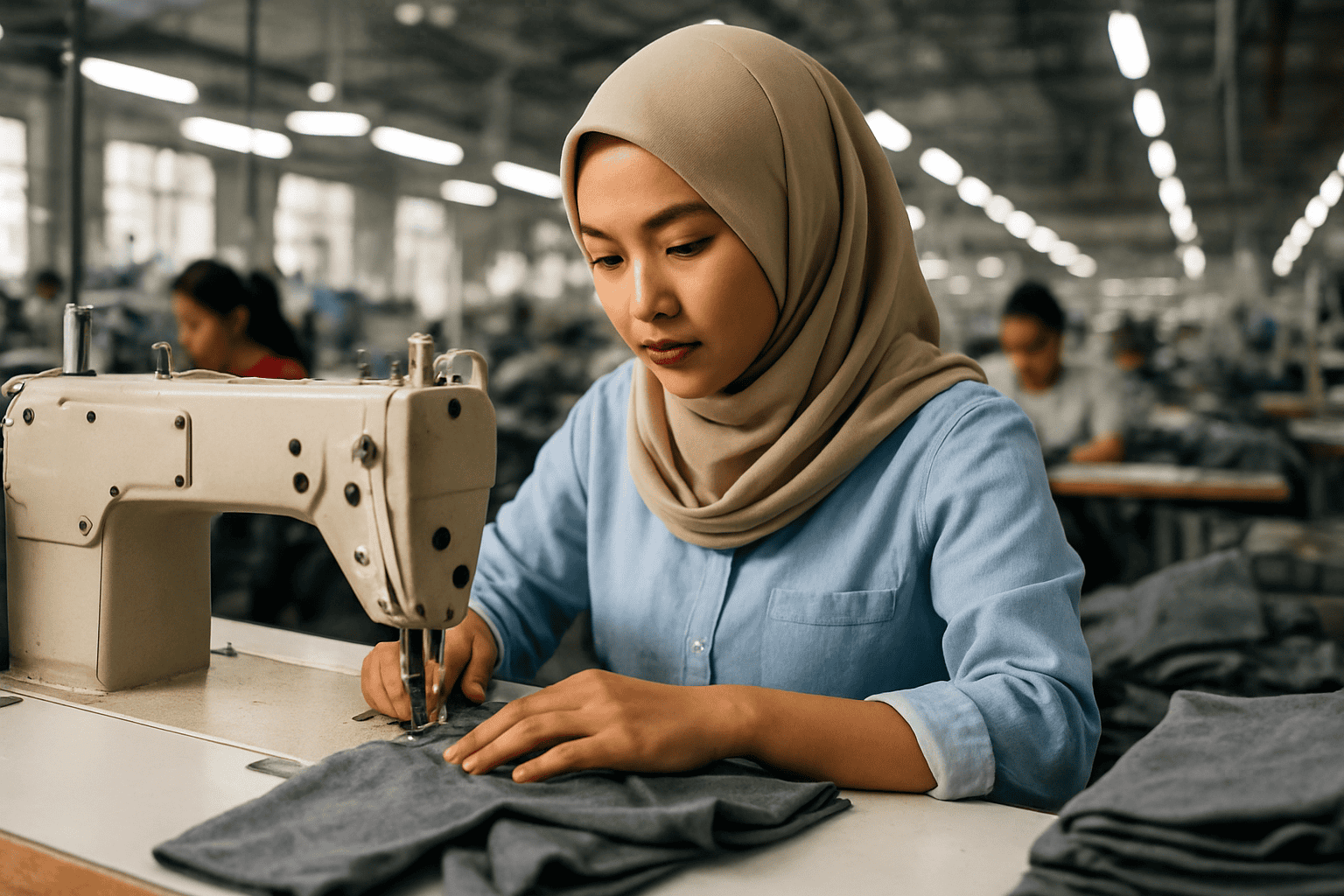
Textiles and garments remain a defining cluster for Indonesia, supported by long-standing export relationships and a large domestic market. The sector benefits from established supply chains across Java and the core textile hubs in West Java and Central Java, with East Java and Banten playing increasingly important roles. Made in Indonesia 4.0 initiatives are driving upgrading in factories, boosting automation and quality control for both local and global brands.
Key strengths include broad labor absorption and solid spinning, weaving, and apparel assembly capabilities that serve ASEAN and global buyers. Yet energy reliability and logistical capabilities can affect throughput. Companies must balance cost advantages with the need for consistent quality to meet international expectations.
-
-
-
-
-
-
- Cost leadership in basic textile production versus higher value design and finishing.
- Growing demand for traceability and increasingly eco-friendly fabrics across the supply chain.
- Strategic garment assembly hubs near ports such as Merak and industrial zones in Tangerang, plus broader export corridors in Cilegon and surrounding areas.
-
-
-
-
-
Concrete steps you can implement today:
-
-
-
-
-
-
- Map your supply chain to identify single points of failure, especially in power and logistics. Develop backup power options and alternative transit routes to keep lines moving.
- Pilot a small batch modernization in a mid-size factory: upgrade one sewing line with automated cutting and feeding to measure gains in speed and waste reduction.
- Join a local sustainability program to track fabric provenance. Use a simple, verifiable certificate system to satisfy buyers demanding eco-friendly inputs.
-
-
-
-
-
| Factor | Indonesia | Regional peers |
|---|---|---|
| Lead times for new textile lines | Moderate with improvements in key zones under Making Indonesia 4.0 | Often shorter in dedicated industrial estates elsewhere |
| Labor costs | Competitive for basic production; higher for advanced finishing and automation | Lower in some peers for basic labor; variable for high-skill tasks |
| Capacity scale | Large domestic mills and weaving clusters across Java, with growth in East Java and Banten | Varies by country; some have smaller cohesive clusters, others larger integrated mills |
FAQ
You asked how Indonesia compares on lead times, costs, and scale relative to regional peers. The following answers highlight practical implications for manufacturers and investors alike.
-
-
-
-
-
-
- Lead times: Indonesia shows moderate lead times with some variability by sector and location. Java’s logistics hubs help shorten line start times, but intra-country transit can extend timelines in certain corridors.
- Costs: Labor costs remain competitive for base production, with advantages in textiles and garments. Energy reliability and logistics fees can push total unit costs outside top clusters, so proximity to established estates matters.
- Scale: Indonesia offers large domestic clusters and end-to-end value chains anchored in West, Central, and East Java. Scale grows when operations align with established zones and downstream opportunities in textiles, food and beverages, and electronics.
-
-
-
-
-
Context and strategic takeaways
Indonesia contributes significantly to GDP through manufacturing, with about 20% of output. Java remains the spine of production, hosting major industrial estates and dense supply chains that support faster scaling for investors and MSMEs.
Making Indonesia 4. 0 and related programs aim to upgrade capacity and automation, driving higher value production in electronics, chemicals, and high-tech sectors. While growth trends are steady, labor productivity remains a challenge relative to ASEAN peers, underscoring the need to upgrade targeted clusters.
Operational playbooks for quick wins
-
-
-
-
-
-
- Audit your value chain: map suppliers by Java, Sumatra, and Sulawesi to identify bottlenecks. Prioritize zones with reliable power and port access.
- Choose the right estate: pair basic assembly with textile hubs in West Java, then cluster electronics in Batam or Surabaya for downstream connectivity.
- Plan for lead-time variance: build buffer inventory for components sourced outside major corridors, and lock in permits early in project timelines.
-
-
-
-
-
Quick comparison table
| Question | Indonesia | Regional peers |
|---|---|---|
| Lead times for new lines | Moderate; improving in key zones | Often shorter in dedicated industrial estates |
| Production costs | Competitive for base production; variable for value-added | Lower in some peers for basic labor; higher for advanced skills |
| Scale potential | Large domestic clusters with end-to-end capabilities | Varies by country; some have more consolidated hubs |
Key references and considerations
-
-
-
-
-
-
- Java’s manufacturing spine and port access, including Merak seaport, support scale and density.
- Strategic programs like Making Indonesia 4. 0 influence upgrading and automation within existing clusters.
- Regulatory clarity and administration capacity affect speed to market across provinces and zones.
-
-
-
-
-
For investors and manufacturers exploring Indonesia, consider how Java, West Java, Central Java, East Java, and Banten integrate with your supply chain. Align with established industrial estates, tap into the growing textiles and garments, F&B, and electronics ecosystems, and leverage the support from World KNK and our subsidiary brand Kizen Lab to de-risk and accelerate deployment.
Conclusion
Indonesia sits at the heart of Southeast Asia’s manufacturing ecosystem. Its dense supply chains and mature textile clusters in Java underpin a large, integrated production network that spans textiles and garments, food and beverages, electronics, and beyond with growing English usage. This scale creates resilient linkages across downstream sectors and supports a robust export pathway for global brands.
Practical expansion examples
For a global apparel brand, a nearby city supplier corridor can streamline fabric sourcing, dyeing, and cutting under one roof. In electronics, a West Java hub coordinates packaging, testing, and final assembly near major ports, cutting transit time by days.
Actionable steps for investors
Map your value chain to pinpoint where Java logistics shorten your cycle times. Align with zones close to ports for export readiness and negotiate with local partners who can scale with Making Indonesia 4.0 upgrades. Build phased plans that start with high-volume, low-complexity products and expand into higher value-added lines as capabilities mature.
For investors and partners, alignment remains key. Pair operations with established zones around Java for reliable throughput and leverage downstream opportunities in West and Central Java. Strategic infrastructure and policy support can shorten timelines and improve cost efficiency in the medium term. Our approach remains practical: lean on Indonesia’s scale while optimizing for the local realities of each sector.
-
-
-
-
-
-
- Our subsidiary Kizen Lab accelerates precision and quality control within our production flows.
- World KNK remains focused on delivering end-to-end, worry-free garments that capitalize on Indonesia’s scale and cluster strengths.
- Continued investment in logistics and energy reliability will further sharpen Indonesia’s competitive position.
-
-
-
-
-
References
Related Articles
- Indonesia as a manufacturing powerhouse: scalability and compliance for American fashion brands
- Asia’s Rise in Global Apparel: From Manufacturing Powerhouse to Innovation Hub
- What are common pitfalls Singapore fashion brands face when outsourcing manufacturing in Southeast Asia, and how can they be avoided?