Table of Contents
- Asia’s Rise in Global Apparel: From Manufacturing Powerhouse to Innovation Hub
- Introduction
- 1. The Asia Manufacturing Wave: Historical Shift and Current Footprint
- 2. Beyond Costs: Southeast Asia as a Diverse Manufacturing Powerhouse
- 3. The Apparel Migration: Shifting Sourcing Corridors
- 4. Innovation Hubs: Tech-Driven Transformation in Apparel Manufacturing
- 5. Readying for the Future: Workforce, Infrastructure, and Policy Catalysts
- 6. The Role of Regional Alliances and Trade Agreements
- 7. Practical Implications for Brands: Navigating Asia’s New Landscape
- FAQ
- Conclusion
Asia’s Rise in Global Apparel: From Manufacturing Powerhouse to Innovation Hub
Asia has long been the backbone of global clothing production. It accounts for a majority of world manufacturing output and anchors the supply chains that feed brands from New York to Nairobi. But the story is evolving. The region is shifting from pure scale to advanced capabilities that raise resilience and unlock new value for fashion brands.
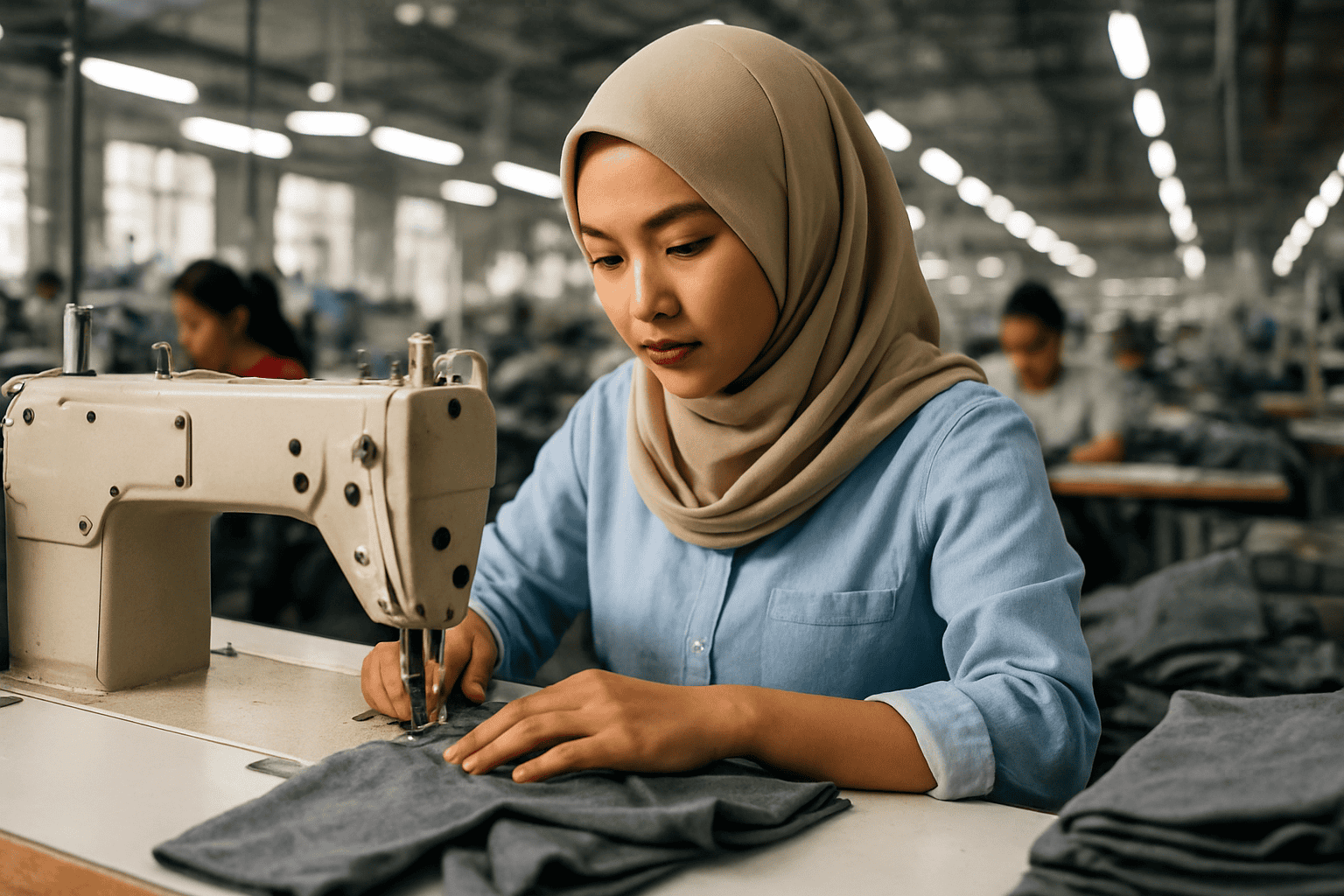
Across economies like China, Vietnam, India, and Southeast Asia, manufacturing is expanding beyond assembly lines into high-tech operations. Cleanrooms, precision textile processes, and medical textiles are becoming part of the regional toolkit. This shift supports not just faster turnover but also greater quality, traceability, and compliance with stringent health and safety standards.
For fashion brands, this evolution means less risk of disruption and more options for diversified sourcing. Asia remains a central hub for global trade, yet a growing share of production is moving toward sophisticated, high-value activities. The result is a more robust supply chain that can weather shocks while meeting rising demands for performance, quality, and sustainability.
Key indicators remain clear. Asia still contributes a large share of global goods trade and manufacturing output, driven by cost-effective labor markets and a widening range of capabilities. At the same time, the regional economy is transitioning to services, automation, and digital-ready manufacturing that strengthen its role as an innovation leader in textiles, electronics-adjacent sectors, and high-tech apparel components.
As supply chain strategies evolve, Asia’s role is not simply about replacing one set of suppliers with another. It is about expanding the factory floor into higher-value activities. The result for fashion brands is clearer timelines, improved product quality, and more predictable performance across complex product lines.
Practical steps for brands working with Asia-based manufacturers
Audit suppliers for capabilities beyond cost, including automation maturity, data transparency, and quality management systems. For example, request a three-year track record of defect rates and on-time delivery performance.
Institute joint development programs with key suppliers. Start with a pilot line for a capsule collection that tests new fabrics, trims, and digital tagging to prove end-to-end traceability.
- Define clear SLAs with specific metrics for yield, defect rate, and change management.
- Invest in supplier training on your brand standards and sustainability criteria.
- Use digital twins or ERP integrations to monitor production real-time from sourcing to shipping.
Be mindful of regional nuances. Smaller suppliers may excel in flexibility but lack scale whereas larger partners may offer risk-sharing models but slower change cycles. Build a balanced portfolio that hedges against localized shocks and currency swings.
Partner brands with Kizen Lab to benchmark supplier capabilities, deploy digital traceability, and implement streamlined compliance checks. This approach reduces escalation times, improves forecast accuracy, and aligns production with evolving fashion cycles.
Introduction
Asia-Pacific is reshaping the apparel manufacturing landscape, blending scale with high-value capabilities to deliver resilience, speed, and sustainable growth across the region. China+1 strategies are increasingly shaping regional diversification, balancing proximity to key suppliers with access to specialized capabilities and faster go-to-market timelines.
At Kizen Lab, we view Asia’s rise as both history and opportunity. We specialize in mid-scale production that bridges boutique craft with industrial capability, backed by stronger quality control, digital tooling, and regional sourcing networks.
Two forces shape this moment. First, supply chains are becoming more resilient as brands seek reliable lead times and compliance. Second, Asia is transitioning toward higher value production, expanding from pure cost advantages to capabilities that respond quickly to market changes. The region’s mature textile clusters, skilled workforce, and increasingly capable facilities position it as a steady anchor for global trade and fashion innovation.
1. The Asia Manufacturing Wave: Historical Shift and Current Footprint
From agrarian roots to industrial dominance
Asia transitioned from farming to manufacturing through targeted policy support, rising labor productivity, and expanding export markets. Today, complex supply chains span textiles, electronics, and automotive components, with clusters centered near coastal hubs and inland nodes.
Three forces shaped this shift: scale, specialization, and integration with global demand. Firms moved beyond simple assembly to include design input, quality engineering, and packaging. The result is a dense network that supports rapid production cycles and a broader product mix. The practical payoff is shorter lead times and higher margin potential for manufacturers that standardize components and adopt modular production models.
Key players: China, Vietnam, India, Thailand
- China remains a central node for high‑volume manufacturing and export readiness, with deep supplier ecosystems and robust logistics. Use proximity to suppliers to test new SKUs before regional rollout.
- Vietnam has become a versatile hub for fabric and garment production, backed by steady investments in skills and infrastructure. Leverage its favorable duty regimes for bulk textile orders and quick rampups.
- India combines a large domestic market with capabilities in textiles, electronics, and other manufacturing, expanding its global role. Integrate local sourcing to reduce import risk and improve global lead times.
- Thailand anchors regional clusters in automotive parts, machinery, and precision textiles, benefiting from proximity to Southeast Asian markets. Consider co‑located suppliers to streamline cross‑border certification processes.
Share of global manufacturing output and trade
Asia accounts for a majority of regional production across multiple sectors, with rising value‑added activities. Firms increasingly participate in design, testing, and aftersales services within Asia, shortening cycles and boosting reliability. Tip for operations teams: map supplier capabilities to a 2‑year technology roadmap to align investments with expected demand shifts.
2. Beyond Costs: Southeast Asia as a Diverse Manufacturing Powerhouse
From wage advantages to advanced capabilities
Southeast Asia is moving up the value chain beyond cost comparisons. The region is deploying precise quality control, stronger environmental standards, and clear digital traceability. Firms are upgrading to higher value processes that boost reliability and consistency across batches.
Vietnam, Thailand, and Indonesia are expanding into domains such as precision textiles, higher-margin garment finishing, and small-batch production runs. Targeted training programs and government incentives are accelerating skilled-labor development to support these moves.
Regional dynamics that reduce risk
Diversifying across multiple hubs lowers exposure to shocks in any single location. Near-market ASEAN states offer shorter lead times and flexible sourcing, helping fashion brands respond quickly to demand spikes without sacrificing quality.
Asia’s evolving ecosystem includes advanced logistics, sector-specific clusters, and cross-border collaboration that lowers the costs of switching suppliers or scaling capacity. A brand can shift from a large bulk order in Vietnam to a designer capsule produced in Malaysia while maintaining consistent standards.
What this means for your supply chain
Vietnam and Thailand are upgrading fabric mills and finishing facilities to support higher add-on value. Malaysia and Singapore provide high-level services in design, testing, and compliance, while Indonesia focuses on integrated textile complexes and improved logistics. Together, these moves create a more resilient, responsive regional network for apparel production.
- Advanced capabilities enable faster turnarounds and tighter quality control with real-time quality dashboards and inline inspection data.
- Diversified hubs shorten lead times and distribute risk across the region, enabling scenarios like split-sourcing for critical fabrics.
- Practical steps: map your current suppliers, run a 2-4 week pilot with a second hub, and set a single source-of-truth for specs.
| Aspect | Impact on Production |
|---|---|
| Advanced capabilities | Boosts value per unit, improves quality, and speeds delivery. Real-world data shows up to 15-25% faster turnarounds in pilot lines. |
| Diversified hubs | Reduces single-point failure and optimizes regional sourcing. Expect shorter replenishment cycles and lower stockouts. |
3. The Apparel Migration: Shifting Sourcing Corridors
From East Asia to Southeast and South Asia
You are seeing a broad expansion of sourcing beyond traditional East Asia hubs. Brands are diversifying into Southeast Asia and South Asia to balance costs with capacity and agility. Tariff risk, growing domestic markets, and the pull of emerging consumer centers in India and across Southeast Asia are accelerating this shift.
Real-world example: a US sportswear label shifted 40 percent of knit production from China to Vietnam and Bangladesh in 18 months, cutting lead times by 25 percent while preserving quality. Another brand aligned with India’s fast‑growing e commerce segment to shorten the path from design to shelf by coordinating local suppliers and logistics partners.
Practical steps you can take now: map regional capabilities by category, run a quarterly risk assessment for each corridor, and pilot a two‑to‑three product line split between China and a Southeast or South Asia partner. Set measurable targets for cost, lead time, and defect rate to track progress.
Impact on fabrics, textiles, and garment production
Southeast Asia’s fabric mills are expanding to support faster garment cycles, with a focus on sustainable sourcing and strict compliance. Local weaving and knitting capabilities are growing to accommodate fashion cycles that demand shorter inventories and customized finishes.
To operationalize this, establish a regional fabric calendar with quarterly fabric introductions and supplier scorecards. For example, coordinate monthly proto runs with a Vietnam mill that can handle small lot sizes and rapid color changes, cutting development time by up to two weeks per style.
- Quality control enhancements: implement regional QC hubs near key mills and use standardized inspection criteria across suppliers.
- Collaboration cadence: biweekly touch base with fabric partners to review prototypes and material substitutions.
- Transparent sourcing: publish a monthly sustainability report detailing fiber origin, dye processes, and waste metrics.
| Aspect | Effect on Production |
|---|---|
| Geographic diversification | Reduced lead times and improved risk management through multiple sourcing corridors. |
| Fabric and finish integration | Quicker prototyping, smaller lot sizes, and higher flexibility in design iterations. |
4. Innovation Hubs: Tech-Driven Transformation in Apparel Manufacturing
Automation, digitalization, and smart factories
Across Asia, factories are accelerating automation to handle high mix, low volume runs with fewer errors. Robotic arms take on repetitive tasks, and vision systems perform real time quality checks. Digital planning links shop floors to scheduling, enabling tighter throughput and faster response to design changes.
Smart factories are moving toward data driven ecosystems. Real time machine health monitoring reduces downtime, and predictive maintenance lowers unexpected breakdowns. For mid size producers, this shift improves overall equipment effectiveness and can lower ownership costs over time.
Smart textiles, electronics integration, and supply chain tech
Textile innovation now embraces sensors, conductive threads, and reversible fabrics that add value beyond aesthetics. Electronics integration enables features like moisture management and embedded diagnostics in performance wear.
Supply chain technology, including digital twins and e kitting, helps brands simulate production scenarios before committing capacity. End to end visibility from raw materials to finished goods improves traceability and reduces waste across regions.
| Area | Impact |
|---|---|
| Automation and smart factories | Better throughput, lower defects, and more resilient schedules. |
| Smart textiles and electronics | New product capabilities, higher value garments, and enhanced performance features. |
| Supply chain tech | Improved forecasting, real time tracking, and shorter lead times. |
5. Readying for the Future: Workforce, Infrastructure, and Policy Catalysts
Upskilling and workforce transitions
Asia is moving from low-cost, low-skill labor to a skilled, adaptable workforce. Countries are expanding vocational training and digital literacy to support automated assembly and data analytics. This shift reduces dependence on basic labor and enables higher value output across mid‑scale production.
Factories implement structured career ladders, from operators to technicians and engineers. For example, a semiconductor fab might promote operators into equipment maintenance roles within two years, paired with micro-credential courses. Local collaborations with universities ensure curricula meet industry needs and supply qualified applicants for advanced manufacturing.
Infrastructure, energy, and policy incentives
Transport corridors, logistics hubs, and port efficiency shorten cycle times and boost on‑time delivery for just‑in‑time production models. Upgraded rail links and multimodal terminals help Asia manage rising volumes without bottlenecks. A regional logistics park can slash inbound material lead times through synchronized scheduling.
Reliable energy and predictable costs are essential for continuous operations. Regions investing in grid modernization and renewable capacity reduce price volatility and support cleaner manufacturing practices. Policy incentives, including targeted tax credits and long‑term investment guarantees, attract capital for plants and automation upgrades. A practical approach is to pilot energy storage at one site to smooth peaks before scaling nationwide.
- Targeted training programs aligned with industry 4. 0 needs
- Regional energy resilience reducing production risk
- Policy frameworks that encourage capital expenditure in tech and facilities
6. The Role of Regional Alliances and Trade Agreements
RCEP and regional integration
Regional cooperation is reshaping where and how apparel is produced. The Regional Comprehensive Economic Partnership (RCEP) accelerates collaboration across manufacturing hubs, streamlining rules of origin and cross-border movement of goods. For mid-size producers, this integration opens access to wider markets without piling on heavy compliance costs.
RCEP goes beyond tariff schedules. It pushes standardization in customs procedures and data exchange, reducing friction at borders. With regional partners aligned on regulatory expectations, firms can plan longer capital cycles with greater confidence. For example, a mid-sized knitwear maker can source yarn from Vietnam, finish garments in Indonesia, and ship to Malaysia with unified paperwork, cutting lead times by weeks.
Impact on sourcing, tariffs, and competition
Trade agreements steer where brands source fabrics, trims, and finished garments. When duties and transit times are predictable, regional sourcing becomes more attractive. This shifts production footprints toward a broader set of ASEAN economies and neighboring markets, not just a single country.
Tariff predictability lowers the cost of complexity in supply networks, making nearshoring and distributed sourcing more feasible. The outcome is a more competitive landscape where cost, speed, and quality must be balanced across multiple regional nodes. Practical steps include mapping tiered duty regimes by country and running quarterly scenario analyses to identify the best combination of suppliers and locations.
| Aspect | Impact on Apparel |
|---|---|
| Regional integration | Smoother cross-border flows and common standards |
| Sourcing flexibility | Expanded supplier options with clearer duty implications |
| Tariff regimes | Better predictability reduces the cost of diversification |
7. Practical Implications for Brands: Navigating Asia’s New Landscape
Strategic supplier partnerships for mid-scale production
You need stable, near-term partnerships that can scale. Mid-scale production benefits from a diverse supplier base across Asia, balancing capacity with consistent quality. Build multi-sourcing arrangements to reduce single‑point risk and improve resilience against disruptions.
Evaluate suppliers on capability, not just cost. Seek proven track records in medium‑volume runs, adherence to quality systems, and the ability to ramp up when demand spikes. Establish clear service levels and joint governance to keep timelines tight and defects low.
- Second-source fabrics and trims to avoid bottlenecks
- Joint development cycles with rapid prototyping
- Shared data portals for real‑time production visibility
Balancing cost, quality, and speed to market
Cost pressure remains real, but speed to market and quality control matter as much. Asia’s newer manufacturing layers deliver faster changeovers, automation, and better traceability, enabling brands to shorten lead times without compromising standards.
Adopt a tiered sourcing approach that segments projects by agility needs. For core, high‑volume lines, favor stable partners with mature processes. For niche or seasonal items, work with nimble suppliers who can experiment without jeopardizing the main line.
| Decision Area | Impact |
|---|---|
| Supplier diversification | Lower risk, steadier supply across cycles |
| Quality governance | Consistent specs, fewer reworks, smoother audits |
| Speed enablement | Shorter run times, faster changeovers, iterative prototyping |
Capitalizing on Asia’s advanced manufacturing layers
Leverage the region’s rapid changeovers, automation, and traceability to shorten development cycles. Cleanroom-capable facilities, where relevant, and specialized textiles workflows can support higher‑value items such as medical textiles and precision components used in smart apparel or electronics‑integrated garments. This shift supports supply chain resilience by enabling closer, faster collaboration with suppliers and faster iterations on product design.
Cost, quality, and risk in a diversified Asia map
Think beyond low unit costs. A diversified Asia map reduces exposure to country‑specific disruptions and tariff shifts. Where feasible, pair established, mature plants with agile partners in nearby markets to balance scale with flexibility. This approach aligns with growing regional production hubs in Southeast Asia and emerging economies, providing access to skilled workforces and favorable government incentives.
| Operational Focus | Benefit |
|---|---|
| Diversified sourcing | Lower risk, steadier supply across cycles |
| Quality governance | Consistent specs, fewer reworks, smoother audits |
| Agile prototyping | Faster iterations and time-to-market |
What this means for brands today
You can shorten lead times without compromising quality by tapping into Asia’s new capabilities and a well‑structured supplier network. Use multi‑source strategies, set clear performance standards, and embrace rapid prototyping workflows to stay ahead in a faster, more complex global trade environment.
Next actions: Map your top SKUs to potential regional suppliers, define a tiered sourcing plan, and establish a joint governance framework with measurable SLAs. This is how brands stay resilient as Asia remains a central spine of global manufacturing while expanding into advanced sectors.
FAQ
You asked how Asia remains central to global clothing production while moving toward advanced manufacturing. Here are concise, practical answers grounded in current market patterns and credible insights.
- Core countries in Asia’s manufacturing footprint China, Vietnam, India, and Thailand lead textiles, electronics-enabled apparel, and scalable mass production. For example, a Vietnamese factory may run 24/7 shifts to meet European fast fashion deadlines, while a Chinese supplier handles complex fabric finishing. These hubs anchor global output in textiles, electronics manufacturing, and consumer goods.
- Shift to higher value capabilities Firms upgrade with automation, cleanroom compatible processes, and smart textiles to reduce defects, improve traceability, and meet stricter safety standards. A garment line uses automated cutting and vision inspection to cut waste and returns.
- Impact on supply chain resilience Regional diversification lowers single-node risk, enabling quicker recovery from disruptions and more predictable lead times through multi-region sourcing. A brand blends sourcing across Vietnam, India, and Indonesia to buffer during port congestion.
- Role of regional policy Trade agreements and harmonized standards streamline cross-border movement and reduce compliance friction for multi-country production networks. Companies invest in standardized labeling and shared ESG reporting to ease audits across factories.
| Topic | Takeaway |
|---|---|
| Advanced manufacturing | Higher throughput, tighter quality control, and data-driven optimization |
| Regional diversification | Expands supplier bases and reduces reliance on a single hub |
If you want deeper detail on specific country trajectories or sectoral gaps, tell me the focus and I can tailor the insights to your needs.
Conclusion
Asia’s rise in global apparel is no longer the story of a single hub. The region now represents a dispersed map that blends traditional mass production with higher precision and risk-aware planning. At Kizen Lab, brands win by partnering with teams that can scale mid‑volume runs while delivering consistent quality and traceability.
Two practical imperatives shape the path forward. Diversify beyond one region to strengthen resilience against shocks. Simultaneously, build capabilities that matter for tomorrow, such as cleanroom ready processes and smart textiles, without losing focus on cost and speed.
- Structured supplier ecosystems reduce bottlenecks and improve lead times.
- Data driven visibility across factories enables proactive quality management.
For mid scale brands, the direction is clear: source with intent, establish robust governance, and partner with collaborators who can grow with you across seasons and product families. The blend of regional strength and capability breadth keeps Asia central to global manufacturing today. For bigger brands, work with our parent company World KNK
References
Related Articles
- Indonesia as a manufacturing powerhouse: scalability and compliance for American fashion brands
- Australian Brands on the World Stage: Nearshoring Manufacturing to Global Spotlight
- What are common pitfalls Singapore fashion brands face when outsourcing manufacturing in Southeast Asia, and how can they be avoided?
- the Bandung factory floor