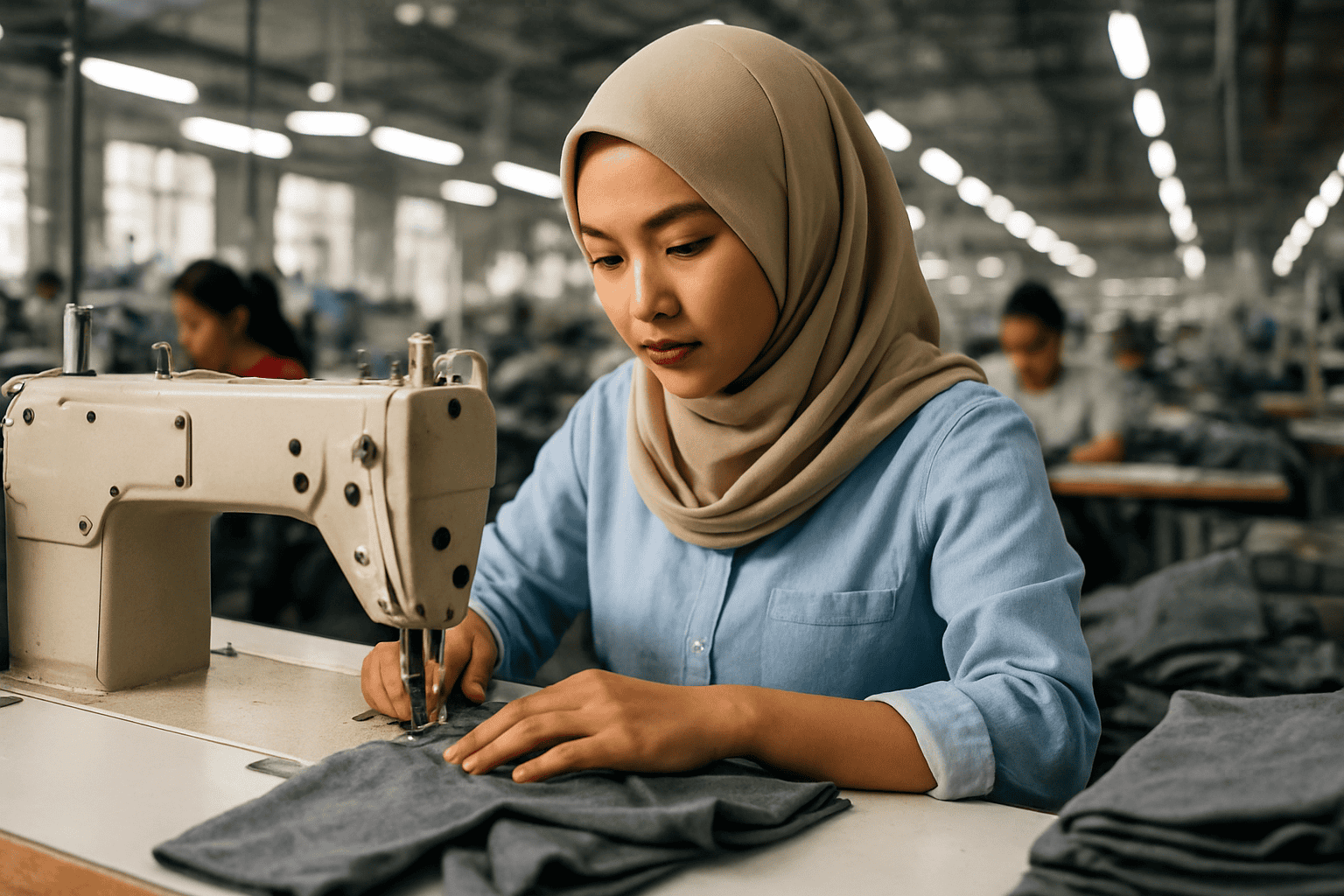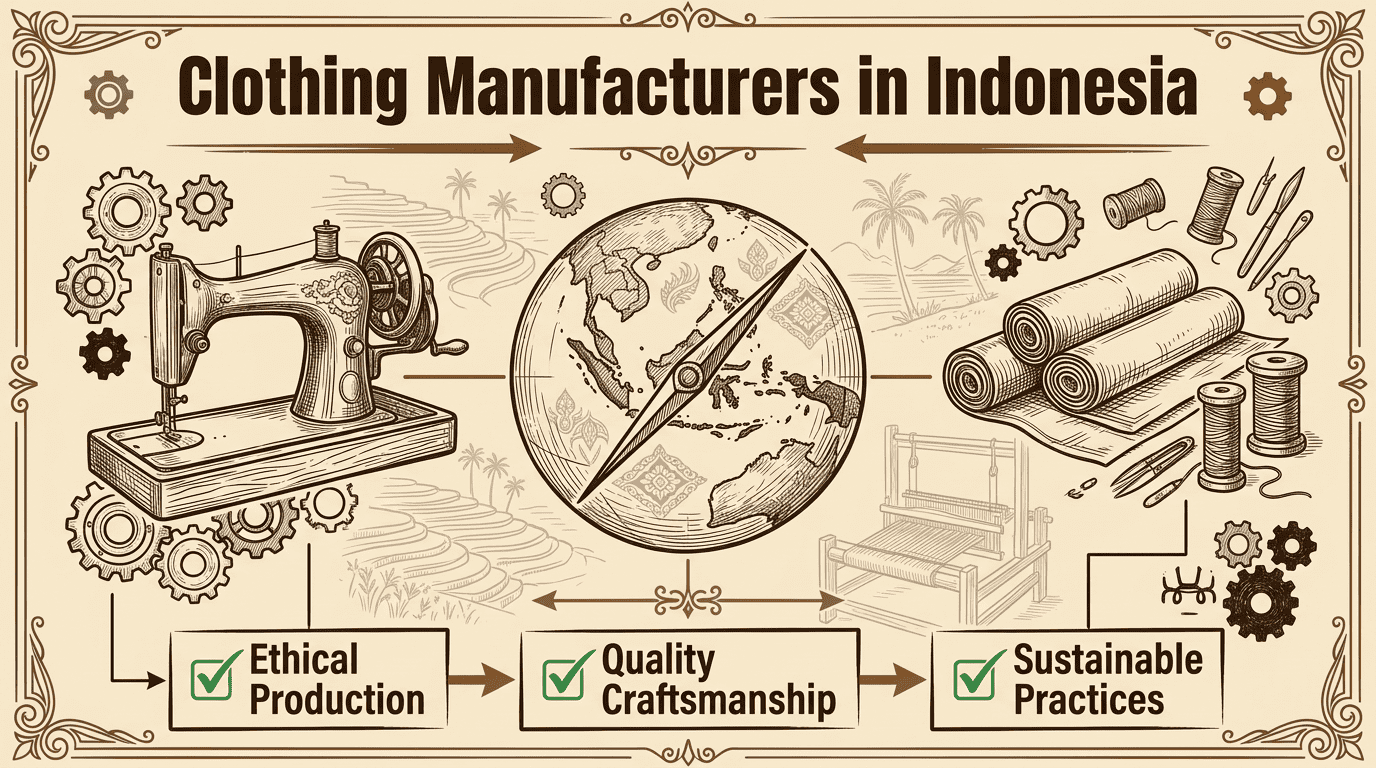
Clothing Manufacturers in Indonesia
Indonesia has quietly become one of Asia’s most competitive garment production hubs. While Bali has gained attention for small-batch, artisan-focused manufacturing, the real opportunity for established fashion brands lies in Indonesia’s larger manufacturing regions where production capacity, labor consistency, and cost advantages come together.
If you’re an established brand looking to scale production without compromising quality, Indonesia offers a compelling alternative to China with lower costs, no tariffs, and strong supply chain stability across Southeast Asia.
Why Indonesia Is More Than Just Bali
Most discussions about Indonesian clothing manufacturing focus heavily on Bali. The island has built a reputation around small-scale, ethical production with artisan craftsmanship and sustainable practices. Manufacturers like Megaya Bali, Yogi & Boo, and S&F Garment Manufacturing have carved out a niche serving startups and emerging brands with low minimum order quantities and personalized service.
Bali-based factories excel at producing resort wear, swimwear, activewear, and custom pieces with hand-dyed fabrics and batik techniques. They’re ideal for independent designers testing new collections or brands prioritizing unique, handcrafted aesthetics.
However, Bali’s manufacturing landscape has limitations that become apparent when production needs scale up. Most facilities are small workshops with limited capacity, higher logistics costs due to the island’s geography, and labor challenges tied to tourism industry competition.
The Indonesia Advantage for Established Brands
Beyond Bali, Indonesia’s main manufacturing regions offer something entirely different. Larger factories with modern equipment, experienced labor forces, and streamlined production processes can handle substantial order volumes while maintaining competitive pricing and consistent quality.
Labor Cost and Consistency
Labor costs in Indonesia’s primary manufacturing areas are typically lower than in Bali, where tourism drives up wages and creates workforce volatility. Established production hubs have dedicated garment workers with years of experience, not seasonal employees moving between industries.
This consistency translates directly into quality control. When your production team has been making similar garments for years, they catch errors before they become problems. They understand fabric behaviour, know how patterns should fit, and maintain standards without constant oversight.
Production Capacity That Scales
Established brands need manufacturers who can grow with them. A successful season might mean doubling your next order. A new retail partnership could require tripling production capacity on short notice.
Indonesian manufacturers outside Bali’s small workshop ecosystem can handle these demands. Facilities with hundreds of skilled workers, multiple production lines, and efficient quality control systems process large orders without sacrificing attention to detail.
Quality Without the Premium Price
One of the biggest surprises for brands moving production to Indonesia is the quality-to-cost ratio. You get craftsmanship comparable to more expensive manufacturing regions at prices that protect your margins.
This isn’t about cutting corners. It’s about operational efficiency, lower overhead costs, and a business environment that supports manufacturing growth. The savings show up in your bottom line while your customers see only the finished product quality.
What Makes Indonesian Manufacturing Competitive
Indonesia brings specific advantages that matter when you’re choosing a long-term production partner.
No Tariff Concerns
Trade tensions have made China manufacturing riskier for many brands. Tariffs can eat into profits or force difficult pricing decisions. Indonesian production avoids these complications entirely, offering stable, predictable costs for your supply chain planning.
Southeast Asian Supply Chain Integration
Indonesia sits at the heart of Southeast Asia’s textile supply network. Fabric mills, trim suppliers, and finishing facilities are all within the region, reducing lead times and shipping costs compared to coordinating across multiple continents.
This geographic advantage means faster turnaround when you need to reorder materials or adjust production specifications. Your manufacturing partner can source locally and keep production moving smoothly.
Proven Export Infrastructure
Indonesian manufacturers have decades of experience shipping to global markets. They understand international quality standards, export documentation requirements, and logistics coordination. Your orders arrive on time, properly packaged, and ready for distribution.
Understanding Bali’s Manufacturing Landscape
While larger Indonesian facilities serve established brands better, understanding Bali’s manufacturers provides useful context for the industry overall.
Factories like CMA Bali have worked with over 1,800 fashion brands from 65 countries, offering services from fabric sourcing through global shipping. Activewear Bali has built a client base of 200+ brands over 25 years, specialising in sustainable yoga and fitness apparel.
King Trading, established in 1990, focuses on luxury swimwear and silk garments for over 300 global brands. WTG brings 25+ years of experience in hand-dyed fabrics and custom batik printing.
These manufacturers excel at what they do. They’ve built businesses around personalised service, artisan techniques, and flexible production for smaller brands. Companies like One Love Clothing Production Bali and Love Anchor Fashion Production offer design consultation and custom development that helps independent designers bring ideas to life.
The challenge comes when production needs outgrow what small workshops can deliver. An order that’s too large for a 50-person facility creates problems. Split production across multiple workshops and you sacrifice consistency. Wait for one facility to complete everything and you miss delivery windows.
Bali Manufacturing: Advantages and Limitations
Bali’s garment industry offers real benefits for specific situations. The skilled craftsmanship and traditional techniques create unique products. Batik, hand weaving, intricate embroidery, and beadwork meet luxury market demands that mass production can’t satisfy.
Flexible production works well for startups testing designs or brands launching limited collections. Many Bali manufacturers accept small minimums and accommodate custom specifications that larger factories would decline.
Sustainability focus appeals to conscious consumers. Natural fibers, eco-friendly dyes, and ethical labor practices align with values-driven brand positioning.
Cultural inspiration infuses Bali designs with distinctive aesthetic appeal. Resort wear, beachwear, and yoga clothing naturally fit the island’s creative sensibility.
But limitations become apparent at scale. Production capacity constraints make large orders difficult or impossible. A manufacturer with 30 sewing machines simply cannot produce 10,000 units on your timeline.
Logistics challenges add costs and complexity. Island geography means everything ships through limited ports with longer transit times and higher freight expenses.
Technology gaps affect efficiency. Without modern cutting equipment or automated processes, production takes longer and costs more per unit than in facilities with current machinery.
Labor mobility creates consistency problems. When workers can earn more in tourism, garment factory staffing becomes unpredictable. New employees need training time, slowing production and increasing error rates.
Quality control varies significantly between small workshops. Without standardised systems, each factory develops its own practices. This inconsistency makes it hard to maintain standards across multiple production runs.
When Established Brands Need More
As your brand grows, your manufacturing needs change. Early-stage flexibility matters less than reliable capacity. Artisan touches become less critical than consistent quality across thousands of units.
You need a partner who answers emails promptly, meets deadlines consistently, and handles problems proactively. Someone who understands your quality standards and maintains them without constant supervision.
Price matters, but value matters more. Saving money on manufacturing means nothing if late deliveries cost you a retail partnership or quality issues damage your brand reputation.
This is where Indonesian manufacturing outside the Bali ecosystem shines. Facilities designed for volume production bring professional systems, experienced management, and operational stability that established brands require.
What World KNK Clothing Manufacturing Offers
World KNK Clothing Manufacturing represents the next level of Indonesian garment production. With over 20 years of experience in Indonesia’s primary fashion hub, we’ve built our business around serving established brands that need reliable, high-quality manufacturing at scale.
Our end-to-end service handles everything from premium fabric sourcing through final packing and delivery. You work with one partner instead of coordinating multiple suppliers.
We specialise in diverse product categories including woven shirts, blouses, dresses, uniforms, religious wear, denim, and outerwear. This range means we understand different construction techniques, fabric requirements, and quality standards across garment types.
On-time delivery isn’t a goal, it’s our standard operating procedure. We build production schedules that account for realistic timelines and build in contingency planning so unexpected issues don’t derail your launch dates.
Quality-first partnership means you sleep better at night. Our systems catch problems during production, not after goods arrive at your warehouse. Consistent quality, ethical production practices, and worry-free collaboration let you focus on growing your brand instead of managing manufacturing crises.
As a China alternative, we offer competitive pricing with comparable quality, zero tariff concerns, and supply chain stability through Southeast Asian integration. Your costs stay predictable while your production remains secure.
Choosing the Right Indonesian Manufacturer
Selecting a manufacturing partner requires looking beyond promotional materials to understand actual capabilities.
Production capacity matters more than promotional photos. Ask specific questions about machinery, workforce size, and current production volume. A manufacturer handling 50,000 units monthly has different systems than one producing 5,000.
Quality control processes reveal professionalism. Detailed inspection procedures, documented standards, and clear communication about defect rates indicate a partner who takes quality seriously.
Communication responsiveness predicts future reliability. Manufacturers who respond promptly during the inquiry phase will likely communicate well during production. Delayed or vague responses suggest problems ahead.
Existing client relationships provide insight. Long-term partnerships with recognisable brands indicate a manufacturer delivers consistently. One-time projects or constantly changing client lists may signal issues.
Financial stability protects your investment. Established manufacturers with solid reputations are less likely to face sudden closures or financial problems that could leave your production stranded.
Making the Transition
Moving production to a new manufacturer feels risky. You’ve invested time building relationships and dialing in specifications with your current partner.
Smart brands approach transitions methodically. Start with a smaller order to test capabilities, communication, and quality standards. Evaluate results objectively before committing to larger volumes.
Provide detailed specifications from the beginning. Clear tech packs, quality standards documentation, and specific requirements prevent misunderstandings that create problems during production.
Build in extra time for the first order. Even excellent manufacturers need a production cycle to fully understand your standards and preferences. Rushing the first run increases error risk.
Maintain open communication throughout production. Regular updates help you catch potential issues early when they’re easier to fix.
The Real Cost of Cheap Manufacturing
Price shopping makes sense until it doesn’t. The lowest quote often comes with hidden costs that exceed the initial savings.
Late deliveries cost you sales, damage retail relationships, and create cash flow problems. Missing a season’s window because production ran three weeks late can kill an entire collection’s profitability.
Quality issues create returns, reputation damage, and rework expenses that dwarf manufacturing savings. One bad batch can cost more than years of slightly higher production prices.
Poor communication wastes time and creates frustration. Hours spent trying to get updates or clarify problems represent real costs even if they don’t appear on invoices.
Reliable manufacturing at fair prices delivers better value than cheap production with constant problems.
Join established brands that have already made the switch.
See how we’ve helped fashion companies scale production while protecting margins. Start with a free consultation, no commitment required.
Talk to a Manufacturing Expert
FAQ
What minimum order quantities do Indonesian manufacturers require?
Minimum order quantities vary significantly between Bali-based small workshops and larger Indonesian manufacturing facilities. Bali manufacturers often accept orders as small as 50-100 pieces per style, making them suitable for startups and test runs. Larger factories typically require 500-1,000 pieces per style as minimums, though this depends on garment complexity and fabric requirements.
How long does production take in Indonesia?
Production timelines depend on order complexity, quantity, and current factory capacity. Standard orders of 1,000-5,000 units typically require 6-8 weeks from final approval to shipping. This includes fabric sourcing, cutting, sewing, quality control, and packing. Rush orders may be possible with surcharges, while complex designs or specialty fabrics can extend timelines to 10-12 weeks.
Is Indonesian manufacturing quality comparable to China?
Yes, Indonesian manufacturing quality matches Chinese production for most garment categories. Indonesia has invested heavily in modern equipment, worker training, and quality control systems over the past two decades. Many factories serve the same international brands that source from China, maintaining identical quality standards. The key is choosing an established manufacturer with proven capabilities rather than judging an entire country’s industry by its smallest operators.
What are shipping costs from Indonesia to major markets?
Shipping costs vary based on destination, order volume, and shipping method. Sea freight to the United States typically costs $3-6 per kilogram with 3-4 week transit times. Air freight runs $8-12 per kilogram with 7-10 day delivery. European markets see similar pricing with slightly shorter sea freight times. Larger orders benefit from container shipping rates that significantly reduce per-unit costs.
How does Indonesian labor cost compare to other Asian manufacturing countries?
Indonesian labor costs sit in the middle range for Asian manufacturing. Workers earn more than in Bangladesh or Vietnam but significantly less than in China or Thailand. This pricing sweet spot delivers good value, balancing cost savings with quality and reliability. Labor costs in Indonesia’s main manufacturing regions are 20-30% lower than in Bali due to lower living costs and less tourism industry competition.
Can Indonesian manufacturers handle technical or complex garments?
Established Indonesian manufacturers handle complex garments including tailored pieces, outerwear with multiple components, and technical activewear with specialised fabrics. Facilities serving international brands have invested in training and equipment necessary for advanced construction techniques. The key is matching your specific needs with manufacturers who have demonstrated experience in your garment category.
What payment terms do Indonesian clothing manufacturers accept?
Payment terms vary by manufacturer size and relationship length. New clients typically pay 30-50% deposits with the balance due before shipping. Established relationships may negotiate net 30 or net 60 terms after proving reliability. Most manufacturers accept wire transfers, with some accepting letters of credit for large orders. Payment flexibility increases as you build a track record with your manufacturing partner.
How do I protect my designs when manufacturing in Indonesia?
Protect your designs through clear contracts, non-disclosure agreements, and choosing manufacturers with established reputations who value long-term relationships over short-term gains. Work with manufacturers who serve recognised international brands, as they understand intellectual property concerns and have systems preventing design theft. Register trademarks and patents in Indonesia for additional legal protection if your designs have significant commercial value.
Ready to get started?
Take the first step toward reliable, scalable one of the top clothing manufacturers in Indonesia. Submit your production specifications and we’ll provide a detailed quote and timeline within 48 hours.

Related Articles
- Leading Garment Manufacturers: Clothing Production Factory in Indonesia
- What advantages does Indonesia offer to mid-scale clothing manufacturers compared to China or Vietnam?
- What are the best ways for an Australian clothing brand to find reliable manufacturers locally or overseas?
- Non-Woven Garments: What They Are and Who Uses Them (Kizen Lab)
- inside the Bandung factory
Sizing up Bali? Our Bali clothing manufacturers guide explains what the island does well, how ceremonies shape delivery dates, and where 1,000-piece woven programmes usually sit.