
Last updated: 6 November 2026
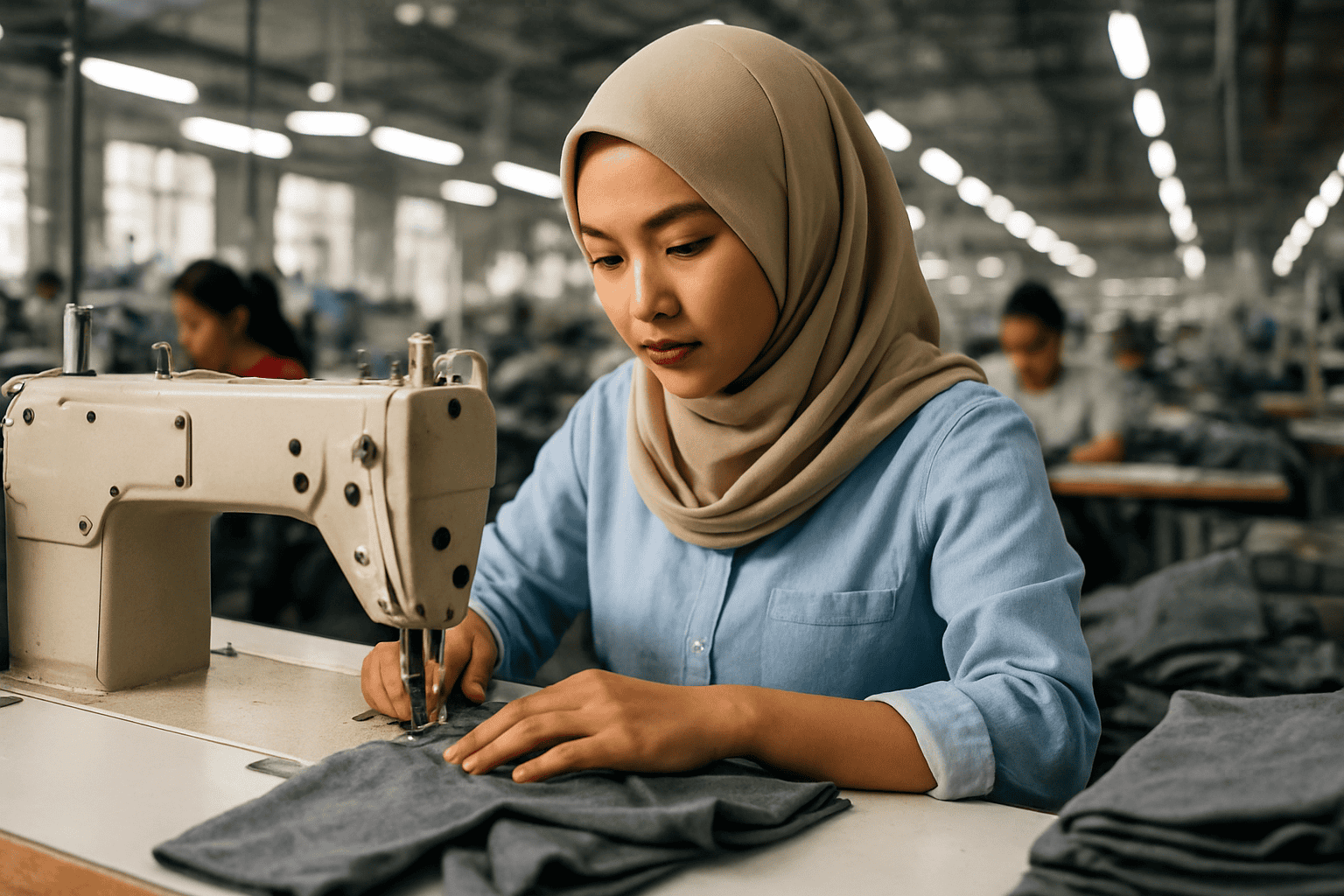
Australian schools looking for a school uniform manufacturer usually meet two walls: local factories quote high on formal woven wear, and offshore mills feel far away and opaque. This page is the honest factory-side answer. World KNK is a woven specialist in Bandung (Indonesia) that runs uniform programmes for schools and the suppliers who dress them, and this guide explains exactly what that looks like: what we make, what it costs, how duty works, and how the calendar decides your delivery date.
What can an Indonesian factory make for Australian schools?
The woven half of a school wardrobe: shirts, blouses, dresses, tunics, trousers, shorts and skirts, in junior and senior cuts, across a full size run from size 4 to adult. What we do not make is knitwear, polos or sportswear; those run on different machines, and a factory that claims everything usually weaves nothing well.
The piece most schools ask about first is the check. A school tartan or plaid is a yarn-dyed development, woven to your own colour palette rather than printed on top. Custom fabric development starts at 1,500 pieces per style and adds four to eight weeks before cutting, because the mill weaves to your brief. Once the check exists, it belongs to your programme, and every future order runs without the development step.
How does duty-free work under IA-CEPA?
Indonesia and Australia trade under the Indonesia-Australia Comprehensive Economic Partnership Agreement, in force since July 2020. DFAT describes IA-CEPA as removing tariffs on nearly all products traded between the two countries, and apparel sits inside that. A certificate of origin accompanies each shipment, and your customs broker confirms the treatment for each garment line before you price anything. The practical effect is simple: Indonesian formal wear lands in Australia without the tariff load that other sourcing countries carry, and that difference flows straight into your school’s per-piece price.
What does a school uniform programme cost?
Programmes run from 1,000 pieces per style, mixed across your size run. The minimum exists because cutting, setup and quality control cost the same whether a line runs for a day or an hour; our MOQ explainer covers the maths, and the uniform programme MOQ ladder shows how samples, pilots and bulk sit together. Stock fabrics move fastest. House colours and school checks open the custom development tier at 1,500 pieces.
Three lines move the per-piece price: fabric weight and composition, the check or embroidery on top, and trims. Sampling fees apply per round and are credited against the first bulk order; the sample fees guide explains the structure. Schools below the woven minimum run the same programme through our subsidiary Kizen Lab, which produces FOB from 500 pieces per style.
How long does a school uniform order take?
Sampling runs one to two weeks per round. Bulk runs six to twelve weeks. Custom fabric adds four to eight weeks before cutting starts. Add freight to Australia and a buffer for a first order with a new factory. The lead times guide breaks the clock down.
Two calendar realities decide the start date. Capacity is finite and booked first in, first out, so a slot conversation beats a rush fee; the capacity booking guide explains how slots work. And the Indonesian factory calendar has two squeezes: Chinese New Year in January and the Ramadan run-up, with Idul Fitri landing early March 2027. If your delivery window sits near either, book by December. Our Ramadan 2027 production calendar maps the full window.
How do you keep sizes consistent across a whole school?
A school order lives or dies on the size run: one style, cut across sizes 4 to 16 and adult, where every size must fit the same body logic. We grade from your measurement chart with written tolerances, agreed before sampling starts; the tolerances guide shows the numbers, and size runs and grading explains how a first order splits across the run. The check that matters most is the second order: the consistency guide covers how dye lots, patterns and checks stay identical a year later.
What does a school need to start?
Less than most committees expect: the garment list with quantities per style, a reference sample or clear flat sketches, your school colours, and the delivery window. Our preparation checklist covers the full list. If your school works through a uniform supplier, the same guide applies; suppliers run bigger programmes and benefit most from the woven depth here.
FAQ
What is the minimum order for school uniforms?
At World KNK, 1,000 pieces per style mixed across the size run, with custom school checks starting at 1,500. Smaller programmes from 500 pieces run through Kizen Lab, our subsidiary on the same campus.
Is clothing from Indonesia duty-free into Australia?
Under IA-CEPA, yes for nearly all goods, apparel included, with a certificate of origin per shipment. Your broker confirms the treatment for each line before you commit to prices.
Can you match our school tartan?
If it is a standard mill pattern, we match it. If it is your own palette, we develop it as a yarn-dyed custom fabric from 1,500 pieces per style, and the check becomes yours for every future order.
How late can we order for the next school year?
Work backwards: bulk needs six to twelve weeks plus freight, and the Ramadan run-up squeezes February and March. For a January delivery, the order needs to be booked months ahead; for mid-year and beyond, talk to us now and we will give you the honest date.
Do you make polos and sports uniforms?
No. Those are knit garments outside our woven specialisation. A factory that only claims woven depth is the right factory for shirts, dresses, tunics and trousers.
Get a quote for your school programme
World KNK is a woven specialist in Bandung (Indonesia) with around 700 staff and group capacity near 200,000 pieces a month. Send your garment list, quantities and delivery window, and we will come back with a quote, a fabric plan and an honest calendar. Call +62 22 5430686, message WhatsApp +62 813 8008 138, or use the contact page.

