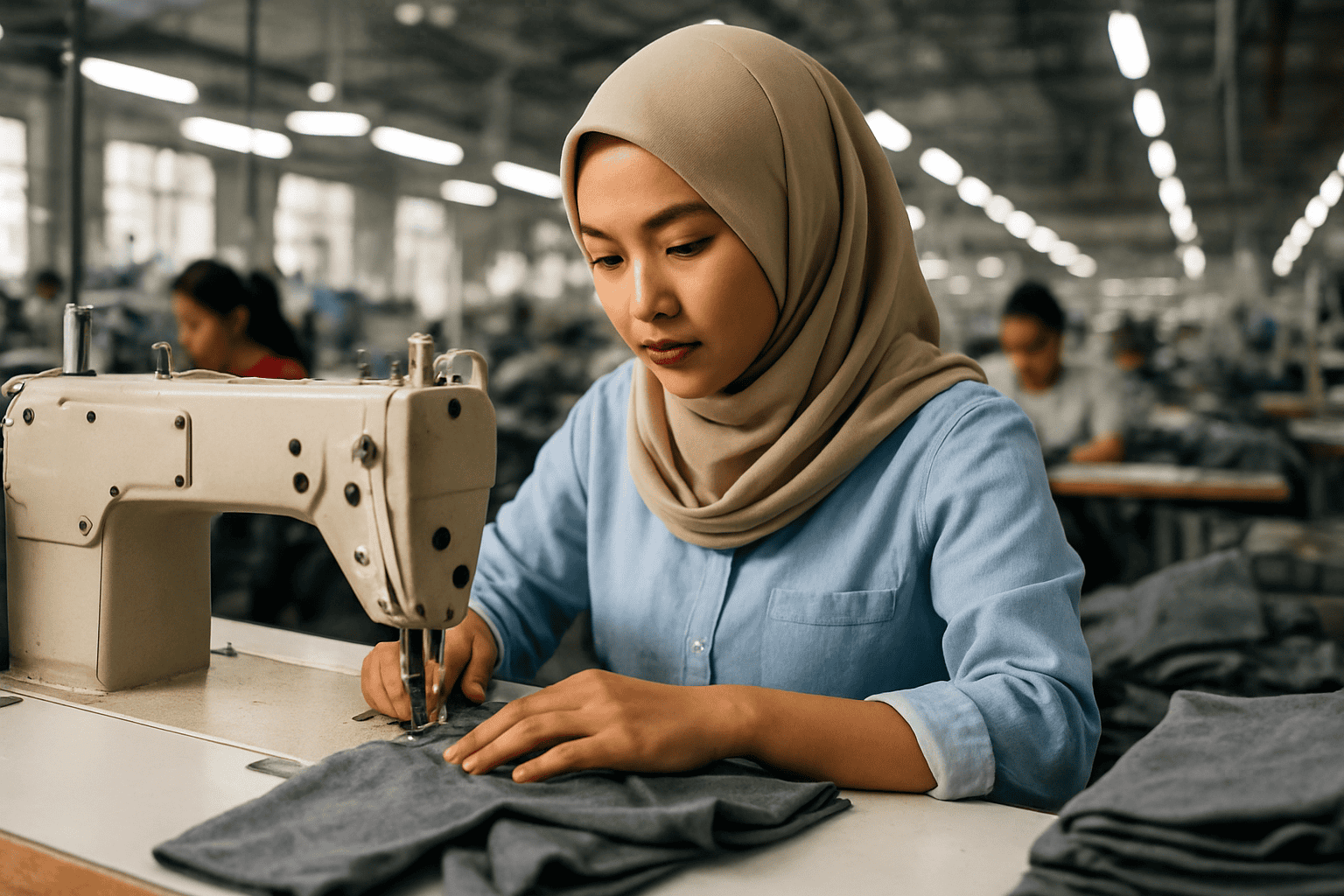
A sourcing agent vs clothing manufacturer is a decision most buyers frame backwards, asking who they should pay before asking what each one is actually for. From the factory side the picture is simple: agents exist to bridge distance and language, factories exist to make garments, and problems start when a buyer expects either one to do the other’s job. Here is how the two roles really divide the work, where each earns its money, and the one question that reveals who your agent actually works for.
What does a sourcing agent do inside the process?
An agent is your representative on the ground: shortlisting factories, translating briefs, chasing timelines and arranging inspections. Sourcing firms such as Leeline Sourcing steer buyers towards agents when self-managing would be too much, and from our side of the table that advice holds for a certain kind of buyer, because a factory honestly prefers a customer who understands its own orders. What an agent changes is communication, not capability. The fabric is still cut on our tables, the stitching still happens on our lines, and the quality standard is still whatever the factory’s system enforces when nobody from either side is watching.
Where agents genuinely earn their place
Three buyers benefit most from an agent. The first-timer, whose single offshore order carries all the learning and whose agent absorbs the wrong-factory risk. The multi-supplier buyer, whose programme needs cloth, garments and finishing from different places, and whose agent becomes the coordinator a single factory cannot be. And the absent buyer, whose calendar leaves no room for production calls, because a direct order with a week of silence between answers is slower than a managed one. Woosourcing’s September 2026 comparison of manufacturing destinations makes the same case from the destination side: Indonesia rewards buyers who can navigate it, and rewards them best on products like apparel where the material is local, which is exactly where an experienced local guide shortcuts months of trial and error.
Where buying direct wins
Direct wins on three fronts that matter more every season. Price, because a commission or markup on every order is a permanent tax that repeats with each reorder. Information, because a buyer who hears about a delay from the factory, in the factory’s own words, can react a week earlier than one waiting for a summary. And accountability, because when the people who sewed the garment answer for it directly, quality conversations get shorter and fixes get faster. Third-party inspection services such as Goodada’s Indonesia apparel QC give direct buyers the on-the-ground checks an agent would have arranged, charged per inspection rather than as a standing percentage. Repeat programmes are where direct pulls furthest ahead: our longest-running clients ship smoother in year three not because they are lucky but because the relationship has no interpreter left in it.
The question that reveals who an agent works for
Ask one question of any agent: who pays your commission? If the factory pays it, the agent’s income depends on keeping that factory happy, which sits awkwardly with the impartial quality policing the buyer thinks they bought. If the buyer pays it, the incentive line is clean, and the fee deserves the same scrutiny as any other cost line. This is not an argument against agents; it is an argument for knowing the incentive structure before trusting it. The same honesty standard applies in reverse, by the way: ask a direct factory who its smallest account is, because a factory that only wants the big programmes is telling you where your order sits in its queue.
What a first direct order should look like
Buying direct works best when the first order is designed to teach both sides safely. Keep the style count small and the specification tight, so the factory learns your standard on something you can inspect line by line. Put the quality expectations in writing before any deposit: the fabric tests, the measurements that matter, the packing standard, the same list you would hand an agent to enforce on your behalf. Book the inspection before production rather than after, because a known check sharpens everyone’s attention, and use our breakdown of how a factory builds its quote to confirm the number in front of you matches the specification you sent. Then judge the run on its follow-up: how fast problems were raised, how the fixes were documented, whether the second-order conversation started before the first carton was sealed. A factory that passes that test has replaced an agent’s supervision with its own, and every order after the first gets cheaper in both money and worry.
How our floor treats agent-brought and direct buyers
Our lines run woven programmes from 1,000 pieces per style, and the order behaves the same whether it arrived through an agent or a direct conversation: fabric tested before cutting, digital patterns, in-line checks. Buyers in the United States planning at that scale can see the programme details on our uniform manufacturing page for US brands, and brands still under our minimum have a direct route too, through our sister company Kizen Lab, which runs FOB production from 500 pieces on the same campus with English-speaking merchandisers. For either path, our guide to vetting an Indonesian clothing manufacturer is the checklist we would use ourselves. If you want to test how a direct conversation feels, our contact page is the unfiltered version.
Frequently asked questions
Is a sourcing agent worth it in Indonesia?
For a first order, a multi-supplier programme or an absent buyer, yes, the bridge earns its fee. For repeat single-factory programmes, buying direct usually wins on price, speed of information and accountability.
Who pays a sourcing agent’s commission?
Three structures exist: the buyer pays a commission, the factory pays it, or the agent marks up the factory’s price. Always ask which applies, because a factory-paid commission puts the agent’s income and your quality control on opposite ends of a tug-of-war.
Can a factory replace a sourcing agent?
Within a single-factory programme, a good factory’s merchandising team covers most of what an agent does, with the advantage that its answers come from the floor. An agent keeps the edge only when your programme spans several suppliers or you cannot attend the process yourself. And when the plan is bigger than one order, our guide to moving clothing production from China to Indonesia shows what to prepare before the new factory sees a single brief.
How do I vet a factory without an agent?
Verify the paperwork, demand a live video walk-through, order samples as evidence and book an independent third-party inspection before shipment. Our vetting guide lists the sequence in full, and a factory that resists any step of it has answered your question for you.