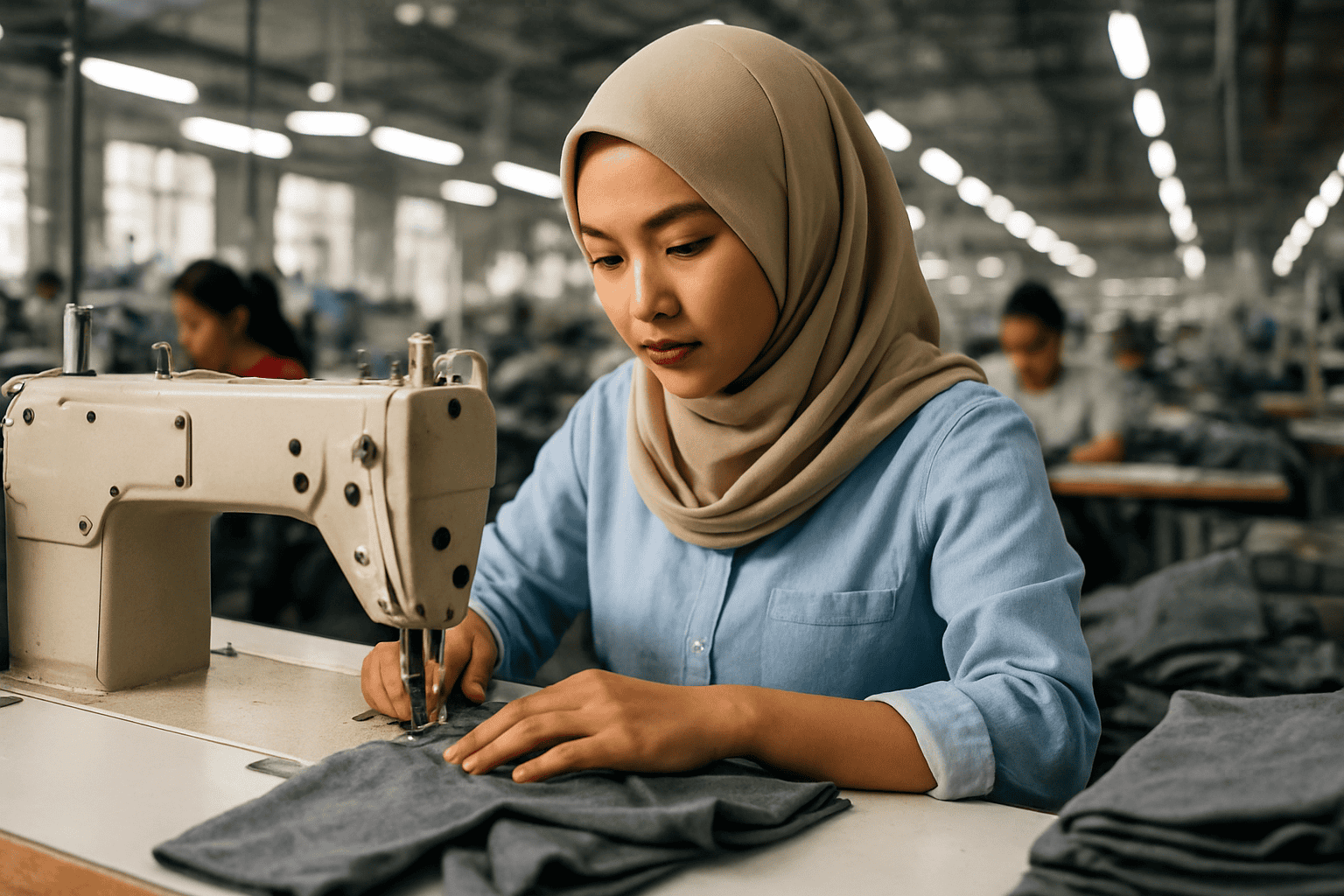
Garment quality consistency is the test most buyers never think to set, because the first sample has already fooled them. A factory can make almost anything once, with its best people and its best cloth, and the approved sample is exactly that: a factory’s best day. The second order is different. It asks whether the standard holds when the spotlight moves on, and in woven manufacturing that answer decides whether a label can grow. Here is what consistency actually depends on, and how to tell which factories can deliver it.
What does garment quality consistency actually mean?
Consistency means the reorder matches the sample in everything the customer can see and feel: the hand of the fabric, the colour, the fit, the stitching density, the finishing. The industry’s tool for it is the seal sample, a production-line garment agreed between buyer and factory and kept by both as the reference every later carton is judged against. Not a sample the factory’s best machinist made in the sampling room; a garment pulled from the bulk line, so the promise being sealed is one the line can actually keep. When buyers say a factory “isn’t the same since the first order”, what failed is almost always this: the reference was an ideal, and the line was only ever human.
Why can bulk differ from the approved sample?
Three quiet gaps open between a beautiful sample and an ordinary reorder. Fabric varies by roll: dyed lots differ slightly from each other, and a mill’s replacement cloth can behave differently on the table even under the same name. People vary by day: sampling rooms hold senior operators, while bulk lines rotate staff, and a style’s first hundred pieces always run behind its thousandth. And information varies by handover: if the pattern adjustments, thread changes and pressing notes discovered during sampling never made it onto paper, they were carried in someone’s memory, and memory does not survive to the second order. None of these gaps is a factory being careless; they are the reasons systems exist.
How a factory holds consistency across orders
The factories that keep reorders faithful treat consistency as paperwork, not intention. The seal sample is signed, dated and stored away from the line. The fabric for each order is tested before cutting, against the same shrinkage and colourfastness standards every time, and lots are not mixed within a size run. The pattern is digital, so the tenth order cuts from the same data as the first, not from a re-draft. And in-line checks sit between operations, catching drift at the operation where it started instead of at final inspection, where it can only be counted. Our own floor runs exactly this way on woven programmes from 1,000 pieces per style: the fabric tests before production and the in-line system exist because consistency is manufactured, not hoped for.
What a buyer should do on a reorder
Buyers have leverage here, and it costs nothing. Before confirming a reorder, ask what changed since last time: which fabric lot, which lines, which operators. Ask for a pre-production sample on any style that mattered, even when the factory waives its fee, because it is the cheapest insurance in the trade. And reference the seal sample by name in the purchase order, so the contract names the standard, not just the style. Our article on tech pack mistakes that delay sampling covers the documentation half; the reorder half is the same discipline carried forward. A factory that answers “nothing changed” without checking is answering from memory, and memory is the first thing that fails.
Three questions that test a factory’s consistency
A buyer can size up consistency in one conversation with three questions. Ask to see the seal sample procedure: who signs it, where it is stored, what happens on a dispute. Ask how fabric lots are controlled between orders, and listen for testing per lot rather than testing per supplier. Ask what percentage of production is checked in-line, and at which operations, because a factory that only inspects finished goods is measuring its failures, not preventing them. The quality of the answers matters more than the confidence of the brochure: a factory that walks you through its tolerance tables and its lot log is describing a system, while a factory that reassures you is describing a mood. Buyers running programme work, where the same styles repeat season after season, should treat these three answers as the core of the vetting conversation, ahead of price and even ahead of lead time.
Where reorders reveal a factory’s truth
Repeat programmes are consistency’s stadium, because their dates and standards never move. A corporate uniform programme that reorders twice a year cannot quietly swap cloth, and hotel groups, schools and government buyers are the reason our calendar and lot controls exist in their current form. Scale helps too: when a style graduates from a sister line onto our specialist woven lines, the pattern data and fabric specification travel with it unchanged, so the reorder a label places at 1,000 pieces reads the same as the test order it placed at 500. If your label is approaching that step, our contact page is where the conversation about holding your standard starts.
Frequently asked questions
What is a seal sample in garment manufacturing?
A garment pulled from the bulk production line, agreed by buyer and factory as the quality reference, signed and kept by both. Every later carton is judged against it, which is what turns “good quality” from an opinion into a standard.
Why do reorders vary from the first order?
Usually because the first order ran on the factory’s best attention and the second ran on its systems. Fabric lots differ between dye runs, operators rotate between styles, and undocumented sampling-room fixes disappear with the people who made them. Factories with sealed references, tested fabric lots and in-line checks absorb those differences before you see them.
How do you ensure consistency in garment manufacturing?
With systems, not intentions: a seal sample on file, fabric tested per lot against fixed standards, one digital pattern source for every order, and in-line checks at the operations where drift begins. Ask any candidate factory to describe those four things; the specificity of the answer is the consistency you can expect.
Should I request a pre-production sample on a reorder?
Yes, on any style that matters commercially. It confirms the current fabric lot and line against your seal sample before full production, and on a reorder it is usually quick, because the pattern and specification already exist.