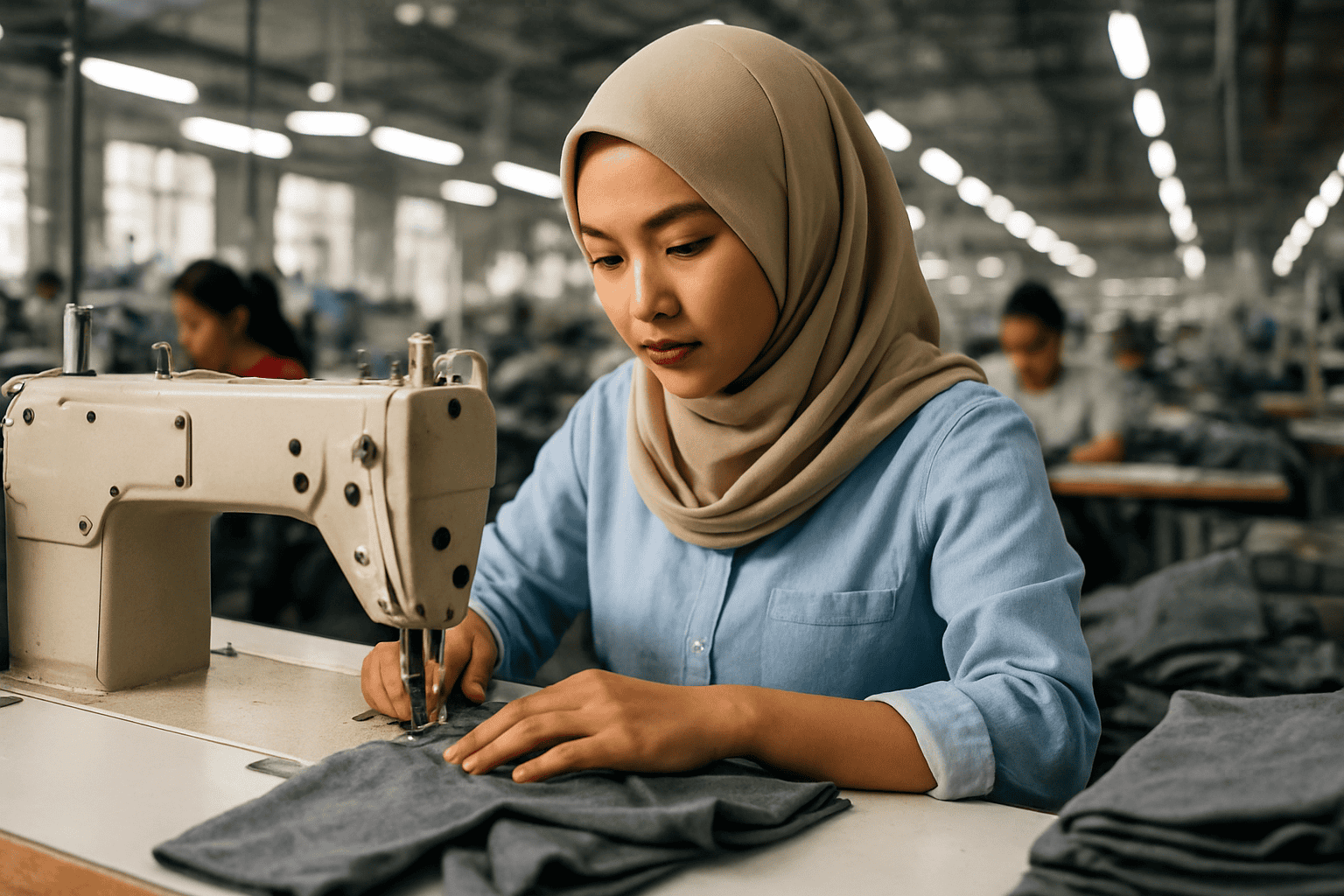
Fabric substitution is the trust test of garment manufacturing, and most buyers never think to set it until it has already failed them. The cloth arrives looking close to what was approved but hanging differently, washing strangely, or wearing out early, and the question that follows is the one this article answers: can a factory swap your fabric, when is it legitimate, and what should the paper trail look like on both sides?
Can a garment factory swap your fabric?
Honestly: yes, it happens, and the line between acceptable and unacceptable is narrower than most buyers realise. Substituting without your knowledge or consent is never acceptable, whatever the reason, because the fabric is not a detail of the garment, it is the garment’s hand, drape, weight, colour and wearing life. But a factory proposing a substitution openly, with a comparable-or-better replacement and your written approval before cutting, is not cheating; it is handling a supply problem the way supply problems deserve to be handled. The offence is never the swap itself. It is the silence.
When is a fabric substitution legitimate?
Three situations make substitution genuinely necessary, and they happen in every factory’s life. The mill discontinues the fabric or cannot supply the booked quantity in time. A tested lot fails the shrinkage or colourfastness checks, and shipping it would be worse than replacing it. Or a force majeure event, a mill fire, a shipping blockage, breaks a supply chain that was otherwise sound. In all three the test is the same: the replacement must be equal or better on the written specification, disclosed before cutting, and approved by you. What separates a professional factory from a careless one is not that the first two never occur; it is that the third condition, your consent, is treated as part of the process rather than an obstacle to it.
How a substitution should be approved
The procedure is short enough to demand in every order. Notice in writing, before cutting, naming the original and the proposed replacement. A specification comparison on paper: composition, weight, weave, shrinkage and colourfastness results for both. An approval swatch posted or handed over, big enough to judge hand and drape, not a thumbnail. Your written sign-off amending the order. And the seal sample updated, so the reference every future carton is judged against matches the fabric actually being shipped. None of that takes more than a few days, which is the honest answer to the factory’s oldest excuse, that there was no time to ask. Our guide to the fabric tests before production is where the comparison numbers come from, and a factory that cannot produce them for a proposed substitute has not tested it, which is itself the answer.
What substitution without consent means
A silent swap is a small defect with a large shadow, because it tells you how every other unspecified detail is being handled. If the cloth can be changed without a note, so can the thread, the trims, the stitching density and the finishing, and the seal sample you are paying to enforce has been quietly rewritten. The defence is documentary and costs almost nothing: put the fabric composition, weight and mill or equivalent standard in the specification, state that substitutions require written approval with an approval swatch, and reference the seal sample by name in the purchase order. Our article on tech pack mistakes that delay sampling covers the specification half, and our guide to vetting an Indonesian clothing manufacturer covers the factory half, because a substitute-happy floor usually announces itself long before your order arrives.
How to spot a substitution after the fact
If the cloth arrived before the paperwork did, the garment itself will usually confess. Lay it against your seal sample in daylight: a different mill’s cloth shows itself in the shade, the hand and the way a panel hangs. Weigh a cut panel on a kitchen scale against the specification’s GSM; a ten percent gap is not a rounding difference. Wash one garment before the batch is worn, because substitutes reveal themselves in shrinkage and colour loss first. And check the seam behaviour: a substitute with a different weave puckers where the approved fabric lay flat. If any of those fail, stop wearing the batch, photograph everything, and take the test report to the factory; a good factory makes it right, and a bad one confirms what the swap already told you. The same protection exists at small scale: our sister company Kizen Lab runs the identical no-swap policy on 500-piece programmes, so a label starts under these rules and grows under them.
How our floor handles substitution
Our own rule is simple enough to be printed on the wall: no fabric change without written approval and an approval swatch, ever, on any order. When a mill problem forces a proposal, the buyer receives the comparison specification, the swatch, and a revised date impact in one package, and the seal sample is re-signed if the substitute is approved. Lot control continues after approval too, because the fabric that was tested is the fabric that must be cut, lot by lot. Some programmes remove the question entirely: public service uniform manufacturing and similar institutional work are specified to the mill and dye lot precisely because the buyer’s tender cannot tolerate a substitute at all. If you want a floor where the fabric you approved is the fabric that arrives, our contact page starts that conversation.
Frequently asked questions
What is fabric substitution in garment manufacturing?
Any change from the fabric named in the approved specification to a different cloth, whether the change is the composition, the weight, the mill or the dye lot. Legitimate or not depends entirely on disclosure: a proposed, tested, buyer-approved replacement is process; a silent one is a breach.
Can a factory change fabric without telling you?
No responsible factory does. The specification and the seal sample are the buyer’s reference, and changing the fabric without written consent and an approval swatch breaks both, which is why our own rule is no substitution without written approval on any order.
What is an approval swatch?
A physical piece of the proposed replacement fabric, large enough to judge hand and drape, sent to the buyer for written sign-off before cutting begins. It is the fastest, cheapest quality control in the trade, and both parties should keep one.
What should a clothing contract say about fabric?
Composition and weight, the mill or an equivalent standard, test requirements for shrinkage and colourfastness, a substitution clause requiring written approval with an approval swatch, and a named seal sample as the reference. With those five lines, substitution becomes a managed event instead of a gamble.