Last updated: 5 October 2026
The sample round process inside a factory is invisible to most buyers, which is a pity, because understanding it explains almost everything about why some samples arrive perfect and some arrive late. From our floor: a sample is not sewn by one person in a corner; it moves through a pattern office, a cutting table, a dedicated line and a QC bench, and each stage either builds the buyer’s confidence or spends it. Here is how a factory actually runs its sample rounds, what happens at each stage, and how buyers get the best out of every round.
What happens when a tech pack arrives at a factory?
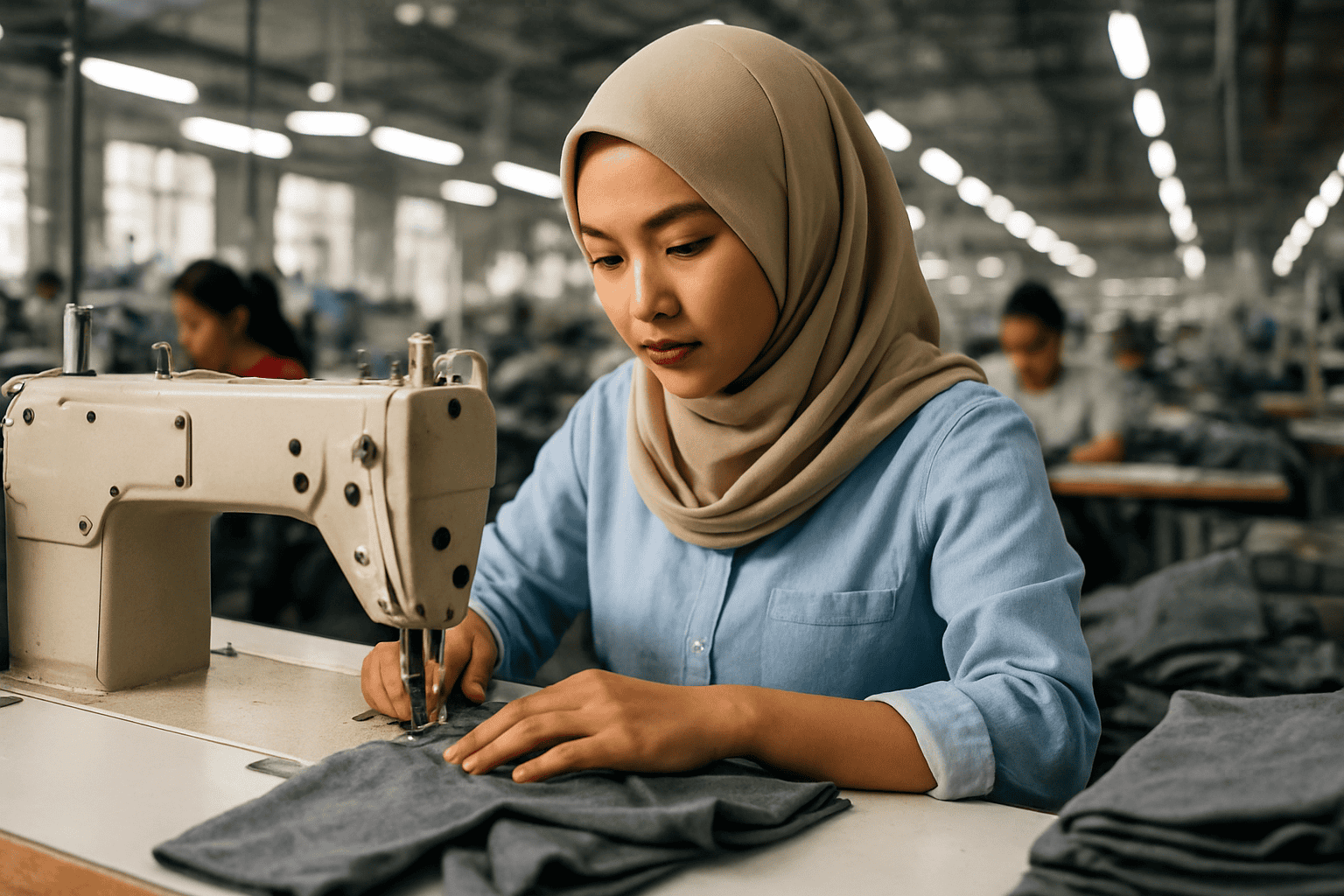
Stage one is the pattern office, not the sewing floor. A pattern maker reads the tech pack, translates the measurement chart into a graded pattern, and flags every point of measure that cannot be located on the sketch; those flags go back to the buyer before anything is cut, because the cheapest correction in the trade is the one made on paper. Fabric and trims are pulled against the bill of materials, or sourced if the spec calls for something the campus does not run, and any substitution question is asked now, in writing, with a swatch, the discipline our article on fabric substitution rules describes from both sides. Only when the pattern is confirmed and the fabric is on the table does the sample reach a sewing line, and even then it is sewn by senior operators, because a sample is the factory’s first impression of your standard.
How does a factory QC its own samples?
Before a sample ships, it passes a bench inspection that mirrors what the buyer should do on arrival: every point of measure recorded against the spec with its tolerance, construction checked seam by seam, colour assessed in a daylight box, and the whole garment photographed. The inspection sheet travels with the sample, so the buyer sees not just the garment but the factory’s own measurements of it, which is a transparency habit worth demanding from any supplier; our article on how to read a tech pack explains why the read-back matters as much as the inspection. A factory that self-inspects honestly is telling you something important: its QC found the small deviations before you did, and documented them rather than hiding them.
Why do sample rounds sometimes need three attempts?
When a third round happens, the cause is usually upstream of the sewing. Fit changes at round two are normal, because a flat pattern meets a real body for the first time and grading assumptions meet real proportions. Rounds that drift beyond that are diagnostics: fragmented feedback restarts the factory’s queue every time it lands; approvals given verbally and later contradicted cost a full round to untangle; and a style whose fabric keeps changing is a decision problem wearing a sampling costume. Buyers who send one consolidated response per round, the discipline our guide to tech pack mistakes that delay sampling recommends, almost never need a third round on simple styles.
How do sample rounds differ for uniform programmes?
Uniform and programme work adds a layer fashion sampling does not have: the wear test. A tech and call centre uniform programme, for example, is sampled, then worn for days by people doing the actual job, because a collar that looks right on a mannequin can fail by three in the afternoon; our tech and call centre uniform manufacturing programmes build wear testing into every round. Grading also runs harder, across more sizes and more body types than a fashion drop, and the wash testing extends to dozens of cycles rather than one, because uniforms are judged after their fiftieth wash, not their first. The structure is the same as fashion sampling; the standard is simply endurance.
What factories wish buyers would check
There is a short list the floor wishes every buyer would cover, because it prevents the disputes nobody enjoys. Wash the sample before judging the hand, so fabric conversations start from washed fabric. Check the garment inside as carefully as outside, because internals predict how the bulk will age. Compare the sample with the previous season’s sample, when there is one, rather than with memory. And read the inspection sheet we send with the sample before writing feedback, because half of it may already answer the other half’s questions. Buyers who cover these arrive at approval with the same picture the factory has, and that shared picture is the whole point of the rounds, the same standard our guide to garment quality consistency extends into bulk and reorders.
How does a buyer get the best out of every round?
Three habits, all of them free. Respond in one consolidated batch per round, annotated photographs beside the spec pages. Approve or reject every point explicitly, in writing, and log the round in the tech pack’s revision sheet. And treat the factory’s inspection sheet as the start of the conversation, not the end: reading it and responding to it is what turns two parties exchanging garments into one team building a standard. Buyers who work this way find their second rounds shorter, their third rounds rarer and their bulk calmer, which is the whole return on understanding the process. If that is the process you want on your next sample, our contact page starts it.
Frequently asked questions
How long does a sample round take in a factory?
One to two weeks per round for a simple style: pattern work a few days, fabric a few days, sewing and inspection the rest. The variable is rarely the sewing; it is how quickly consolidated feedback arrives and how complete the tech pack was on arrival.
Who sews the samples in a factory?
Senior operators on a dedicated sampling line, because the sample is both a prototype and the factory’s first proof of competence. This is also why samples can look better than bulk; bulk runs on mixed-skill lines, which is exactly why the seal sample discipline exists.
Does the factory inspect its own samples?
A professional floor does, against the same points of measure the buyer will use, and it ships the inspection sheet with the garment. Ask for that sheet before your first sample ships; a factory that measures its own work and shares the numbers is a factory worth measuring.
What is a wear test on a uniform sample?
A sample worn for several real working days by people doing the actual job, checking comfort, movement and wash durability before bulk approval. Programmes like ours build it into every uniform sampling round, because office-proof is not the same as job-proof.