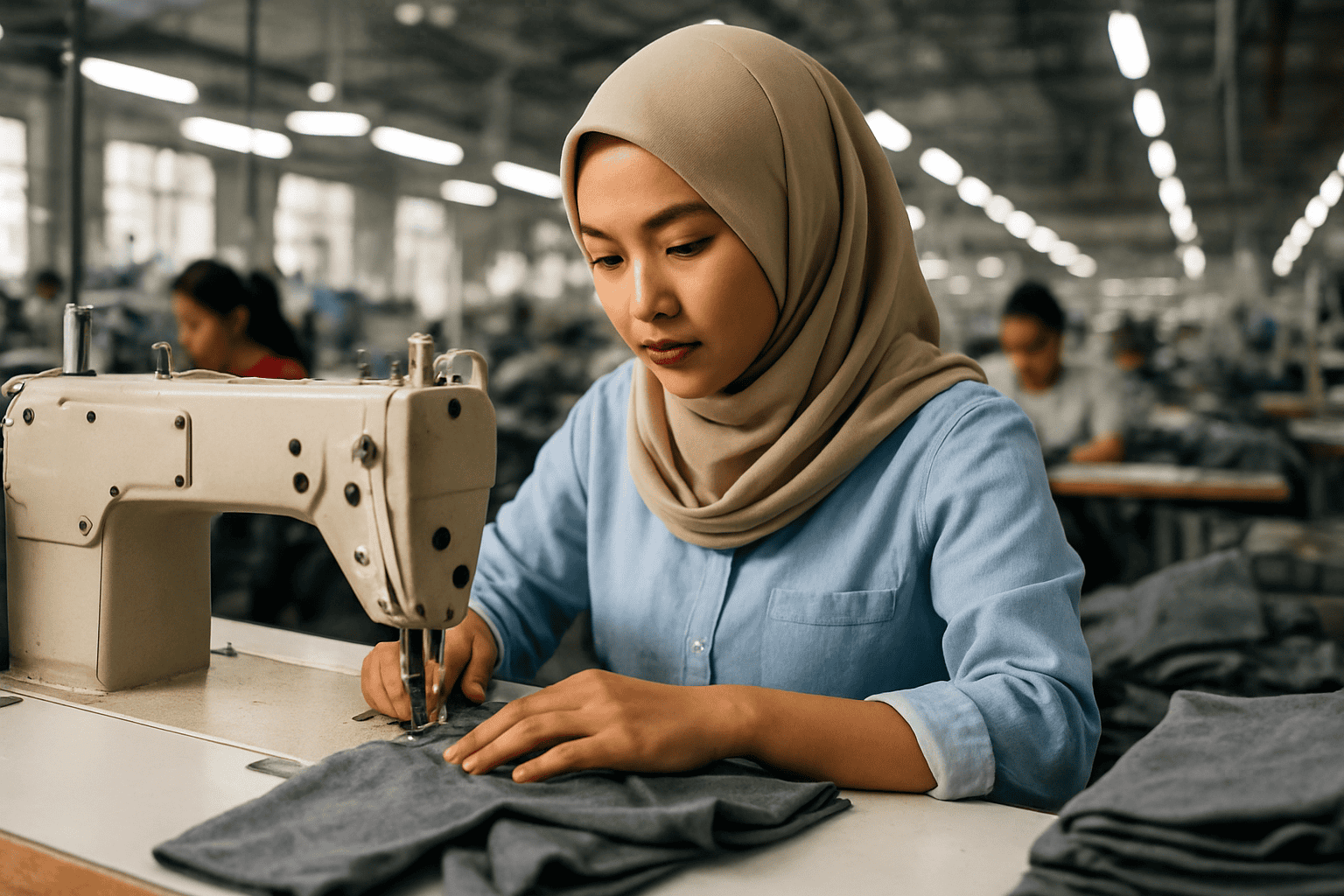
Speed to market in apparel is built, not rushed, and the difference between the two is the whole story of a factory calendar. Brands talk about speed as if it were a personality trait of certain suppliers; from the floor it looks more like arithmetic, decisions arriving before the calendar needs them, slots booked before they are scarce, and nothing important travelling by memory. Here is where time is genuinely lost in apparel production, what the fast operators do differently, and how our woven programmes hold pace without a rush fee in sight.
What does speed to market mean in apparel manufacturing?
It is the full run from confirmed design to goods on the water: sampling, fabric, production and freight as one clock, not four. What has changed in 2027 is that buyers measure that clock differently; sourcing commentary such as Arcus Group’s apparel outlook notes that brands now weigh resiliency against lead-time shocks, port delays and material shortages alongside cost per unit. Speed has stopped being a luxury positioning and become a risk measure: the label that can move in weeks absorbs a shock that strands a slower competitor’s season.
Where the time is really lost
Factory calendars tell an uncomfortable story: production itself is rarely where orders fall behind. Industry analyses such as BlueKaktus’s speed-to-market study estimate that more than 30 percent of total apparel cycle time is spent waiting between processes, and our own bookings match the pattern. The gap between an approved sample and a started line is usually approval latency, feedback arriving in instalments, fabric decisions reopened after the cutting schedule was drawn, freight treated as a later problem. The sewing floor runs to the timetable it is given. When buyers ask us for speed, the honest answer is that we can manufacture quickly, and they can decide quickly, and the order only moves at the speed of the slower half.
Why fast-fashion speed is a system, not a sprint
The famous fast-fashion cycle, weeks from sketch to shelf where traditional wholesale takes six to twelve months, is documented across industry studies including the MDPI analysis of fashion supply chains and sourcing explainers such as GoCubic’s. What those systems prove is not that sewing got faster; it is that everything around the sewing got organised. Small design batches, fabric held close to the line, decisions decentralised, and logistics running in parallel with production instead of after it. A factory can offer that structure at programme scale: our own lines cut from one digital pattern source, test fabric before production, and check in-line, which is speed as a by-product of control. Brands wanting the mechanics can see it in our guide to factory capacity booking, because a booked slot on a real calendar is the fastest thing in the trade.
How 1,000-piece programmes hold pace
There is a persistent myth that scale means slowness. A well-run 1,000-piece woven programme holds pace because its risks were retired before the first cut: the pattern is digital and graded, the fabric is tested and booked against the calendar, and in-line checks catch drift at the operation where it begins, so the goods move to freight on the day they were promised. Our breakdown of what goes into a clothing manufacturer quote shows the same logic in the price: a quote built on a real calendar carries no padding for the unknown, and quotes without padding are the ones that ship on time. Pace, like quality, is designed at the quote stage, not recovered at the port.
What buyers can do to speed the calendar
Half of speed belongs to the buyer, and it is the cheaper half. Send one consolidated response per sample instead of a week of fragments. Approve on the date you promised, even when the decision is merely good rather than perfect, because a good decision this week outranks a perfect one next month. Put the specification in writing before production so the floor is not guessing, using our list of tech pack mistakes that delay sampling as the checklist. And treat freight as part of production, booked in parallel, because a container that sails on schedule is the whole point of everything upstream. Buyers who run this discipline are the ones our calendar never surprises, and their orders are the ones that read the same in the shipping documents as they did in the quotation.
Programmes where the pace is non-negotiable
Some sectors measure speed to market in days rather than seasons, and their programmes are the clearest proof of the calendar principle. Aviation uniform manufacturing lives against fleet rollouts and crew intake dates that shift for nobody; school programmes run backwards from term one; hospitality fits its refits between bookings. These are the programmes that taught our campus its discipline, and the same structure is available to a label at its first 500 pieces through our sister company Kizen Lab, which runs FOB production from 500 pieces on the same campus and calendar. If your launch has a date that matters, put it in front of us through our contact page and we will show you the calendar it needs.
Frequently asked questions
How long does it take to produce apparel?
Budget one to two weeks for sampling and six to twelve for bulk, with fabric development longer, and freight on top. The spread comes less from sewing speed than from how early decisions and bookings land; fast operators compress the cycle by removing the waiting between stages.
Why is speed to market important in fashion?
Because information ages fast. A style launched inside its demand window sells at full price and generates the sales data that funds a confident reorder, while the same style launched late meets markdown season and teaches you nothing in time to act on.
Can a factory speed up production without a rush fee?
Yes, and the lever is the calendar rather than the line: booked slots, pre-scheduled fabric testing, approvals returned on promised dates and freight arranged in parallel. Rush fees buy queue-jumping; discipline removes the queue entirely.
What is the fastest way to launch a new clothing style?
Run the smallest order that tests the style properly, with a factory whose structure is already fast: digital pattern-making, tested fabric, in-line checks and a booked slot. A 500-piece test on our sister campus is the quickest honest route to market, and it graduates onto these woven lines when the style earns it.