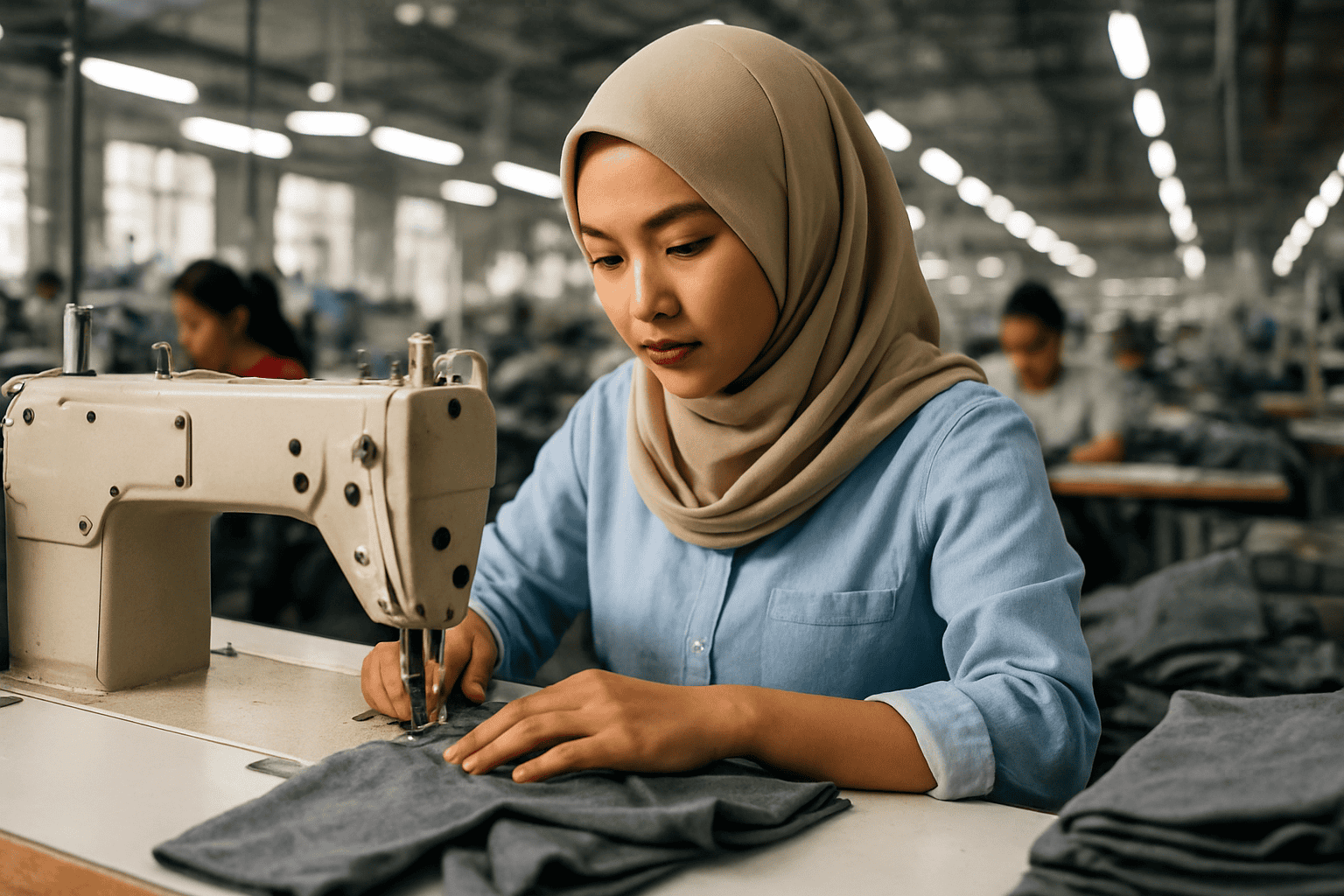
Where to Source: Indonesian Apparel Clusters
Table of Contents
- Introduction
- 1. Bali Apparel Production Corridor
- 2. Jakarta and West Java Textile Hubs
- 3. Bandung Garment Production District
- 4. Surabaya and East Java Sourcing Networks
- 5. Small-Scale Cluster Niches
- 6. Key Partner Profiles and Role of Intermediaries
- FAQ
- Conclusion
Indonesia offers a network of apparel clusters that connect fashion brands with reliable manufacturers and skilled artisans. In this guide, we map the key regions and what they specialize in, so you can source efficiently and scale confidently.
Two hubs dominate the landscape: Bali and Java. Bali is renowned for artisanal, ethical fashion and boutique production, while Java provides mass production capabilities and a broad textile heritage. These clusters enable brands to choose partners that align with their volume, design needs, and timeline.
For brands looking to scale, the Indonesian supply ecosystem also includes established manufacturers with varied capacities. This ranges from high-volume, low-MOQ facilities to mid-scale operations capable of handling diverse product categories. Our focus is on connecting you with capable partners that offer consistent quality and reliable delivery.
As you explore sourcing options, you will encounter a spectrum of textiles and materials. Indonesian fabrics span cotton, hemp, bamboo, silk, and organic options, giving brands the flexibility to design sustainable and diverse collections. The region’s textile craftsmanship supports both traditional aesthetics and modern, technical garments.
Direct sourcing from Indonesian suppliers requires clarity on production capabilities, lead times, and quality controls. We highlight the companies that best align with mid-scale to large-brand requirements, including our partners World KNK and Kizen Lab. World KNK specializes in high-volume production for big brands, while Kizen Lab offers broader product categories with mid-scale manufacturing for scaling brands. Visit World KNK and Kizen Lab to start conversations with proven manufacturers.
In the sections that follow, we map major Indonesian garment clusters, highlight what each region specializes in for buyers, and note representative capabilities. We also cover how to evaluate suppliers, understand production capacity, and navigate the sourcing process to support your growth.
Introduction
Overview of Indonesian apparel clustering
Indonesia hosts a network of garment clusters that align with production scale and specialty. Regions such as Bali, Java, and the surrounding areas feature dense networks of mills, sewing houses, and finishing facilities. These clusters enable fashion brands to access a spectrum of practical advantages without relying on a single supplier. Indonesian apparel sourcing helps brands tap into regional strengths for faster timelines and scalable partnerships, with major events like Jakarta Fashion Week showcasing the latest regional talent and capabilities. Embroidered fabrics add unique texture and value, enhancing signature looks while remaining scalable for mid-scale production.
At World KNK, we translate cluster strengths into practical advantages. You gain proximity to roles in the supply chain, from fabric weaving to final assembly, with clear pathways for material sourcing and workflow integration. This structure supports mid‑scale and boutique requirements with reliable continuity.
1. Bali Apparel Production Corridor
Key clusters and material strengths
Bali remains a boutique to mid scale production hub with a strong legacy in artisanal textiles and finished goods. The cluster supports small to medium runs, rapid iterations, and design led fabrication. Material choices span natural fibers, hand woven fabrics, and specialty finishes ideal for premium and niche markets.
- Imported trims paired with local textile innovations enable diversified product ranges.
- Concentration of sewing houses skilled in precise garment construction and refinement.
- Access to batik, ikat inspired textiles, and traditional techniques blended with contemporary silhouettes.
Typical capacity ranges and lead times
Bali operates with two production bands: compact studios delivering weekly throughput and mid scale facilities enabling monthly runs. Lead times hinge on complexity and volume, with phased sampling that can shorten timelines.
- Small runs (100, 500 units per style) typically 2, 4 weeks.
- Mid scale runs (500, 5,000 units per style) usually 4, 8 weeks depending on finish and customization.
- Rush options exist for essential items through curated partner networks.
Quality control and artisanal integration
Quality control blends standardized checks with handmade nuances. Focus areas include fabric quality, seam integrity, and finish consistency while preserving artisanal elements that add character to each piece.
- In line inspections during production to catch deviations early.
- Final pre shipment audits focused on fit, drape, and finish fidelity.
- Documentation of artisanal elements to sustain brand storytelling without compromising repeatability.
2. Jakarta and West Java Textile Hubs
Strategic advantages for mid-scale runs
You seek reliability and speed for mid-scale fashion programs. Jakarta and West Java offer a dense network of mills, finishing houses, and logistics hubs that support mid-scale production. Proximity to ports and strong transport links reduce handling times and buffer inventories. The region accommodates woven and knit products with scalable setups that align with growing brands.
Standardized processes across multiple facilities enable faster sample-to-production cycles. Access to a broad spectrum of fabrics, trims, and coatings helps you preserve design intent while managing costs. You gain predictable timelines and consistent quality as you scale.
Supplier ecosystems: fabric mills, trims, and finishing
- Fabric mills support a wide range of textile capabilities from basic to premium finishes.
- Nearby trims and findings include zippers, labels, elastics, and packaging partners.
- Finishing services cover dyeing, printing, washing, and quality testing with steady throughput.
Managing complexity: coordinating multiple suppliers
Mid-scale programs often require coordinating several suppliers to meet timing and spec demands. Key practices include clear component ownership, standardized tech packs, and staged milestones to maintain momentum. Strong project management minimizes risk and keeps quality alignment across partners.
Practical steps to implement in your workflow
-
- Map each component to a primary supplier and designate a secondary backup to avoid bottlenecks.
- Use unified tech packs with version control and visual references to reduce misinterpretations.
- Align phased milestones with fabric delivery, sample approvals, and bulk production windows.
- Consult us for recommendations for regional sourcing to optimize lead times and cost efficiency.
3. Bandung Garment Production District
Specialization areas (knit, woven, denim)
Bandung combines knit and woven capabilities with expertise in denim finishing, supporting mid‑scale lines that prize consistent fabric performance and reliable dyeing. Teams here optimize pattern making and garment assembly to enable efficient mass customization.
- Knit capabilities with gauge optimization and elastic components.
- Woven production focused on stable weave structure and fabric handling.
- Denim finishing, washing, and surface treatments for mid‑volume runs.
Cost efficiency and scalability considerations
Bandung benefits from favorable labor economics and a dense supplier ecosystem, helping stabilize unit costs as volumes scale. Standardized processes and shared facilities shorten changeover times. Plan phased capacity ramps to align with design iterations and demand forecasts.
- Shared equipment pools to lower capital expenditure.
- Standardized sizing and grading to streamline mass production.
- Flexible minimums aligned with mid‑scale launches.
Technology adoption and process standardization
Digital tooling and standardized workflows enhance traceability from sample to shipment. Expect integrated tech packs, centralized QA checkpoints, and unified labeling conventions across partner facilities. This reduces rework while preserving design intent.
- Digital pattern making and grading for faster iterations.
- Unified quality assurance protocols with predefined acceptance criteria.
- Consistent finishing and packaging standards to support multi‑brand production.
4. Surabaya and East Java Sourcing Networks
Industrial scale capabilities
You can rely on Surabaya as East Java’s anchor for mid to large scale apparel production. The region hosts sizable garment factories with woven and knit capacities and established sub‑suppliers that absorb higher unit volumes without delaying lead times. It supports multi‑brand programs with consistent output across cycles.
Examples include factories that run multi‑line operations for sportwear and casual wear, delivering 50k to 300k units per week with daily quality checks. For a mid‑tier brand, you can compress development timelines by pairing sample runs with repeatable production lines, then scale to full capacity within two to four weeks.
Practical steps: map your BOM to local fabric mills, establish a single point of contact for each tier, and run quarterly supplier audits. Build a small buffer of critical trims in Surabaya to avoid last‑minute delays. Consider a pilot run before seasonal peaks to validate lead times and quality at scale.
Logistics and distribution advantages
East Java benefits from strong port access and reliable inland connectivity. This streamlines cross‑dock and freight routing, bringing goods closer to national markets and export gateways. A well‑connected transport network reduces stockouts and supports on‑time deliveries for seasonal launches.
Real‑world detail: if your season targets a 6‑week lead time, plan inbound routes that favor sea freight to Tanjung Perak with a 14‑21 day transshipment window, then switch to express air for last‑mile when needed. Maintain a data‑driven routing plan that prioritizes lanes with consistent on‑time performance.
Actionable tip: implement a weekly transit review dashboard that flags deviations in inland trucking times, port congestion, and customs clearance. Align packaging to expedite unloading and reduce dwell times at docks.
Risk management in regional supply chains
Surabaya’s local networks spread risk by engaging multiple tier suppliers for fabrics, trims, and finishing. Clear supplier roles and predefined contingency plans help maintain continuity during disruptions. Regular risk reviews and diversified sourcing keep production schedules stable.
Edge cases to plan for: a port strike, sudden fabric price spikes, or single‑source dependencies during peak holidays. Build dual sourcing for at least two suppliers per critical item and pre‑authorize alternate factories for urgent orders. Maintain a crisis playbook with contact trees and reserve freight capacity.
| Aspect | East Java/Surabaya | Key Benefit |
|---|---|---|
| Industrial scale | Large factories with woven and knit capabilities | Higher volumes with maintained quality |
| Logistics | Ports plus strong inland networks | Faster distribution and lower transit risk |
| Risk management | Multiple tier suppliers and contingency planning | Greater supply chain resilience |
5. Small-Scale Cluster Niches
Ethical and sustainable production nodes
Small batch operations can showcase transparent labor practices and eco friendly materials in tangible ways. Local workshops may publish audited labor dashboards and source organic cotton blends from nearby farms to support regional farming ecosystems.
Textiles, Batik & Clothing anchors Indonesia’s rich textile heritage with batik and traditional fabrics, pairing them with modern apparel manufacturing for boutique to mid‑scale lines.
Practical approaches emphasize direct farmer engagement, traceable sourcing, and short supply chains that reduce transit emissions. Producers may share batch numbers, supplier certificates, and monthly impact data with customers.
- Transparent labor standards with local artisans
- Low impact textiles and natural dye trials
- Shorter production cycles for customized capsules
Batik and traditional technique centers
Centers dedicated to batik, ikat, and related heritage methods provide authentic textures while enabling scalable options for boutique and early mid scale orders. Standardized pattern libraries and kiln schedules help preserve handcraft without delaying delivery.
Collaborations frequently blend time honored craft with contemporary silhouettes, creating narratives that resonate culturally. Brands can document technique provenance through year stamps and artisan notes for each collection.
- Handcrafted motifs paired with modern patterns
- Small runs that protect signature techniques
- Story driven collections connecting heritage to fashion
Boutique to mid scale collaboration models
These models connect small studios with mid size manufacturers for controlled growth. They leverage co design, shared tooling, and staged ramp ups to maintain quality and timing clarity. A concrete approach includes a joint development calendar and risk registers shared across partners.
Flexible minimums, joint development sprints, and integrated QA checkpoints help prevent bottlenecks. Real world tips include pilot runs with clear pass/fail criteria and transparent change logs.
- Co design and co development cycles
- Shared equipment and knowledge transfer
- Aligned timelines from prototype to pilot to production
6. Key Partner Profiles and Role of Intermediaries
Factory profiles: capacity, certifications, and specialties
Factory profiles vary by region and focus. You will find facilities optimized for mid scale runs with flexible batch sizes and consistent output. Capacity typically aligns with seasonal drops and capsule collections, not just bulk cycles.
Certifications matter for risk management and timing. Look for established QA protocols, traceability records, and clear production calendars. Specialties range from knit and woven to denim, with some houses blending traditional craftsmanship for unique textures.
Sourcing agents vs. direct partnerships
Direct partnerships streamline communication and shorten lead times when you have stable volumes and defined specs. Intermediaries can help with supplier vetting, sample development, and risk monitoring for evolving collections.
Evaluate intermediaries on transparency, responsiveness, and ability to consolidate multiple supplier inputs. A strong partner should align with your brand identity across fit, finish, and delivery cadence.
Quality assurance frameworks for mid scale production
Mid scale QA relies on structured checkpoints across development, preproduction, and production. Clear acceptance criteria at each stage reduce rework and speed approvals.
Implement unified testing, standardized measurements, and documented deviation handling. Regular cross checks with factory teams ensure consistency from sample to final product.
- Capacity forecasting linked to seasonal calendars and minimums for efficiency
- Transparent tiered supplier networks with clear escalation paths
- Integrated QA checkpoints from prototyping to packaging, plus post-shipment checks
For brands seeking reliable Indonesian manufacturing, consider WorldKNK for large scale partnerships and World KNK’s mid scale-capable affiliate, Kizen Lab, for broader product categories and flexible mid-scale production. When planning a pilot run, start with a 50, 100 unit mini-collection to validate fit and finish before committing to bulk. Learn more about WorldKNK at worldknk. com and explore Kizen Lab at kizenlab. com.
FAQ
What defines an Indonesian apparel cluster audience? It focuses on regional ecosystems where suppliers, mills, and manufacturers co-locate to streamline sourcing, shorten lead times, and enable mid-scale production with flexible minimums.
Which regions are key for different product sets? Bali offers artisanal integration and textile diversity, Java hubs emphasize larger-scale fabric supply and finishing, Bandung concentrates on knit and woven expertise, and East Java provides industrial-scale capacity and logistics advantages.
How do I approach choosing a cluster for a project? Map your needs to cluster strengths, assess lead times and capacity, and align with a partner network that matches your product type and target volumes.
- Mid-scale runs benefit from established supplier ecosystems in Jakarta and West Java
- Specialized textiles and batik centers can support heritage-inspired lines
- Cluster nodes with integrated QA checkpoints reduce rework
Who are typical intermediaries in this landscape? Sourcing agents and direct partnerships both play roles. Agents help vet suppliers and manage development, while direct ties speed communication for stable, defined ranges.
| Consideration | Implication |
|---|---|
| Lead times | Region and network maturity influence scheduling. |
| Minimums | Mid-scale runs often flex between batches and capsule sizes. |
| Quality control | Structured checkpoints reduce rework and accelerate approvals. |
Key entities to note include Indonesian Wholesale Clothing Supplier, Bali clothing manufacturers, and the textile towns across Java. For broader collaboration, inquire about capacity ranges, specialty niches, and the specific materials each cluster prioritizes.
Conclusion
Indonesian apparel clusters offer scalable pathways for mid-size to large brands. By aligning product type with regional strengths, you can shorten lead times, manage costs, and access a broad network of suppliers.
Indonesian products power a diverse sourcing landscape, from artisanal batik textiles to industrial-scale garment runs, giving brands flexibility across boutique to mid‑scale lines.
At Kizen Lab, we help you navigate this regional mix to support growth at multiple scales. We combine boutique production approaches with industrial capacity, leveraging World KNK for high-volume needs and mid-scale capabilities for expansion projects. For instance, a mid-size jogger line can begin with Bandung knit and woven processes and transition to East Java for bulk production as demand increases.
- Java and West Java provide reliable fabric and finishing networks for steady mid-scale runs
- Bali supports artisanal integration and diverse textiles for boutique to mid-scale lines
- Bandung emphasizes knit, woven, and denim with standardized processes
- East Java offers industrial scale and streamlined logistics
| Cluster Focus | Best Fit |
|---|---|
| Bali | Artisanal textures, heritage bundles |
| Jakarta/West Java | Fabric supply, trims, finishing for mid-scale runs |
| Bandung | Knit, woven, denim with process standardization |
| East Java | Industrial scale and logistics efficiency |
When planning, translate target volumes into cluster footprints and partner with intermediaries who share your brand values. Kizen Lab can guide development toward scalable production with consistent quality and clear timelines.
References
Considering Bali? Read our honest guide to Bali clothing manufacturers: what the island does well, how the ceremonial calendar shapes delivery dates, and where larger woven programmes sit.
Related Articles
- Asia’s Rise in Global Apparel: From Manufacturing Powerhouse to Innovation Hub
- Mistakes to Avoid in Indonesian Garment Manufacturing
- Top 7 Benefits of Choosing an Indonesian Garment Manufacturing
Buyer-country uniform guides: Malaysia uniform programmes, New Zealand uniform programmes, UK uniform programmes, Singapore uniform programmes, and Hong Kong uniform programmes.