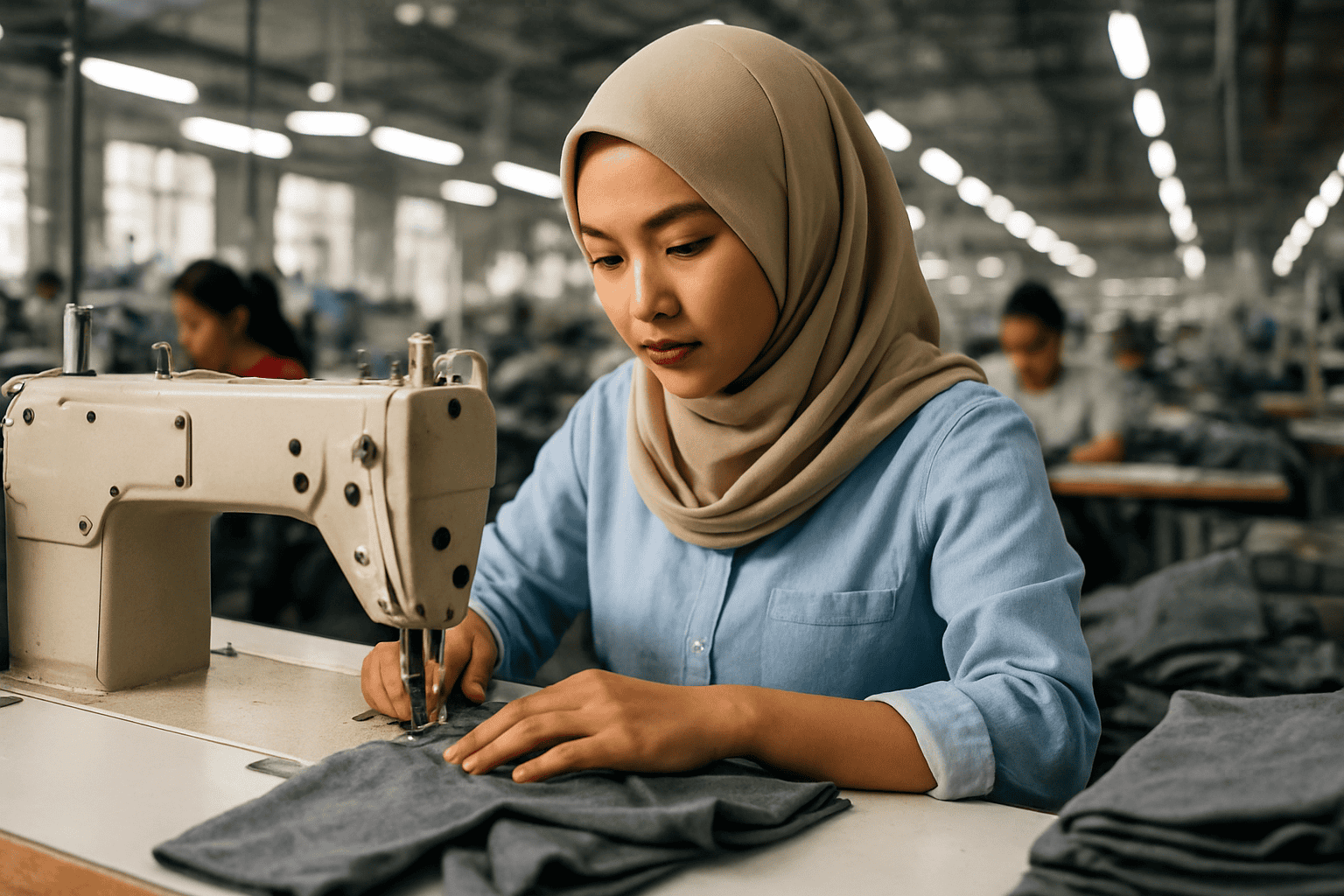
A private-label abaya programme runs on a simple division: you bring the brand, the factory brings the production. The brand half is the artwork, the label designs, the packaging spec and the size plan. The production half is everything from pattern grading through cutting, sewing, label application, inspection and the export documents that clear your container. The programme numbers: 1,000 pieces per style, sampling in one to two weeks per round, bulk in six to twelve weeks, FOB from an Indonesian port.
The abaya manufacturer page covers the programme overview. This post is the step-by-step walkthrough from tech pack to shelf.
What does the brand supply at the start of a private-label abaya programme?
Four inputs, and the target market is one of them. The tech pack or clear reference garments, with measurements, construction notes and fabric direction. The brand artwork: logo files, label designs, hangtag artwork, packaging preferences. The size ratios, which decide how the 1,000 pieces split across the run. And the target market, because Arabic care labels for Saudi Arabia print to different requirements than generic export labels.
These inputs are what the quote is built on. Without them, the factory estimates; with them, the factory prices.
What does the factory produce before bulk?
Three stages between the tech pack and the cutting table. The Lectra digital pattern, graded across the size run from a single base pattern, so every size inherits the same balance. Sampling, one to two weeks per round, where the silhouette, the construction and the fabric approval are confirmed in cloth. And the PP sample, the last checkpoint that freezes every specification, trim and label position before bulk is booked.
Fabric is confirmed in the same window. Custom development starts at 1,500 pieces and adds its own fabric lead time. Brand labels and packaging are produced to your artwork.
What happens during bulk production?
Cutting runs against a Lectra-planned marker, with every panel nesting to the fabric width for minimum waste. Sewing follows the PP specification. Brand labels are applied in production, so the garment that comes off the line is the garment that goes into the carton. Finishing presses, trims final thread ends, and the final inspection checks against the approved seal sample before packing.
Packing follows your spec: polybag, carton marks, the ratio per carton matching your size split. The export document set, commercial invoice, packing list and bill of lading, is built from the production data, and your forwarder builds the Gulf import file from it.
Where are the decision points in the programme?
The fabric approval, where the handfeel and the opacity are confirmed against the bulk dye lot. The PP sample sign-off, where the complete specification is frozen. And the shipping decision, which side of Eid the stock lands on, which freight mode, and which port. Each decision gates the next stage; each delay in a decision pushes the stages after it.
What does the shelf look like?
The garment that reaches your Gulf warehouse carries your label, your hangtag, your packaging, cut from the fabric you approved, in the sizes you specified. The season timing sits on our Ramadan 2027 production page.
Private-label abaya programme questions
What is the minimum order for a private-label abaya programme?
1,000 pieces per style, or 1,500 where custom fabric development is needed. Our sister company Kizen Lab produces private-label abayas and modest wear from 500 pieces per style.
Can I supply my own labels and packaging?
Yes, and that is the normal private-label input. Send the artwork early enough for the labels to be produced before bulk starts.
What documents does the factory provide for the Gulf import file?
The factory supplies the production documents your importer’s certification body asks for. The importer of record owns the SABER certificates, and Arabic care labels print to Saudi requirements: fibre content, manufacturer, origin and care instructions.
How does grading stay consistent across the size run?
One Lectra digital base pattern, graded digitally, so every size inherits the same balance. The sampling rounds confirm the grading before bulk is booked.
Send your brand artwork and size plan through the quote page or contact us, and the programme gets mapped from tech pack to shelf before anything is committed.
يجري برنامج العبايات ذات العلامة الخاصة على تقسيم بسيط: أنت تجلب العلامة، والمصنع يجلب الإنتاج. نصف العلامة هو التصميم وتصاميم البطاقات ومواصفات التغليف وخطة المقاسات. ونصف الإنتاج هو كل شيء من تخطيط الأنماط عبر القص والخياطة وتطبيق البطاقات والفحص ووثائق التصدير التي تُخلي حاويتك. الأرقام البرنامجية: 1,000 قطعة لكل موديل، عينات من أسبوع إلى أسبوعين لكل جولة، جملة من ستة إلى اثني عشر أسبوعاً، FOB من ميناء إندونيسي.
تغطي صفحة مصنع العبايات نظرة البرنامج العامة. وهذه التدوينة هي الاستعراض خطوة بخطوة من كتيّب المواصفات إلى الرف.
ماذا تقدم العلامة في بداية برنامج عبايات ذات علامة خاصة؟
أربعة مدخلات، والسوق المستهدف أحدها. كتيّب المواصفات أو مراجع واضحة بالقياسات وملاحظات البناء واتجاه القماش. تصميم العلامة: ملفات الشعار وتصاميم البطاقات واللافتات وتفضيلات التغليف. تناسق المقاسات، الذي يقرر كيف تتوزع الـ1,000 قطعة عبر التشغيلة. والسوق المستهدف، لأن بطاقات العناية العربية للسعودية تُطبع وفق متطلبات تختلف عن بطاقات التصدير العامة.
وهذه المدخلات هي ما يُبنى عليه عرض السعر. بدونها يقدّر المصنع؛ بها يسعّر.
ماذا ينتج المصنع قبل الجملة؟
ثلاث مراحل بين كتيّب المواصفات وطاولة القص. النمط الرقمي على Lectra، مقسّماً عبر سلسلة المقاسات من نمط أساس واحد، فيرث كل مقاس الاتزان نفسه. العينات، من أسبوع إلى أسبوعين لكل جولة، حيث تُعتمد الصورة الظلية والبناء واعتماد القماش بالقماش. وعينة ما قبل الإنتاج، آخر نقطة فحص تُجمّد كل مواصفة ومشغولة وموضع بطاقة قبل حجز الجملة.
ويُعتمد القماش في النافذة نفسها. التطوير الخاص يبدأ من 1,500 قطعة ويضيف مدته القماشية الخاصة. وبطاقات العلامة والتغليف تُنتج وفق تصميمك.
ماذا يحدث أثناء إنتاج الجملة؟
يجري القص وفق تخطيط Lectra، وكل قطعة تتداخل عرض القماش لأقل هدر. وتجري الخياطة وفق مواصفة PP. وتُطبَق بطاقات العلامة أثناء الإنتاج، فالقطعة التي تخرج من الخط هي القطعة التي تدخل الكرتون. ويكوي التشطيب ويقتطع خيوط الزوائد، والفحص النهائي يجري مقابل العينة المعتمدة قبل التعبئة.
ويتبع التغليف مواصفاتك: البولي باج وعلامات الكراتين ونسبة كل كرتون مطابقةً لتوزيع مقاساتك. وتُبنى حزمة وثائق التصدير، الفاتورة التجارية وقائمة التعبئة وسند الشحن، من بيانات الإنتاج، ويبني منها معيد الشحن ملف الاستيراد الخليجي.
أين تقع نقاط القرار في البرنامج؟
اعتماد القماش، حيث يُثبَّت الإحساس اليدوي والعتامة مقابل صبغة الجملة. وتوقيع عينة ما قبل الإنتاج، حيث تُجمَّد المواصفة الكاملة. وقرار الشحن: أي جهة من العيد تهبط عليها البضاعة، وأي نمط شحن، وأي ميناء. وكل قرار يفتح المرحلة التالية؛ وكل تأخير في قرار يدفع المراحل التي تليه.
كيف يبدو الرف؟
القطعة التي تصل مستودعك الخليجي تحمل بطاقتك ولافتتك وتغليفك، مقصوصةً من القماش الذي اعتمدته، بالمقاسات التي حددتها. وتوقيت الموسم في صفحة إنتاج رمضان 2027.
أسئلة برنامج العبايات ذات العلامة الخاصة
ما الحد الأدنى لبرنامج عبايات ذات علامة خاصة؟
1,000 قطعة لكل موديل، أو 1,500 عند تطوير قماش خاص. وتنتج شركتنا Kizen Lab عبايات وملابس محتشمة ذات علامة خاصة من 500 قطعة لكل موديل.
هل يمكنني تقديم بطاقاتي وتغليفي الخاصين؟
نعم، وهذا هو المدخل الطبيعي للعلامة الخاصة. أرسل التصميم مبكراً بما يكفي لإنتاج البطاقات قبل بدء الجملة.
ما الوثائق التي يوفرها المصنع لملف الاستيراد الخليجي؟
يوفر المصنع وثائق الإنتاج التي تطلبها جهة التصديق لدى مستوردك. والمستورد صاحب السجل يملك شهادات سابر، وبطاقات العناية العربية تُطبع وفق متطلبات السعودية: تركيب الألياف والمصنع والمنشأ وتعليمات العناية.
كيف يبقى التقسيم متسقاً عبر سلسلة المقاسات؟
نمط رقمي أساس واحد على Lectra، مقسّم رقمياً، فيرث كل مقاس الاتزان نفسه. وتؤكد جولات العينات التقسيم قبل حجز الجملة.
أرسل تصميم علامتك وخطة مقاساتك عبر صفحة عرض السعر أو تواصل معنا، وسيُرسم البرنامج من كتيّب المواصفات إلى الرف قبل أي التزام.