Last updated: 29 September 2026
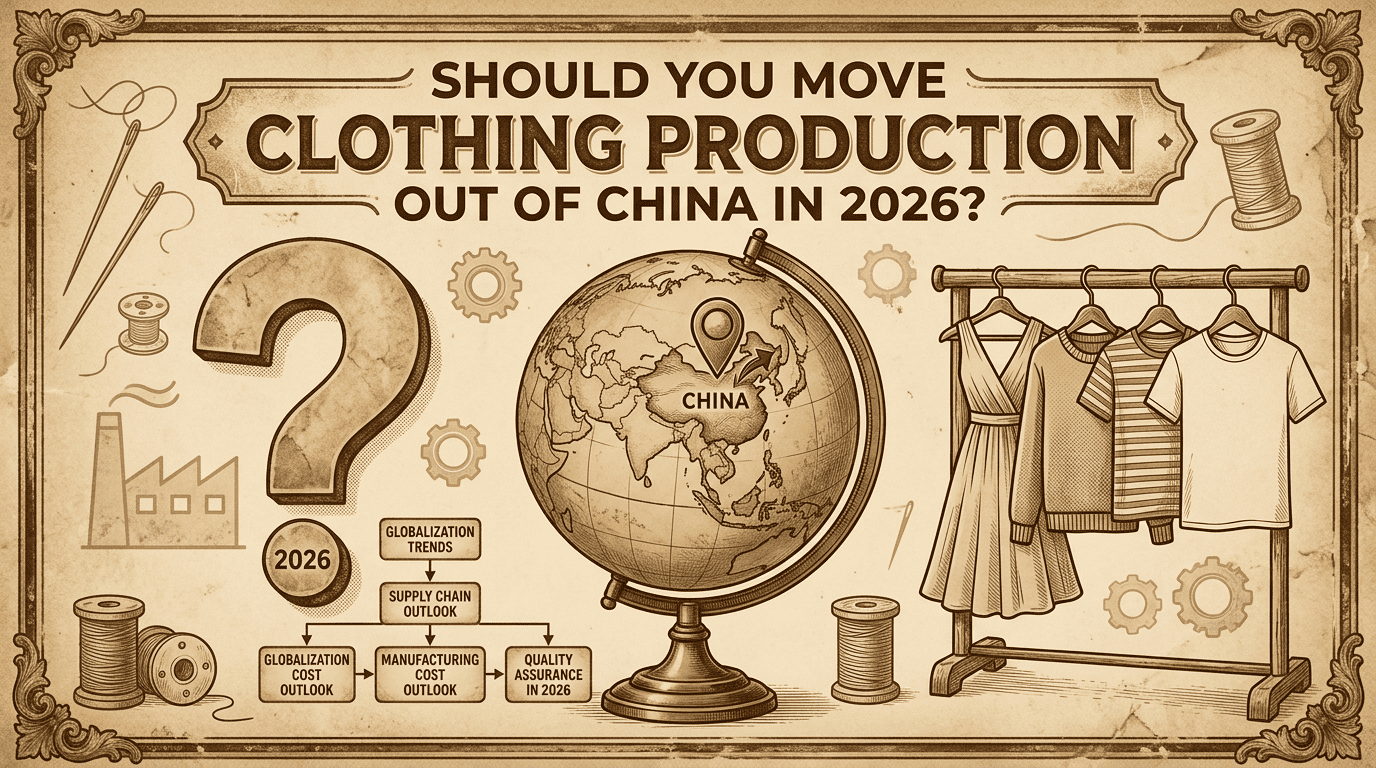
Should You Move Clothing Production Out of China?
If you run an apparel brand, you’ve probably asked yourself this question more than once lately. The answer isn’t as simple as yes or no. Moving clothing production out of China makes sense for some brands, but not all. It depends on what you make, how you order, and what keeps you up at night.
Let’s walk through the real considerations, based on what actually happens on the factory floor, not just what sounds good in a headline.
Why Brands Are Rethinking China Manufacturing
China has been the backbone of global apparel manufacturing for decades. But things are shifting. Tariffs, geopolitical tensions, and supply chain disruptions during recent years have made brands nervous. Add rising labor costs in some Chinese regions, and it’s natural to wonder if there’s a better option.
Many brands now want resilience more than rock-bottom prices. They’re looking for backup plans, not just cheaper quotes. This shift is real, and it’s changing how sourcing decisions get made in 2027.
When China Still Makes the Most Sense
Before you pack up and leave, consider where China still beats the competition. For complex garments like technical outerwear, multi-panel dresses, or intricate embroidery work, Chinese factories often have unmatched skill and infrastructure. If your product needs specialised equipment or highly trained workers, alternatives might struggle to match the quality.
Reorders are another area where China shines. Need 500 units of last season’s bestseller in three weeks? Chinese factories handle quick turnarounds and small repeat orders better than most. Their systems are built for speed and flexibility at scale.
If your brand relies on frequent restocks or rapid response to trends, cutting ties completely could hurt more than help. Many successful brands keep some production in China while diversifying the rest.
Real Challenges of Moving Production
Setup Time and Learning Curves
Switching factories isn’t like changing coffee shops. New production partners need time to learn your specs, fit standards, and quality expectations. Expect at least two to three sample rounds before production quality matches what you’re used to. Budget six months minimum for a smooth transition.
Minimum Order Quantities
China often allows smaller MOQs because of established infrastructure and multiple fabric suppliers nearby. Alternative countries might require higher minimums per style or color, especially if you’re a new customer. This affects startups and brands testing new designs.
Communication and Time Zones
Chinese factories have decades of experience working with Western brands. Many have English-speaking teams and understand international standards. Newer manufacturing hubs are catching up, but expect some growing pains in communication early on.
Apparel Sourcing Alternatives Worth Considering
Indonesia: The Balanced Choice
Indonesia has emerged as a serious alternative for apparel brands looking to diversify their supply chain. The country offers competitive pricing close to China, strong textile infrastructure, and no current tariff concerns with major markets.
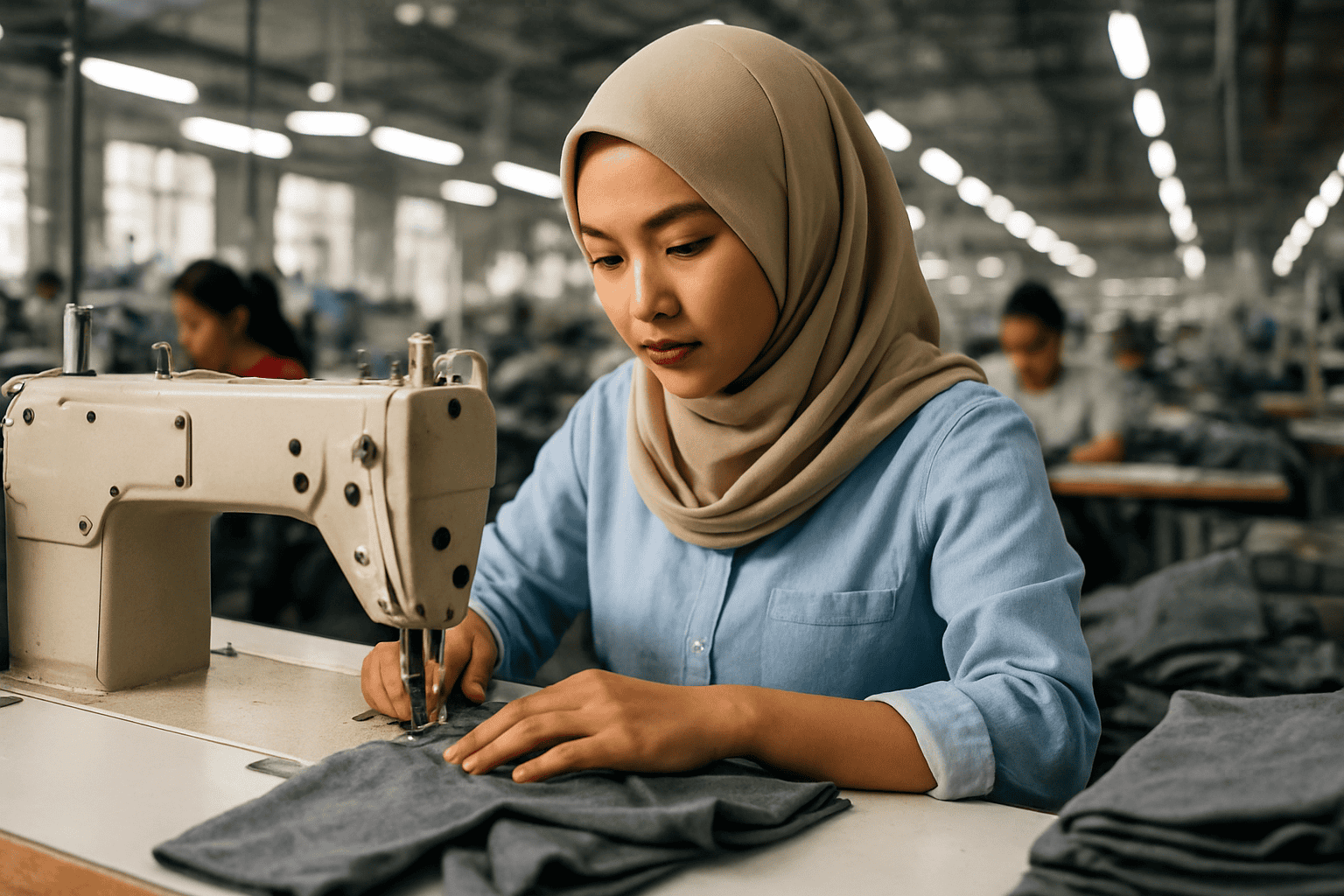
Indonesian factories excel at garments like shirts, blouses, dresses, and uniforms. Quality levels match Chinese production for most categories. Lead times are comparable, and the country’s position in Southeast Asia provides geographic diversification without sacrificing logistics.
World KNK Clothing Manufacturing operates in Indonesia’s fashion hub with over 20 years of experience. We’ve helped brands transition from China while maintaining quality standards and delivery schedules. Our end-to-end service covers fabric sourcing through final packing, making the switch smoother than going it alone.
Vietnam: Scale
Vietnam works well for brands ordering large quantities of simpler styles. The country has invested heavily in apparel infrastructure and offers good value at volume. However, fabric sourcing can be more limited than China for specialised materials.
Bangladesh: Cost Focus
If price is your main concern and you’re ordering basic styles in large quantities, Bangladesh clothing production remains competitive. Quality control requires more hands-on management, but the cost savings can be significant for price-sensitive brands.
How to Diversify Apparel Supply Chain Wisely
Smart diversification doesn’t mean abandoning China overnight. It means building options that make sense for your specific needs.
Start by analyzing your product mix. Which items are your volume drivers? Which require specialized skills? Which change frequently? Use this breakdown to decide what moves where.
Consider a hybrid approach. Keep complex or quick-turn items in China while moving stable, high-volume basics to alternatives like Indonesia. This balances risk without sacrificing capability.
Test new partners with smaller trial orders before committing full production. A 500-piece trial run reveals quality issues and communication gaps before they become expensive problems.
Indonesia vs China Manufacturing: A Direct Comparison
For most apparel, Indonesia and China now compete directly on quality and price. Indonesia often edges ahead on tariff exposure and lead time predictability. China still leads on handling extremely complex constructions and very small reorders.
Fabric availability favors China for unusual or highly specialized materials, but Indonesia’s textile sector covers most standard apparel needs. Both countries can hit similar delivery windows when production is planned properly.
The real difference often comes down to factory relationships and communication style. Established Chinese partners know your brand history. New Indonesian partners bring fresh attention and motivation to earn your business.
Questions to Ask Before Making the Move
What’s driving your decision? If it’s only cost, you might be disappointed. Labor costs in alternative countries are rising too. If it’s supply chain resilience, diversification makes clear sense.
How complex are your products? Simple t-shirts move easily. Technical jackets with multiple layers and trims need more vetting.
What’s your order pattern? Regular large orders suit most alternatives. Frequent small reorders might still need China’s flexibility.
Do you have time to invest in new relationships? Successful factory partnerships take effort and patience, especially at the start.
What Brands Get Wrong About Sourcing Decisions
Many brands chase the lowest quote without calculating total cost. Cheaper unit prices mean nothing if quality fails, shipments delay, or minimum orders force you to overbuy.
Others wait for a crisis to diversify. By then, good factories are fully booked and you’re stuck with whoever has capacity. Smart brands build alternative relationships before they urgently need them.
Some expect perfection immediately. Every new factory partnership has a learning period. Patience and clear communication during early orders pay off long-term.
How to Start the Transition
Begin with research and outreach six months before you need production. This gives time for samples, adjustments, and trial runs without pressure.
Be specific about your needs when contacting potential partners. Share tech packs, quality standards, and realistic order projections. Vague inquiries get vague responses.
Visit factories if possible, or work with agents who’ve verified capabilities in person. Photos and websites don’t tell the full story.
Start with one or two styles that represent your typical production. Success here builds confidence for expanding the relationship.
When to Keep All Production in China
If your brand sells exclusively in Asian markets, keeping production in China often makes logistical sense. Shorter shipping distances and established distribution networks matter.
Brands with very small total volumes might not benefit from diversification. The effort of managing multiple factory relationships outweighs the risk reduction when you’re only producing a few thousand units annually.
If your products require truly unique capabilities that only specific Chinese factories possess, don’t force a change just to follow trends. Protect your product quality first.
The Role of Your Manufacturing Partner
Choosing the right factory partner matters more than choosing the right country. A mediocre factory in a great location will cause more problems than a great factory anywhere.
Look for partners with experience in your product category, clear communication practices, and realistic promises. Be wary of factories that promise everything with no questions asked.
World KNK specializes in helping brands transition to Indonesian production without sacrificing quality or timelines. Our 20 years of garment manufacturing experience means we understand both the technical requirements and the business pressures you face. We’ve guided startups through their first production runs and helped established brands diversify away from single-country dependence.
Making the Decision for Your Brand
There’s no universal answer to whether you should move clothing production out of China. The right choice depends on your products, order patterns, risk tolerance, and growth plans.
For many apparel brands in 2027, a balanced approach works best. Maintain relationships that serve you well while building alternatives that reduce concentration risk. Test new partners on suitable products before making dramatic shifts.
The brands that navigate this transition successfully are the ones that plan ahead, communicate clearly, and choose partners based on capability rather than just location or price.
If you’re evaluating apparel sourcing alternatives and want practical guidance based on factory-floor reality, World KNK can help. We’ll walk you through what’s actually possible for your specific products and volumes, without the sales pressure or unrealistic promises. Reach out to discuss how Indonesian manufacturing might fit into your sourcing strategy.
Got Questions? Let our AI help you.

FAQ
Is moving production out of China always cheaper?
Not necessarily. While some alternative countries offer lower labor costs, total production costs depend on many factors including fabric availability, minimum order quantities, shipping, and quality consistency. Sometimes the savings are minimal once you factor in everything.
How long does it take to transition production to a new country?
Expect six months minimum for a smooth transition. This includes finding the right factory, sample development, fitting adjustments, trial production runs, and working out communication processes. Rushing this timeline usually creates problems.
Can Indonesian factories match Chinese quality for apparel?
Yes, for most garment categories including shirts, blouses, dresses, and uniforms. Indonesian manufacturing quality is comparable to China for these products. Very specialised or technical items may require more careful factory selection in any country.
Should I completely stop using Chinese factories?
Not necessarily. Many brands benefit from a hybrid approach, using China for complex items or quick reorders while diversifying volume production to alternatives. Complete withdrawal makes sense for some brands but not all.
What’s the biggest mistake brands make when changing manufacturers?
Choosing based solely on price quotes without evaluating actual capability, communication quality, or total cost of ownership. The cheapest quote often becomes the most expensive mistake when quality issues or delays occur.
How do minimum order quantities compare between China and Indonesia?
This varies by factory rather than country, but established Chinese factories sometimes offer more flexibility on MOQs due to their scale and local supply networks. Indonesian factories are competitive on MOQs for standard fabrics and constructions, but may require higher minimums for unusual materials.
What products are easiest to move out of China first?
Simple, high-volume basics with standard fabrics and construction. Think basic shirts, simple dresses, or uniform items. These transition smoothly and let you test new factory relationships without high risk.
Related Articles
- China’s Ongoing Role in Shipping the West Toward Asia-Based Production Shifts
- China Alternative for Clothing Manufacturing for Australian Brands
- What should a scaling fashion brand know when transitioning from boutique to mid-scale production in Australia or nearby regions?
- Non-Woven Garments: What They Are and Who Uses Them (Kizen Lab)