China’s Sourcing Strategy Evolves: Diversification of Apparel Imports in a Post-World’s Factory Era
Table of Contents
- Introduction
- 1. The Rise of ADCs: How Asian Developing Countries Are Supplying China
- 2. From Low-Cost Basics to Diversified SKU Portfolios
- 3. Sustainability as a Competitive Edge in China’s Imports
- 4. Trade Dynamics: Tariffs, Regulations, and Diversification Incentives
- 5. The Role of End-to-End Indonesian Manufacturing: Why Bandung Providers Matter
- 6. Implications for Global Apparel Supply Chains
- Conclusion
Introduction
Diversified sourcing in a post World’s Factory era
You’re seeing a shift away from China as the sole manufacturing hub toward a regional, multi-source network across Asia. Brands and retailers diversify apparel sourcing to reduce risk, navigate tariff barriers, and access adjacent capabilities from fabric mills to logistics. China remains a key scale provider, while nearby markets become increasingly integrated into the supply chain.
For apparel, lead times, pricing dynamics, and product availability are shifting. Diversification accelerates ecosystem collaboration, spanning textile producers to distribution networks, helping firms build more resilient, responsive supply chains.
World’s Factory is now redefining scale and speed in global apparel sourcing, with integrated capabilities spanning fabric, trims, and final delivery to support multi-origin strategies.
World KNK’s perspective: Indonesian garment expertise in a changing global supply chain
World KNK blends two decades of Indonesian garment know-how with modern production systems. Our end-to-end approach covers fabric sourcing, development, and final delivery, ensuring consistency as sourcing maps redraw themselves.
We see opportunities in a diversified sourcing landscape. Indonesian capabilities can supplement China-centric networks by boosting speed, customization, and regional fulfillment. Our focus remains on a worry-free manufacturing journey for global brands and organizations.
1. The Rise of ADCs: How Asian Developing Countries Are Supplying China
Key ADCs: Vietnam, Bangladesh, Cambodia, Indonesia, Sri Lanka, and Pakistan
China’s apparel imports are broadening beyond traditional hubs as ADCs upgrade capabilities. These markets are moving from basic cut and sew toward more value-added categories, supported by improved mills, stricter quality controls, and closer alignment with Chinese consumer preferences.
Vietnam and Bangladesh lead in scale and maturity, while Cambodia, Indonesia, India, Sri Lanka, and Pakistan contribute strengths in rapid replenishment, specialized fabrics, and regional logistics. Together, they help Chinese buyers hedge supply risk and shorten lead times.
What Chinese retailers are sourcing from ADCs vs. domestic production
- From ADCs: a growing mix of replenishment basics, mid-range apparel, and increasingly sustainable materials.
- From domestic production: higher-end and technically complex items that require China-based quality control and rapid customization.
- Overall trend: ADCs complement China’s capacity, expanding SKUs and enabling faster responses to market shifts.
2. From Low-Cost Basics to Diversified SKU Portfolios
Expansion beyond basic items: Replenishment and mid-range categories
ADCs are broadening the mix beyond staples. Replenishment cycles, mid-range silhouettes, and seasonal updates come from ADCs, expanding the stock keeping units available to retailers and brands.
This shift accelerates calendar-driven replenishment, helping Chinese retailers stay stocked with greater agility. It also supports faster fashion cycles while preserving price competitiveness.
Implications for product design, quality, and price fit in the Chinese market
- Design latitude: ADC partners are delivering more design-forward options informed by Chinese consumer insights.
- Quality alignment: Manufacturers are upgrading controls to meet rising quality expectations while maintaining favorable cost structures.
- Pricing strategy: A broader SKU mix enables tiered pricing that matches consumer segments, from value to value-add.
| SKU focus | ADC sourcing impact | Chinese market response |
|---|---|---|
| Replenishment basics | Quicker turnover and steady demand | Lower disruptions, reliable shelf availability |
| Mid-range categories | Richer fabrics, improved fits | Broader consumer appeal, higher basket size |
3. Sustainability as a Competitive Edge in China’s Imports
Share of recycled and organic textiles in ADC imports vs. domestic China production
ADCs are layering recycled and organic materials into their offerings, meeting evolving consumer values and regulatory expectations across Asian markets.
Chinese buyers recognize ADCs’ growing capabilities in sustainable textile, expanding the materials pool without compromising cost efficiency. The shift supports responsible sourcing aligned with regional standards.
Implications for brand differentiation and supply chain transparency
- Brand differentiation: Sustainable material stories from ADC suppliers provide distinct value in a crowded market.
- Traceability: Greater emphasis on origin and processing steps builds credibility with retailers and end consumers.
- Risk management: Transparent sustainability practices reduce compliance risk and strengthen resilience across multi-source networks.
| Aspect | ADCs | Domestic China production |
|---|---|---|
| Recycled content | Growing share in basic and mid-range lines | Varies by brand; some higher sustainability programs |
| Organic textiles | Increasing adoption in premium entries | Rising interest but slower scale in some segments |
| Supply chain transparency | Enhanced traceability to meet regional and brand standards | Improving with regulatory focus and tech-enabled tracking |
4. Trade Dynamics: Tariffs, Regulations, and Diversification Incentives
Tariff environments and geopolitical shifts shaping supplier choices
Tariffs and policy signals are steering diversification. Look beyond current costs to anticipate constraints that could raise expenses or disrupt supply. This risk mindset pushes buyers toward multi-source strategies that reduce reliance on a single corridor.
Geopolitical developments are reshaping sourcing maps. As trade frictions evolve, brands need resilient networks that can absorb shocks while preserving lead times and price discipline.
Strategic moves by brands to reduce risk through multi-source sourcing
Brands are reallocating orders across ADCs and established hubs to balance cost, quality, and speed. Directing specific SKUs to alternative origins helps protect calendar commitments and avoid bottlenecks. Looking for a smart alternative to China for apparel manufacturing can further enhance flexibility.
Manufacturers are building regional playbooks coordinating fabric, trims, and cut-and-sew capacity across borders. The goal is faster response, clearer accountability, and better end-to-end timeline visibility.
| Driver | Impact on sourcing | Expected outcome |
|---|---|---|
| Tariff signaling | Prompt shifts in order allocation | Reduced risk of cost spikes, more stable planning |
| Regulatory divergence | Compliance complexity increases across origins | Greater emphasis on traceability and supplier audits |
5. The Role of End-to-End Indonesian Manufacturing: Why Bandung Providers Matter
World KNK’s capabilities: From fabric sourcing to final delivery
You can streamline a multi-origin strategy with World KNK. We connect regional fabric sourcing to finished garment production for a seamless workflow. The result is speed, solid quality control, and clear timelines from yardage to final packaging.
Our capabilities span material scouting, supplier vetting, pattern development, and end-to-end logistics coordination. This reduces handoffs and strengthens accountability across the supply chain.
How Indonesian factories fit into China-focused diversification strategies
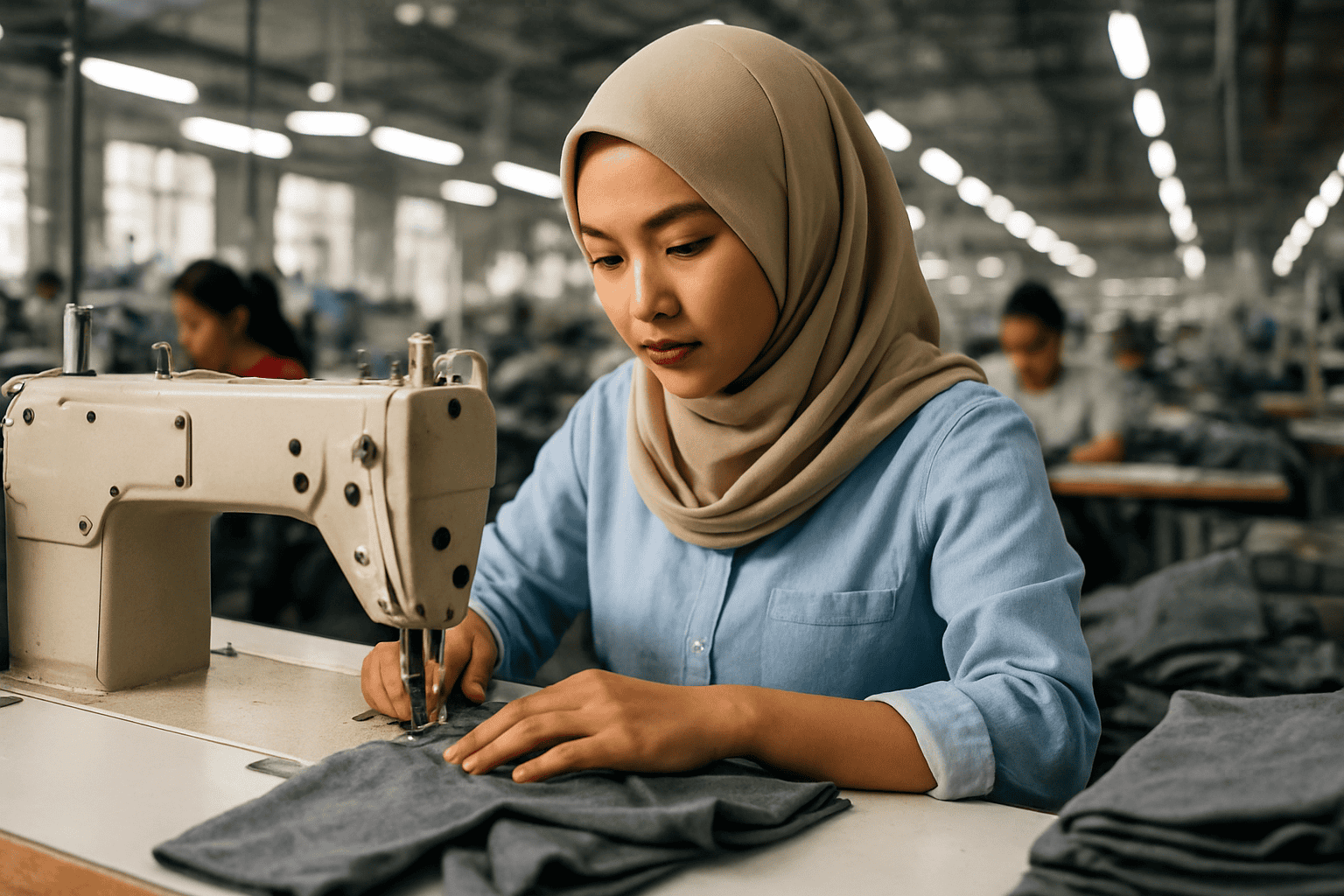
Indonesian plants offer nearshore advantages that complement China-centric networks. They provide competitive lead times, skilled labor, and automation aligned with replenishment SKUs and mid-range lines.
Bandung-based providers excel at agile small- and medium-volume runs, enabling rapid response to shifting demand without disrupting larger production plans in China or other ADC hubs.
- Proximity to Southeast Asian markets supports regional stock flow and faster restocking.
- Integrated fabric sourcing reduces transit steps and improves transparency.
- Collaborative ERP and logistics workflows align with multi-source sourcing goals.
6. Implications for Global Apparel Supply Chains
Upgrading and restructuring in the global value chain
Diversified sourcing is prompting firms to rethink coordination across regions. Leaders are boosting supplier collaboration, digital traceability, and integrated planning to reduce handoffs and improve responsiveness.
Supply networks are more modular. Brands allocate work by capability, directing replenishment SKUs to ADCs while retaining design and core fabrics in central hubs. This shift supports faster restocking and more resilient calendars.
Nearshoring and the China plus one approach are gaining traction. Firms pursue regional vertical integration to shorten lead times, tighten control over SKUs, and cushion against tariff volatility.
Opportunities and risks for lead firms and new entrants
- Access to specialized ADC skills, replenishment efficiency, and the development of regional sourcing hubs near key markets.
- Compliance complexity, potential quality variation across origins, and tariff exposure that can affect unit costs.
- New entrants can offer end-to-end capabilities by integrating fabric sourcing, trims, and cut-and-sew, shortening lead times.
- Improved visibility across the chain supports faster risk assessment and quicker realignment of orders during disruptions.
| Dimension | Traditional vs Diversified | Impact on lead times |
|---|---|---|
| Supply base | Single-hub dependence vs multi-origin ecosystems | Improved resilience, increased scheduling complexity |
| Data capabilities | Fragmented data across partners vs integrated platforms | Faster decision making, clearer accountability |
Conclusion
China’s sourcing playbook is evolving as ADCs expand their footprint and multiyear relationships become the norm. The result is a layered global network that balances price with capability and speed to market.
For brands, the shift brings both opportunity and risk. You gain access to a broader set of suppliers and SKUs, but you must manage more moving parts while upholding consistent quality across origins.
- ADCs like Vietnam, Bangladesh, Cambodia, Indonesia, and India are integral to replenishment and mid-range lines, not merely alternatives.
- Nearshoring advantages emerge through faster restocking and regional stock pools that cushion disruptions.
- End-to-end providers in Indonesia, including Bandung-based teams, anchor multi-origin strategies with support from fabric sourcing to delivery.
| Key takeaway | Operational implication |
|---|---|
| Diversified sourcing | Strengthens resilience and broadens SKU coverage |
| Quality governance | Requires unified standards and transparent supplier audits across origins |
At World KNK, our integrated approach remains a steady anchor. We bridge regional capabilities with China-focused diversification, ensuring predictable timelines and worry-free delivery for our partners.
Shein has rapidly scaled its global sourcing network, leveraging ADCs in Southeast Asia and beyond to diversify SKU breadth and speed up response times, while maintaining aggressive digital-first demand planning.
China + 1 is gaining traction as brands seek multi-origin resilience. By pairing China’s scale with nearbyADC capabilities, buyers can optimize lead times, diversify risk, and tailor assortments for regional markets.
Some observers note how policy shifts from the Donald Trump Administration previously pressured supply chains to rethink reliance on a single origin, accelerating diversification and nearshoring moves that are echoed in today’s multi‑origin strategies.
Onshoring is becoming a strategic complement to offshore diversification, with brands rebalancing to bring select capabilities closer to home to improve agility, compliance, and speed-to-market.
References
World KNK has been producing woven garments in Bandung since 2000, more than five million garments and counting, with capacity of 200,000 pieces per month.