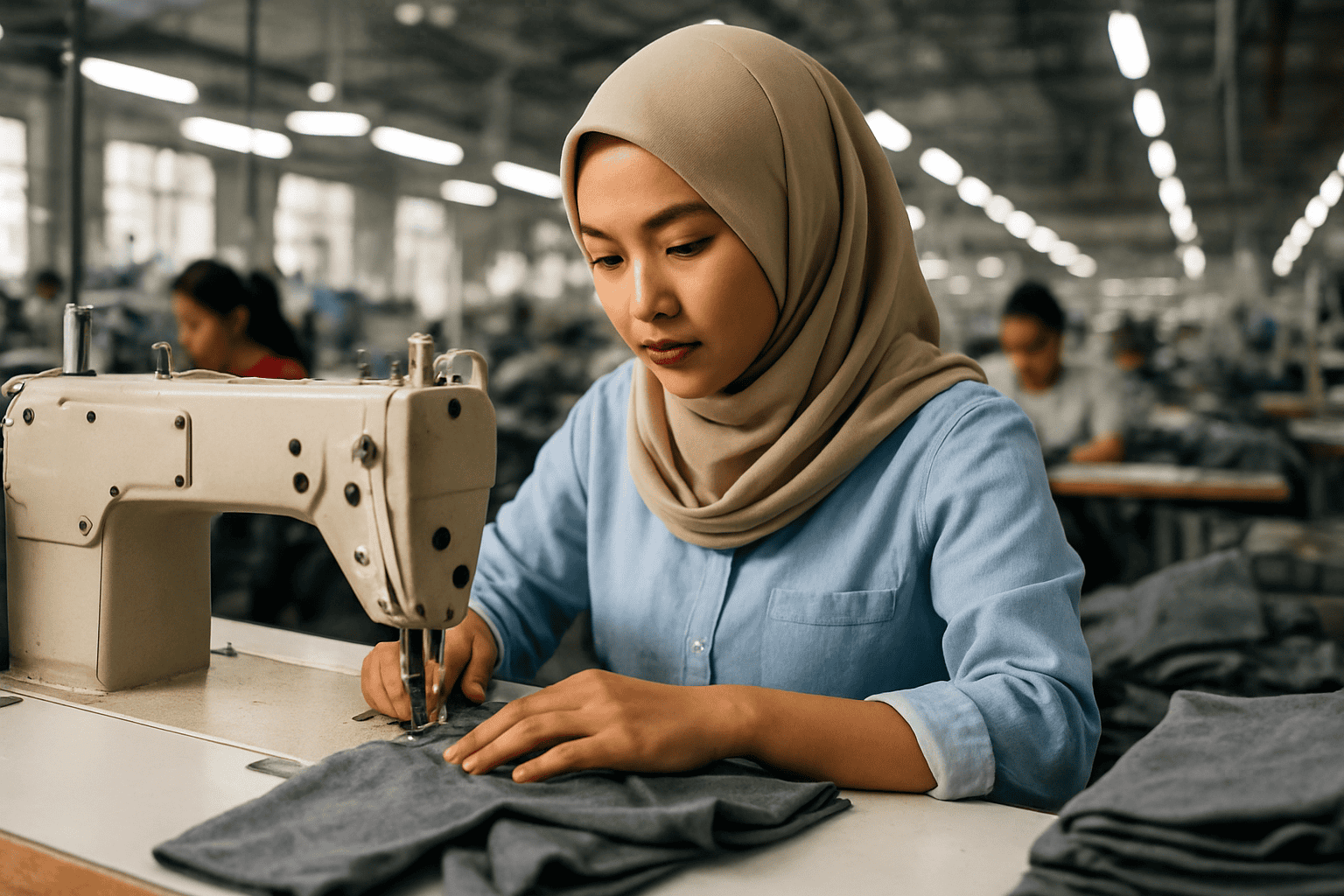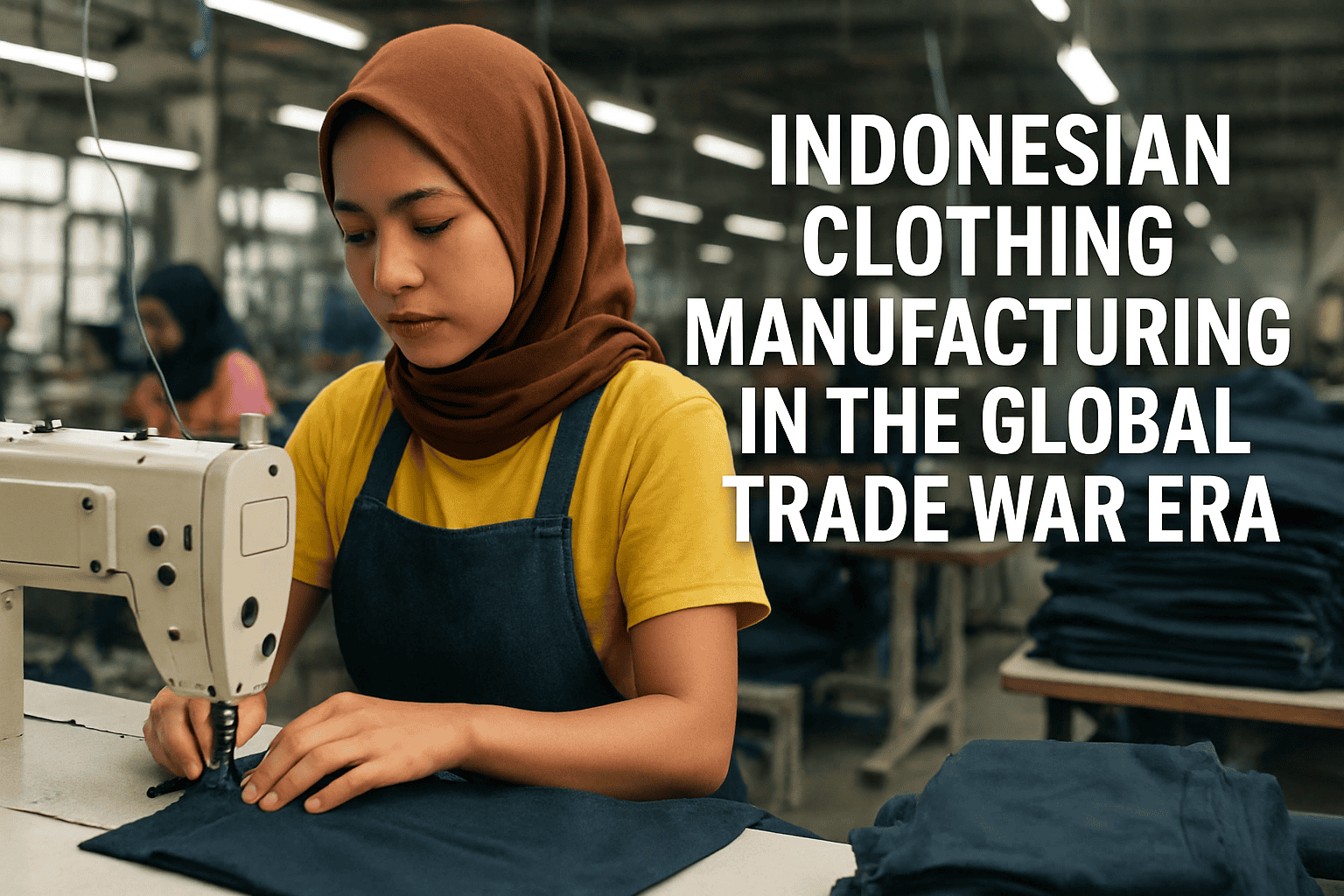
Indonesian Clothing Manufacturing in the Global Trade Challenge Era
Table of Contents
- Introduction
- 1. Shifting Trade Dynamics and Market Access
- 2. Supply Chain Resilience and Local Sourcing
- 3. Competitiveness through Quality and Efficiency
- 4. Value-Added Capabilities and End-to-End Services
- 5. Market Positioning and Branding in a Turbulent Era
- 6. Risk Management in Global Trade
- FAQ
- Conclusion
Introduction
Overview of World KNK and its role in the sector
World KNK brings two decades of Indonesian garment industry experience to partnerships. Our end-to-end capabilities cover fabric sourcing, production, and delivery, helping brands navigate a dynamic global economy.
We emphasize reliable execution and clear communication to foster long-term collaboration. By blending traditional craftsmanship with disciplined processes, we aim to provide a smooth manufacturing journey for brands pursuing diversification and stable supply chains.
1. Shifting Trade Dynamics and Market Access
Tariffs and preferential access: who, where, and how
You face a tightening tariff landscape that affects textiles and garments across key markets. This prompts you to reassess cost structures and access routes. Indonesia is not at the varied tariff exposure depending on destination, with some partners offering preferential terms under recent trade deals while others tighten protections.
Policy shifts are steering buyer behavior toward predictable pricing and shorter lead times. Indonesian producers should map tariff curves against production costs to identify viable margins and risk hedges, ensuring you stay competitive in a price-sensitive global economy.
Track changes quarterly and run scenario math showing duty impact if exchange rates shift by 5 percent. Consider how port congestion or certification requirements could affect lead times and landed cost calculations for each route.
Diversification of export markets beyond traditional buyers
Expanding beyond established markets reduces exposure to tariff swings and demand shocks. Indonesia’s textile and garment sector is increasingly pursuing Europe, North America, and nearby East Asian markets through new trade arrangements, while broadening exposure in markets with rising purchasing power.
Tailor product assortments to evolving buyer preferences and leverage regional logistics to shorten distribution chains. This diversification supports price competitiveness and resilience in volatile conditions.
Actionable steps: run a 12‑month market test with two SKUs per region, pre‑price with regional freight, and set a 6‑week lead time target for top destinations to capture quick turns.
| Destination | Tariff Prospects | Strategic Focus |
|---|---|---|
| Europe | Preferential access under recent agreements | Adjust product mix for value and fit |
| Canada | Improving terms via new frameworks | Leverage duty benefits for mid-range lines |
| East Asia | Varies by country; potential for duty relief in select programs | Strengthen quick-turn capabilities |
2. Supply Chain Resilience and Local Sourcing
Strengthening domestic fabric and trim sourcing
You can reduce exposure to cross-border shocks by expanding Indonesia’s domestic supply base. Local mills and trim suppliers are increasing capacity to meet rising order windows, helping shorten lead times and improve cost visibility.
Strategic partnerships with Indonesian textile clusters enable faster feedback on fabric performance, allowing tighter quality control at the source. This strengthens the end-to-end flow from fabric to finished garment without relying on long international freight lanes.
- Invest in regional spinner and weave capacities to improve fabric reliability
- Forge long-term contracts with domestic trim suppliers for price predictability
- Develop a unified data platform to track material provenance and quality metrics
Strategies to mitigate global supply disruptions
Supply disruption risk can be managed by distributing production across multiple Indonesian hubs and nearby regional partners. This approach reduces single-point failure while preserving lead times.
Implement flexible sourcing models that swap inputs without major retooling, enabling quicker responses to tariff or port congestion changes.
- Adopt multi-sourcing for key inputs to avoid bottlenecks
- Build buffer inventories for critical components during peak demand windows
- Coordinate with logistics partners to secure prioritized shipping slots during disruptions
| Strategy | Benefit | Risk to watch |
|---|---|---|
| Domestic fabric and trim sourcing | Shorter cycles, clearer pricing | Capacity constraints if demand spikes |
| Multi-hub production | Resilience against regional shocks | Complex coordination costs |
| Flexible input sourcing | Agility to tariff changes | Quality variability |
3. Competitiveness through Quality and Efficiency
Lean manufacturing and throughput improvements in Bandung
Bandung supports mid market clothing with margins boosted by faster throughput and tighter waste control. A real-world example shows a local factory reducing batch sizes from 5000 to 1000 units, cutting WIP and trimming cycle times.
To replicate this, map the value stream end to end, identify the top three bottlenecks, and run small, rapid trials. Begin with a single line change and assess impact over two weeks before broader rollout.
Core moves include value stream mapping, takt-aligned cycles, and visual management that highlights bottlenecks. Local supplier partnerships enable rapid tool changes, quick line tests, and faster setup reductions, such as shorter changeovers on common styles.
- Smaller batch production to reduce inventory risk
- Standardized work instructions across lines
- On-site problem solving with cross-functional teams
Quality management practices that differentiate Indonesian garments
Quality discipline focuses on fabric behavior, stitch integrity, and finish uniformity. A closed defect-tracking loop prompts root-cause fixes at the source, preventing seasonal fit drift. Brands can test fabrics for shrinkage across multiple washes and adjust sewing tolerances accordingly.
Adopting standardized sampling, inline inspection checkpoints, and real-time dashboards enables operators to halt trends early. This reduces returns and sustains buyer confidence amid volatility.
- Inline quality gates tied to production milestones
- End-to-end traceability for components and finished goods
- Data-driven adjustments to process parameters
| Aspect | Impact | Risk to monitor |
|---|---|---|
| Lean manufacturing | Faster throughput, lower waste | Need for continuous training |
| Quality management | Greater consistency, fewer defects | Over-reliance on audits |
4. Value-Added Capabilities and End-to-End Services
From fabric sourcing to final delivery: the World KNK model
The World KNK model coordinates fabric sourcing, trimming, production, and distribution within a single network. It emphasizes visibility across the export production chain, reducing handoffs and improving delivery predictability. This approach helps buyers diversify away from single-country dependence and aligns with Indonesia’s growing domestic production capacity.
Key elements include coordinated fabric sourcing, supplier governance, and transparent logistics planning that map to buyer timelines. The model enables faster onboarding of new SKUs and smoother scaling during peak seasons.
Customization, sampling, and quick-turn capabilities
Customization to order remains essential in a fast fashion cycle. Indonesian factories are increasingly able to translate sketches into samples quickly, with integrated fit tests and material validation early in the cycle.
- Rapid sampling with digital fit libraries
- Flexible prototyping runs to minimize risk before bulk orders
- Pre-approved material variants to shorten approval windows
Quick-turn capabilities shorten lead times without compromising quality. Cross-functional teams onboard designers, product engineers, and production planners to compress development phases and ensure on-time delivery.
Real-world applications and pitfalls
Take a mid-market sportswear label placing a multi-color men’s jacket line. World KNK enabled a single sourcing thread, cutting time from concept to shelf by 28 percent through concurrent sourcing and in-line QA checks.
- Coordinate fabric swatch approvals with supplier dashboards to avoid late-stage rework
- Use digital pattern libraries to convert sketches into test garments within 72 hours
- Implement a staggered sampling plan to expose fit issues early
Be mindful of data gaps and supplier capacity fluctuations. Ensure data normalization across partners and maintain a contingency plan for factory shutdowns or port delays.
| Capability | Benefit | Watchpoints |
|---|---|---|
| End-to-end visibility | Better schedule control, fewer delays | Requires robust data integration |
| Sample-to-order speed | Faster time-to-market, higher agility | Potential sample quality variance |
| Customization pipelines | Greater buyer satisfaction, renewal likelihood | Scope creep risk |
5. Market Positioning and Branding in a Turbulent Era
Crafting a clear value story for global buyers
Define a precise proposition that links price, speed, and reliability. Indonesian garment makers should emphasize integrated production networks, end-to-end visibility, and the ability to ramp SKUs quickly to meet shifting demand. Highlight control points in the export production network to help buyers reduce risk in a buyer-driven global commodity chain.
Highlight capabilities that matter to brands diversifying away from China and Vietnam. Proximity to domestic suppliers, predictable lead times, and flexible capacity become tangible advantages. The focus is on steady throughput and dependable delivery windows, not just cost.
How to stand out without sustainability claims
Brands now evaluate suppliers on more than price. Indonesian factories can differentiate through reliable sourcing, transparent reporting across the supply chain, and strong governance in supplier selection. This approach builds buyer confidence in volatile markets.
Use consistent documentation and proactive risk flags to demonstrate reliability amid tariff shifts. The aim is steady production and predictable distribution, rather than marketing alone.
| Differentiator | Buyer Benefit | Watchpoints |
|---|---|---|
| End-to-end visibility | Lower risk, better schedule adherence | Requires integrated data systems |
| Rapid SKU ramp | Faster time-to-market, adaptability | Scope management for customization |
| Ethical governance | Trust in supplier integrity | Verification burden on operations |
6. Risk Management in Global Trade
Currency, price volatility, and demand risks
You operate in a market where currency swings and input costs can flip profitability quarter to quarter. Indonesian producers must monitor foreign exchange movements, hedging options, and pricing ladders tied to contract terms. Regular scenario planning helps you anticipate shifts in demand and adjust mix accordingly.
- Currency hedges aligned to contract cycles
- Index-based pricing for certain components
- Flexible product portfolios to absorb demand shocks
Maintaining visibility across the export production network is essential. Real-time data on order book health, supplier capacity, and port conditions reduces surprise costs and missed commitments.
Contracting strategies and supplier diversification
Smart contracting spreads risk across suppliers and regions. Shorter lead times, volume tiering, and flexible term sheets help manage tariff timing and capacity constraints. You gain resilience when your agreements anticipate disruption scenarios.
- Multi-sourcing across domestic and regional suppliers
- Flexible purchase agreements with clear change-in-law clauses
- Performance-based milestones tied to delivery windows
Diversification matters more than ever. Expanding to new destinations reduces exposure to any single tariff regime and stabilizes supply chains. The goal is a balanced export portfolio that maintains consistent throughput even as markets shift.
World KNK recommends testing supplier redundancy with quarterly tabletop exercises. In practice, map critical components to at least three vetted vendors per region and run a 48-hour disruption drill twice a year.
In today’s buyer-driven global production networks, Indonesia’s clothing industry depends on integrated production networks with Korean, Taiwanese, US, and European firms. This reality shapes how production and distribution are managed, and it underscores the importance of maintaining resilience within the export production network.
| Risk Area | Mitigation Approach | Watchpoints |
|---|---|---|
| Currency risk | Hedging, flexible pricing | Hedging costs, liquidity |
| Price volatility | Indexing, mixed supplier base | Commodity spikes, supplier reliability |
| Demand risk | Scenario planning, adaptable SKUs | Forecast accuracy, market shifts |
FAQ
What drives Indonesia clothing exports in the current year?
Tariff dynamics in key markets, notably the United States and Europe, shape buyer choices. Indonesia benefits from a diversified export base and growing integration into production networks that connect domestic producers with international partners. This buyer-driven global production network supports Indonesia clothing exports and reinforces its role in global supply chains.
Real-world example: a Jakarta fabric mill partnering with a US importer can lock in a price window to hedge tariff timing, then pass savings to the factory floor. Data point: between 2023 and 2024, US imports from Southeast Asia grew 6.5% while tariff adjustments remained twofold year over year, signaling resilient demand when lead times stay predictable.
Practical step: map your top three tariff timelines for end markets and align production slots to those windows. Track currency moves and freight surcharges monthly to keep cost forecasts accurate.
How can brands diversify away from China and India?
Choose partners that offer end-to-end services from fabric sourcing to delivery, with strong domestic capabilities and reliable lead times. Proximity to Southeast Asian supply networks reduces risk and improves responsiveness to demand shifts. Look for firms that integrate fabric, trims, sewing, and finishing to streamline production.
Real-world tip: select a supplier near Bandung or Surabaya that can demo a 2-week fabric-to-finished-garment cycle for a pilot SKU. Expert view: firms with in-house dyeing and trimming can shave 5, 7 days off cycle times compared with multiple outsourcing steps.
What role do local suppliers play in resilience?
Strengthened domestic fabric and trim sourcing reduces exposure to global disruptions. Local capacity supports shorter design-to-sample cycles, faster production ramp, and adaptable lines that respond quickly to tariff changes and demand swings.
Edge case: during a port disruption, a supplier with nearby fabric stock and on-site dyeing can sustain 70% of output versus 20% for fully offshore partners. World KNK recommends maintaining at least two local fabric suppliers per key SKU.
Which capabilities differentiate Indonesian garment makers?
End-to-end visibility, rapid SKU ramp, and steady throughput under changing tariffs are key. Firms delivering consistent delivery windows and transparent governance gain an edge with buyers who seek reliability and predictability in production and distribution.
Actionable tip: implement a shared production dashboard with suppliers showing order status, raw material lead times, and contingency plans. Track performance monthly and reward on-time, in-full deliveries with preferred pricing.
| Question | Answer |
|---|---|
| Where should brands look for production flexibility? | Factories with integrated networks spanning fabric, trims, and finishing. |
| How is price competitiveness maintained? | Lean operations, efficient sourcing, and contractual terms that align with tariff timing. |
Conclusion
Tariff dynamics are reshaping Indonesia clothing exports and the global market you serve. World KNK combines deep local capability with strong international links to deliver reliable, worry-free production in a changing global economy.
What this means for brands diversifying from China and Vietnam:
- End-to-end services from fabric sourcing to final delivery reduce dependency on single choke points and keep production moving.
- Strengthening domestic sourcing supports more predictable lead times and faster sampling cycles.
- Diversifying export destinations lowers tariff exposure and spreads risk across multiple markets.
For 2026 and 2027, the focus is building resilient production networks that link Indonesian capabilities with buyer‑driven demand. Our Bandung presence translates into consistent quality and responsive collaboration with international partners.
As the global order book evolves, clear contracting terms, flexible capacity, and leverage of local strengths will help brands achieve steadier throughput. This is an opportunity to deepen partnerships that blend precision craftsmanship with scalable execution.