China’s Role in a Diversifying Apparel Supply Chain: Keeping Scale While Embracing Alternatives
Table of Contents
- Introduction
- Maintaining Scale in China: Core Strengths of a Mature Textile Ecosystem
- 2. Diversification Trends: Emerging Alternatives to Traditional China Supply Chain
- 3. Blended Sourcing Strategies: Balancing China with Alternatives
- 4. Sustainable and Responsible Sourcing Across the Mix
- 5. Trade Policy and Geopolitical Risk: Strategic Implications for Brand Planning
- 6. Operational Excellence for Mid-Scale Players: Lessons from Kizen Lab
- 7. Risk Identification and Mitigation in a Diversified Network
- FAQ
- Conclusion
Introduction
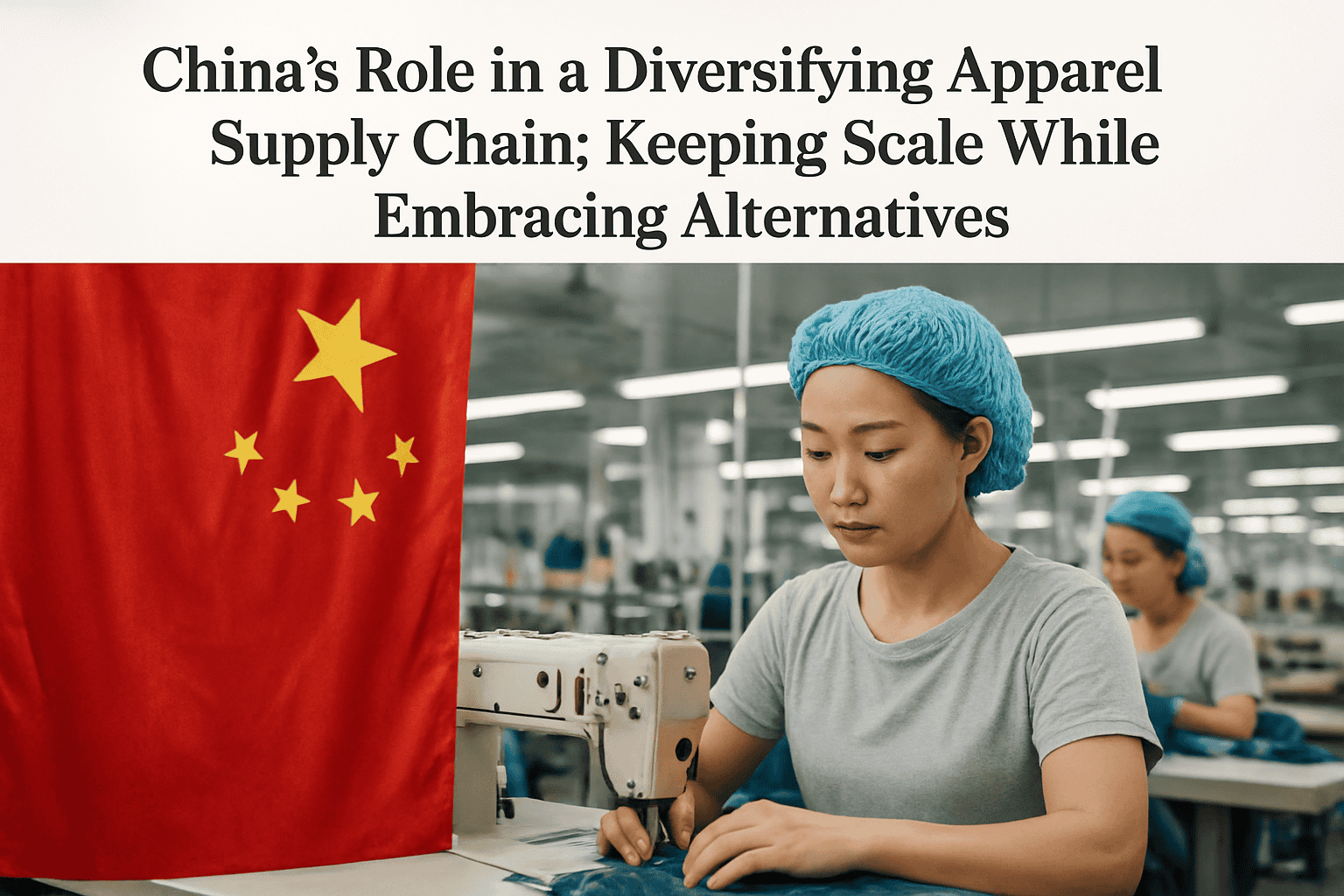
China has long been the world’s manufacturing backbone for apparel, delivering scale and integrated supply networks. Yet the global fashion industry is moving toward diversified supply chains as brands seek resilience and flexibility in the face of tariffs and geopolitical tensions.
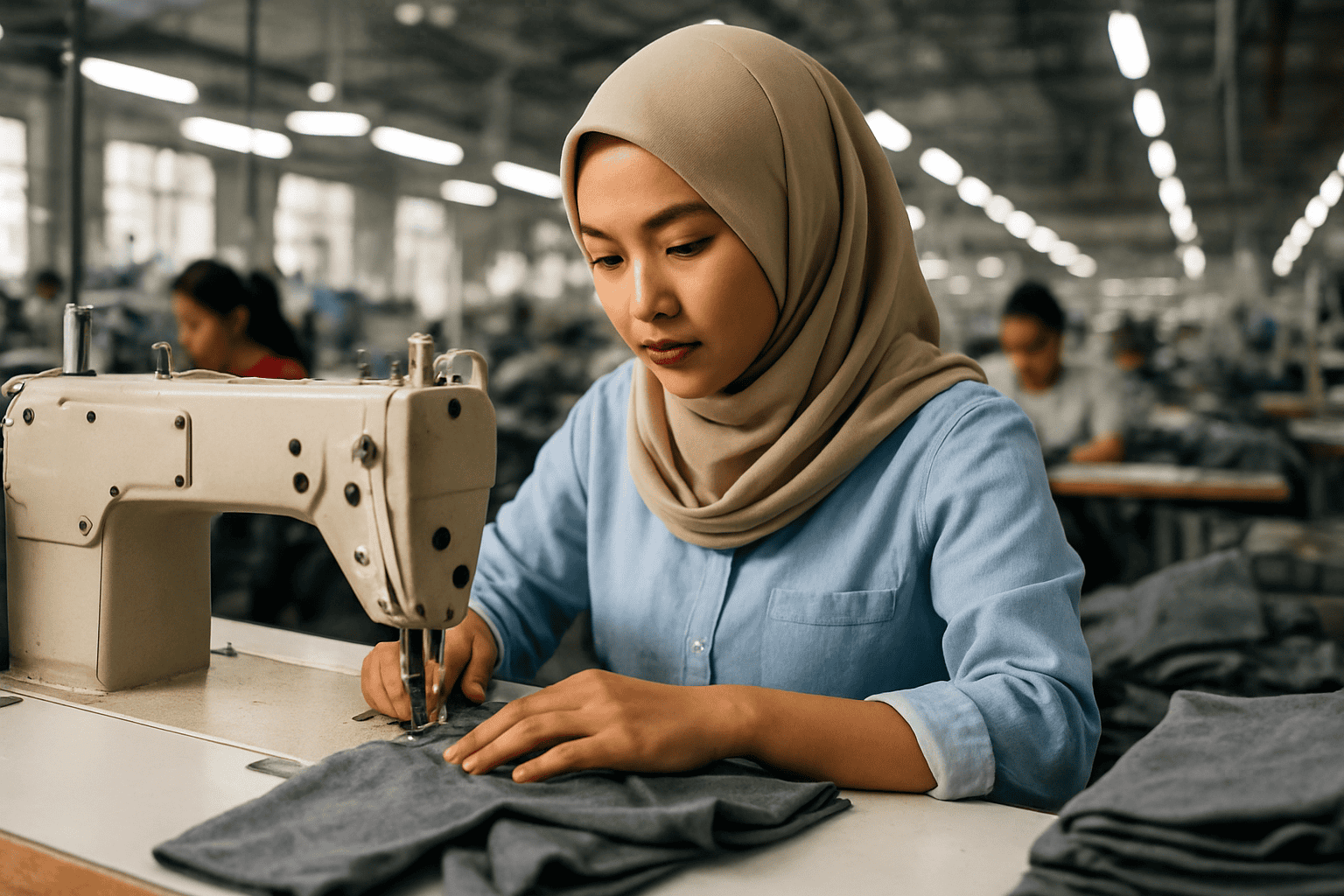
At Kizen Lab, we advocate a dual path: China remains essential for large‑scale production, while sourcing expands to Indonesia, Pakistan, and nearby regions. This blend helps brands protect margins, reduce risk, and stay aligned with fast fashion cycles.
The US‑China trade war has sharpened focus on cost timing and sourcing resilience, pushing brands to evaluate regional hubs without sacrificing scale.
Sri Lanka is emerging as a strategic nearshore option for blended sourcing, offering a mature apparel heritage, solid textile infrastructure, and a proven track record in fast fashion cycles that complements regional hubs in Asia.
Cambodia is increasingly part of the nearshore mix, offering competitive labor costs and established garment clusters that complement Vietnam and Indonesia for mid‑volume production and agile replenishment. Thailand is also emerging as a regional stitching and dyeing hub, enabling closer proximity to ASEAN markets and faster response times for regional lines.
The U. S. Fashion Industry Association (USFIA) champions North American brand interests, advocating balanced, transparent sourcing and resilient supply chains that pair domestic capabilities with diversified offshoring to regions like Asia and beyond.
Maintaining Scale in China: Core Strengths of a Mature Textile Ecosystem
China remains the backbone of the global apparel supply chain thanks to a deeply integrated textile ecosystem. This mature system supports high‑volume orders with reliable output, helping brands meet end customer demand at pace. For example, a mid‑sized fashion label can place a single order covering fabric, dyeing, and final stitching, cutting procurement friction by 40 percent compared with fragmented sourcing. India’s rapidly growing textile and garment sector is strengthening regional capabilities, offering additional sourcing flexibility for cotton, yarns, and finished goods to support blended hub strategies.
Nike is prioritizing near‑shoring and regional diversification to protect speed to market while maintaining scale, leveraging its global manufacturing network to balance core China output with Vietnam, Indonesia, and other Southeast Asian hubs.
Industrial capacity and vertical integration
You benefit from dense production clusters where spinning, weaving, dyeing, and garment assembly sit within close reach. This vertical integration reduces transfer times and minimizes handoffs across suppliers, enabling steady flow of goods. In practice, a typical seasonal line can move from sketch to shelf in six to eight weeks when all tiers sit within a 20‑mile radius.
- Large‑scale capacity enables rapid ramp ups for seasonal bursts.
- Clustered supply chains improve coordination and inventory control.
- Integrated capabilities shorten lead times from design to delivery.
Cost competitiveness and efficiency at scale
Operating at scale sustains lower unit costs and predictable throughput. Efficient logistics and standardized processes support consistent product quality even with high output volumes. Brands like Kizen Lab leverage bulk fabric buying and shared dye lots to stabilize pricing across multiple SKUs.
- Established factory networks drive cost efficiency at volume.
- Economies of scope support multi‑product production runs.
- Streamlined procurement reduces variability in raw materials sourcing.
Innovation hubs and supplier networks
Massive R&D activity fuels advances in materials, finishes, and processes. A broad supplier base speeds the adoption of new techniques, keeping the pipeline fluid and responsive. When a trend shifts to performance fabrics, regional hubs can pilot prototypes within weeks rather than months.
- Regional hubs foster collaboration between mills, labs, and brands.
- Strong university and industry partnerships push product innovation.
- Dense networks shorten supplier qualification times and trim cycle times.
2. Diversification Trends: Emerging Alternatives to Traditional China Supply Chain
Brand resilience is driving diversification beyond the traditional China model. The aim is to preserve speed while reducing exposure to tariffs and geopolitical disruptions, creating a more responsive system that keeps end customer satisfaction in focus.
Indonesia as a manufacturing hub for mid scale production
Indonesia is emerging as a practical option for mid scale production. It offers proximity to key markets, shorter regional lead times, and a growing textile base that supports mid volume cycles.
- Moderate labor costs with solid domestic apparel demand.
- Improved logistics networks to shorten flow to Asia-Pacific hubs.
- Developing accessory and fabric ecosystems to enable end-to-end assembly.
South Korea and nearshore/ASEAN capacity expansion
Nearshore options, including Malaysia and other ASEAN neighbors, are expanding to shorten strategy cycles and diversify risk. Brands gain shorter lead times and easier collaboration across time zones while maintaining quality benchmarks.
- Enhanced nearshoring options reduce transit times for quick-turn capsules.
- Trade dynamics under CPTPP and EVFTA favor regional trade flow.
- Smaller, agile facilities complement large-volume hubs by handling niche lines.
Why ADC-based production is growing beyond the basics
Advanced design and digital-enabled production, or WhyADC-based approaches, enable more efficient light-to-midweight runs across regions. The focus is on flexible tooling, faster sampling, and synchronized planning across sites.
- Rapid prototyping accelerates time-to-market for fashion cycles, with a target of reducing sample lead times from 14 days to 5 days in peak seasons.
- Digital collaboration platforms improve oversight across diversified networks, enabling real-time updates on material availability and capacity constraints.
- Smaller runs with modular manufacturing support seasonal customization without sacrificing scale, supported by multi-site BOMs and shared IP management.
3. Blended Sourcing Strategies: Balancing China with Alternatives
Hybrid supplier models for risk resilience
You can protect your flow of goods by pairing China with carefully chosen regional partners. This blend preserves scale while enabling faster responses to local demand shifts.
- Core production remains in China for volume, efficiency, and cost leadership.
- Strategic capacity sits in Indonesia, Vietnam, or nearby hubs to cover bursts and regional demand.
- Collaborative tooling and shared quality standards keep output consistent across sites.
Real-world scenario: a consumer electronics brand buffers holiday spikes by shifting final assembly to Vietnam while keeping PCB fabrication in China, cutting cycle times by 20% in peak season.
- Coordinate line pairing with regional OTD targets and agreed change-control processes.
- Use a single digital dashboard to flag deviations across sites within 24 hours.
- Establish a regional supplier council to resolve cross-border issues quickly.
Tiered production sequencing and lead-time optimization
Structure production in tiers to optimize lead times and inventory. Tier 1 covers base styles at scale; Tier 2 handles seasonal or fast-moving items close to markets.
- Staggered start dates align with regional demand calendars.
- Buffer components sourced regionally to reduce raw-material risk.
- Cross-site planning improves visibility from design to delivery.
Practical steps: map each SKU to a Tier 1 or Tier 2 plan, then run quarterly simulations showing impact on stockouts and overages.
- Set a 4-week Tier 2 replenishment window for top 20% SKUs.
- Pre-position 2, 4 weeks of critical components near high-demand markets.
- Monitor lead-time variability and trigger tier reallocation when volatility spikes.
Qualifying new suppliers while preserving quality and scale
New partners enter through a phased program that preserves brand standards while unlocking capacity. The aim is to integrate new capabilities without compromising output reliability.
- Stage-gate assessments measure capability, lead times, and compliance.
- Pilot runs prove process stability before full-scale production.
- Documentation and audits maintain traceability across the blended network.
4. Sustainable and Responsible Sourcing Across the Mix
Adopting recycled and organic materials across regions
Expand the use of recycled fibers and organic materials across diverse regions to cut environmental impact while maintaining scale. Start with a regional assessment of material availability, supplier capabilities, and lead times to avoid shortages.
- Regionally sourced recycled content lowers transport emissions and supports a lower overall footprint.
- Organic materials can command premium while helping brands meet sustainability goals.
- Cross-site material compatibility minimizes waste and streamlines quality assurance.
Sustainability as a differentiator in diversified networks
Mexico is increasingly part of nearshore diversification for North American brands, offering a stable textile base and logistics linkages that complement China-plus-one strategies for regional market responsiveness.
- Unified fiber and dye sourcing reduces variability in end products.
- Transparent supply chain data supports consumer trust and traceability.
- Audits and third-party certifications reinforce responsible practices across regions.
Compliance and transparency in multi-country supply chains
Governance across countries requires explicit documentation and tight oversight. Implement standardized checks to prevent gaps as the network scales.
- Centralized supplier dashboards enable real-time visibility.
- Standardized due diligence across sites reduces risk of noncompliance.
- Clear reporting supports end-to-end accountability from raw materials to finished goods.
5. Trade Policy and Geopolitical Risk: Strategic Implications for Brand Planning
Tariffs, policy shifts, and cost risk management
You must monitor tariff environments because they shape landed costs and planning assumptions. Build cost buffers and contingency plans so margins stay intact without delaying timelines.
- Tariff exposure varies by destination and product category, so dynamic costing models are essential.
- Policy shifts can change lead times as duties shift sourcing economics across regions.
- Flexible supplier placement and proactive budgeting underpin cost risk management.
Real world example: a consumer electronics brand rebalanced components sourced from three regions after a 15 percent tariff change, moving to a nearshoring mix to stabilize cost per unit within a 60 day window.
Practical steps you can take now: map all tariff codes by product family, run quarterly sensitivity analyses, and set guardrails for price adjustments with customers.
Expert tip: partner with a data-driven logistics provider like Kizen Lab to track policy signals and automate contingency triggers when thresholds are hit.
Diversification as a geopolitical hedge
Diversified networks act as a hedge against sudden disruptions. A balanced mix of locations stabilizes the flow of goods and reduces inventory risk across market cycles.
- Blended sourcing reduces single-point failure risk amid regional tensions.
- Nearshoring options can shorten transit times and improve responsiveness.
- Transparent cost exploration across sites supports robust decision making.
Concrete scenario: a brand maintained two regional hubs and two nearshore partners, cutting average transit time from 28 to 14 days during a regional port slowdown.
How to implement: run a 2×2 risk matrix for each product line, assign regional capacity targets, and test alert thresholds for capacity gaps.
Note: keep exchange rate exposure in mind when comparing landed costs across sites to avoid hidden swings.
Scenario planning for demand, supply, and tariff changes
Scenario planning anchors brand resilience. Stress-test demand shifts, supplier capacity, and tariff movements to guide investments and timing.
| Scenario | Implications | Action |
|---|---|---|
| Tariff uptick | Rising landed costs, potential price adjustments | Pre-agree price bands; accelerate near-market sourcing |
| Demand surge in a region | Need for flexible capacity and shorter lead times | Activate Tier 2 or regional partners |
| Supply disruption abroad | Inventory reduction risk | Activate alternative hubs and safety stock plans |
6. Operational Excellence for Mid-Scale Players: Lessons from Kizen Lab
Bridging boutique quality with industrial scale
You pair precision with capacity by using modular production blocks that mirror boutique QC while delivering batch-ready output. This approach reduces handoffs and keeps quality consistent as volumes grow. For a midsize apparel line, standardized sewing cells can match boutique garment fits, then scale to seasonal launches without reengineering the entire line.
- Defined tolerances per SKU to keep consistency across runs.
- Flexible tooling that scales from prototyping to full production.
- Standardized work instructions to minimize variation.
Leveraging parent-group expertise for scalable execution
Access to a broader parent-group network accelerates onboarding, audits, and cross-site learning. Tap shared IP, governance playbooks, and centralized risk reviews to shorten time-to-market without sacrificing control. Use a single source of truth for change requests and run monthly cross-site review sprints to surface issues early.
- Centralized project management reduces duplication of effort.
- Cross-site QA benchmarks align output across regions.
- Joint supplier development programs fast-track capability upgrades.
Quality assurance and speed-to-market in diversified supply chains
QA travels with your network. Implement real-time quality dashboards paired with rapid-change procedures to protect timelines when switching between sites. Use color-coded dashboards that flag deviations within 24 hours and trigger containment actions.
- Tiered approval gates for new suppliers maintain standards.
- Pre-authorization of alternative mills minimizes lead-time penalties.
- Time-bound corrective action plans keep momentum intact.
7. Risk Identification and Mitigation in a Diversified Network
Supply disruption dashboards and early warning indicators
In diversified supply chains you need real time visibility to catch shifts before they disrupt production. Use dashboards that fuse supplier health, port congestion, and transit reliability across regions. This helps you act quickly and protect margins. For example, track a faltering supplier in Southeast Asia alongside container backlog at a major West Coast port to trigger a preemptive reorder.
Live lead time tracking by site and product family keeps planning precise. Set alerts for dips in supplier capacity or logistics bottlenecks so you can pivot before delays hit end customers. Implement weekly trigger reviews and test alerts against a 2 week forecast to validate reliability.
Financial and currency risk management across regions
Money crosses borders in every decision. Build multi region plans that account for currency volatility, payment terms, and hedging options to protect margins. Use historical volatility data and run scenario analyses showing how a 5 percent move affects profitability.
Map currency exposure by region and supplier tier, implement dynamic pricing buffers aligned to forecasted exchange movements, and establish structured payment terms that balance cash flow with supplier stability. Consider setting ceiling limits on net exposure per region and revisiting quarterly.
Supplier risk profiling and contingency planning
Not all suppliers carry the same risk. A formal profiling process identifies critical nodes and drives targeted contingencies. Include environmental, social, and governance factors to avoid hidden vulnerabilities.
Rate suppliers on capacity, financial stability, and compliance history. Create redundancy plans for top tier materials and critical processes, and develop scenario based contingency playbooks to keep momentum during disruptions. Include a 72 hour rapid response checklist and quarterly tabletop drills to test readiness.
FAQ
What is driving the focus on supply chain diversification in apparel?
You pursue diversification to reduce brand risk, manage tariffs, and navigate geopolitical tensions. Diversified networks protect the flow of goods from raw materials to end customers and strengthen resilience against disruption.
- Diversification reduces dependence on a single region and supplier bank.
- Nearshoring and regional hubs cut lead times and improve responsiveness in seasonal peaks.
- Shifting regions bring different cost structures, capabilities, and risk profiles.
Which regions are gaining traction besides China?
Vietnam, Indonesia, and South Korea are leading the shift, with other ASEAN players expanding capacity. Brands weigh nearterm readiness against longterm capability building for a robust, global supply chain.
- Indonesia supports mid-scale production within established textile ecosystems and logistics links.
- Vietnam offers mature garment manufacturing, strong supplier networks, and stable uptime.
- Bangladesh and nearby markets are expanding high quality, rapid-response capabilities and tooling.
How should brands approach blending China with alternatives?
Adopt a phased, data driven approach that matches supplier capabilities with product needs, lead times, and cost goals. Start with a small, risk balanced pilot and scale with qualified partners.
- Hybrid supplier models balance risk, capacity, and cost at different volumes.
- Tiered production sequencing aligns regional lead times with product calendars.
- Quality and governance stay consistent through standardized audits and inbound controls.
What role do policy shifts play in planning?
Tariffs and trade rules affect landed costs and supplier choice. Scenario planning and flexible contracts help manage cost risk and timing constraints.
- Tariff upticks trigger price bands and near-market sourcing adjustments.
- Policy changes favor diversified supplier bases as a hedge against disruption.
- Regular reviews keep the strategy aligned with regulatory developments and market signals.
Conclusion
China remains a pivotal anchor for scale in the global apparel industry, but brands are actively diversifying. A diversified supply chain improves resilience, preserves cost discipline, and reduces exposure to tariffs and geopolitical tensions. For example, a label might split production between China for core basics and Southeast Asia for faster response to seasonality, then add a regional hub in Central America for North American orders.
Kizen Lab and it’s parent company World KNK advocates a blended model. Our mid scale capabilities blend boutique quality with industrial throughput, enabling brands to test new regions without sacrificing speed or consistency. You can pilot a capsule collection in multiple regions, measure lead times, and scale what performs best.
- Balanced sourcing maintains a steady flow of materials from raw materials to end customers, reducing single region risk. Implement dual sourcing for at least 20 percent of core fabrics to cushion shocks from a single supplier.
- Strategic diversification lowers vulnerability to tariffs and policy shifts while improving planning. Map regional duty implications and create a rolling cost model to compare scenarios quarterly.
- Transparency and governance ensure uniform quality across nations and support robust supply chain management. Use shared scorecards, audit trails, and real time dashboards to track compliance across factories.
References
Related Articles
- Beyond China: The Strategic Imperative of Diversifying Global Supply Chains
- China’s Ongoing Role in Shipping the West Toward Asia-Based Production Shifts
- How does nearshoring influence Australian brands seeking faster turnaround times and closer supply chain collaboration?
- adding Indonesia without quitting China