A private label clothing manufacturer occupies the ground between two neighbours: the white label supplier selling finished blanks, and the custom development house building a garment from nothing. Where a factory sits on that line decides what your label gets, speed, exclusivity or full ownership of the product. Here is how the three models actually differ inside a working factory, and how to choose the one your brand needs.
What does a private label clothing manufacturer actually do?
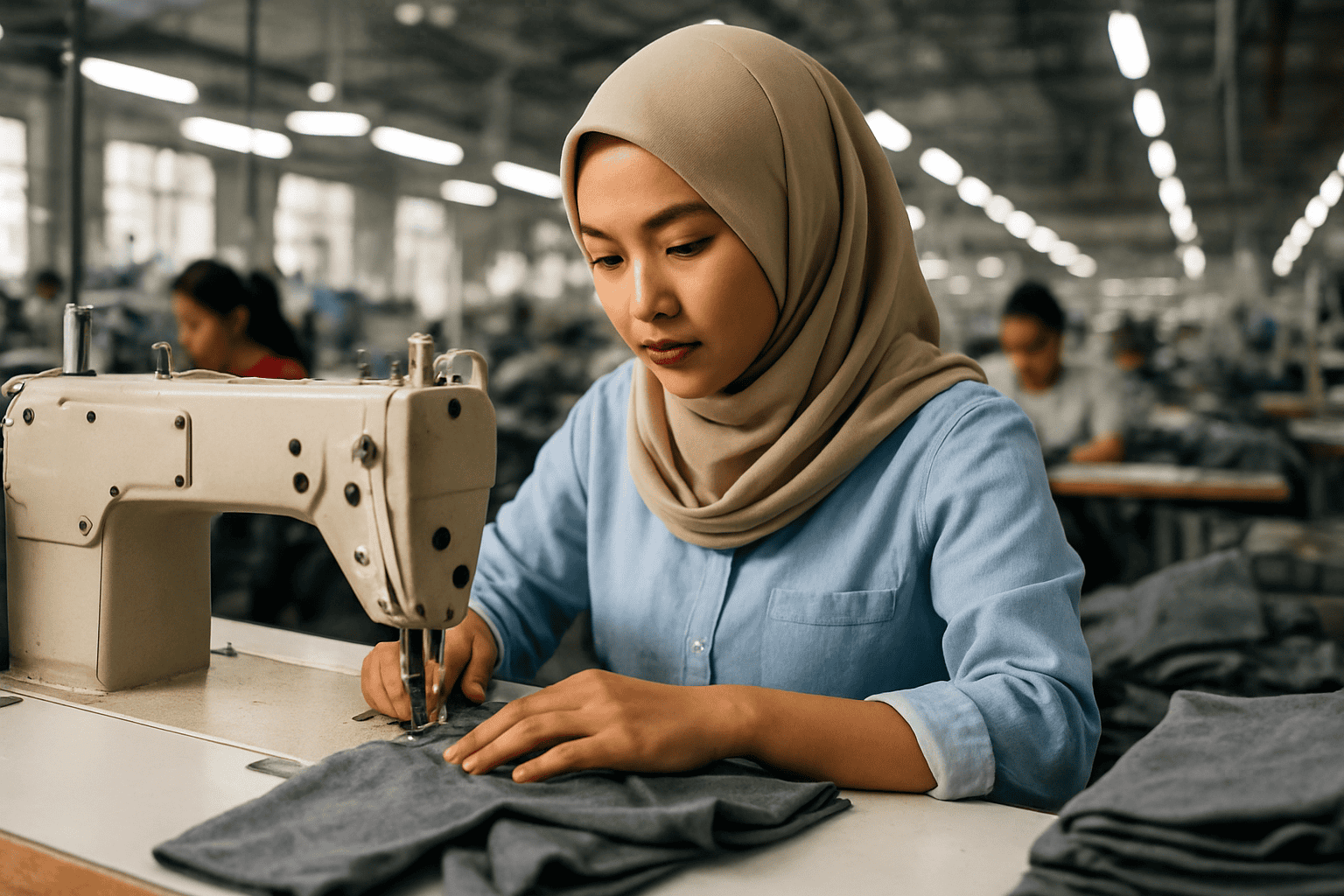
A private label manufacturer produces garments to one brand’s specification and sells those styles to nobody else. The fabric is chosen or developed for the label, the pattern is built and graded for its fit, the labels go in on the line, and the finished garment carries only that brand. Control is the whole point: Maezen Sports’ January 2026 explainer puts the dividing line exactly there, both models use third-party factories and the difference is who controls the product, while NoName Global’s February 2026 guide describes private label as the exclusive, customisable end of the market. On our own floor that means the buyer’s specification reaches the cutting table: fabric tested before production, patterns drafted digitally, and lines running wovens, shirts, dresses, pants, jackets and uniforms, from 1,000 pieces per style.
How is white label different on the factory floor?
White label styles never leave continuous production. The factory makes the same blank month after month in volume, and every buyer receives the identical garment with its own label applied. Arcus AG’s January 2026 guide for new brands calls it existing blank styles that you brand, fast but limited in customisation, and Minku Apparel’s comparison notes the blank is already running, so the only decision left is where the label goes. Shopify’s seller guidance adds the commercial consequence: white label pieces are generic, and any number of brands can sell the same item. Inside a factory the difference is visible immediately. A blank is cut on a standing schedule with no single customer’s interest in it, while a private label run books fabric, patterns and capacity for one brand. Neither is wrong; they are different purchases.
When is fully custom production worth the runway?
Above private label sits full custom development: the garment starts from a tech pack and a fabric decision rather than a catalogue style, sometimes with fabric developed for the label. That tier costs more time before the first shipment, our own custom fabric development runs at 1,500 pieces with a longer lead time for exactly that reason, and it is worth it when the product itself is the brand. For many labels the honest answer sits in between, which is why our guide to custom shirt manufacturing for fashion brands starts from the buyer’s specification rather than a blank, and our breakdown of what goes into a clothing manufacturer quote shows how the three models price differently before you commit.
Why exclusivity changes your quote
A white label blank is cheap because its costs are shared across every buyer who takes it. A private label style carries its own pattern, its own fabric booking and its own quality standard, so nothing is amortised across other brands and the quote must stand on the run alone. Makers Row’s February 2026 note on startups describes the same trade from the buyer’s side: white label launches with pre-developed products, private label buys flexibility through customisation. What a brand gains is an asset. The fit customers re-order is a fit nobody else sells, and the fabric a competitor admired is booked for your production, not theirs.
How sampling differs across the three models
Sampling is where the three models stop looking similar. A white label sample is the factory blank wearing your label, and it exists to confirm branding rather than to judge a product, because nothing about the garment is yours to change. A private label sample is a working agreement: the fit, the fabric hand, the stitching and the finishing are all open for review, and decisions made here carry straight into bulk. Fully custom development samples through several rounds, because the garment is being invented rather than confirmed. Buyers who understand this stop treating sampling as a delay and start treating it as the moment the product is actually decided. What a factory should test before bulk production is our own checklist for that stage, drawn from the fabric tests we run before production.
Matching the model to your order size
Order size usually picks the model for you. White label suits small test quantities because the blank already exists; private label needs a quantity where specification work earns its keep, which for our woven lines means 1,000 pieces per style. Labels not there yet have a structural option rather than a compromise: our sister company Kizen Lab runs private label programmes from 500 pieces per style on the same Bandung campus, with the same digital pattern-making and management, and styles that grow graduate onto the specialist woven lines without changing factories or standards. Whichever rung a label starts on, our guide to vetting an Indonesian clothing manufacturer applies unchanged: the factory that names its category, its minimum and its refusals is the one running real programmes. You are welcome to test us on all three through our contact page.
Frequently asked questions
What is the difference between private label and white label?
White label is a finished factory blank any number of brands can sell under their own labels; private label is a garment made to one brand’s specification and sold exclusively under that brand. The short version: white label rents a product, private label owns one.
Is private label more expensive than white label?
Per piece, usually yes at equal quantity, because nothing in a private label run is shared with other buyers. The gap narrows or reverses once a style has a life: re-orders amortise the specification work, and exclusivity protects the margin a shared blank cannot.
Can a white label product become exclusive?
Not the existing blank, by definition it is sold to many brands, but the step from white label to private label is small in practice: specify the changes you need, commission the pattern, and the next production run is yours alone. Most brands make that move on the style that earns it.
What should I send a private label manufacturer first?
A specification and an honest quantity. The garment type, the fabric you want, the fit references, the labelling and the size range, plus the number of pieces you can genuinely commit to. Our article on tech pack mistakes that delay sampling lists what separates a specification a factory can quote from one it has to guess through.