Choosing a woven garment manufacturer starts with one test: ask a factory what it makes and listen carefully to the answer. “Everything” sounds like capability, but in garment manufacturing it is usually the sound of a factory that has mastered none of it. A woven garment specialist will tell you its category, its fabrics and its limits in the first conversation, and that specificity is the single most useful quality signal in the whole vetting process. Here is why specialisation matters more than size, price or even certifications.
Why does specialisation improve garment quality?
Repetition builds manufacturing skill the same way it builds any skill. A factory that cuts and sews wovens every day knows how a particular poplin behaves on the cutting table, which seam construction stops a collar rolling, and how much a specific twill relaxes after washing, because it has made the same categories hundreds of times. A generalist re-learns those lessons on every new category it takes on, on your order. Sourcing guides make the same point from the buyer’s side: Powersweet Fashion’s 2026 sourcing guide notes that specialist manufacturers integrate specialised trims and branded details correctly from the start, while generalists discover them through errors and rework.
There is also an equipment truth. Woven production needs different cutting, different needles, different machine settings and different handling from knit production. A factory that switches categories constantly is retooling constantly, and every retool is a fresh chance for a defect. A specialist’s lines are configured for its category and stay that way.
What a woven specialist actually does differently
The differences show up long before sewing. Patterns are drafted digitally with the fabric’s behaviour built in, and bulk fabric is tested and relaxed before cutting, because a woven specialist knows unstable fabric is the root cause of most fit complaints. In-line quality checks sit between operations rather than waiting for the end, where mistakes are expensive. And the questions a specialist asks in the first conversation are different: not just “how many pieces”, but what hand feel, what shrinkage tolerance, what colourfastness ratings your market expects. That vocabulary only exists where the work is repeated.
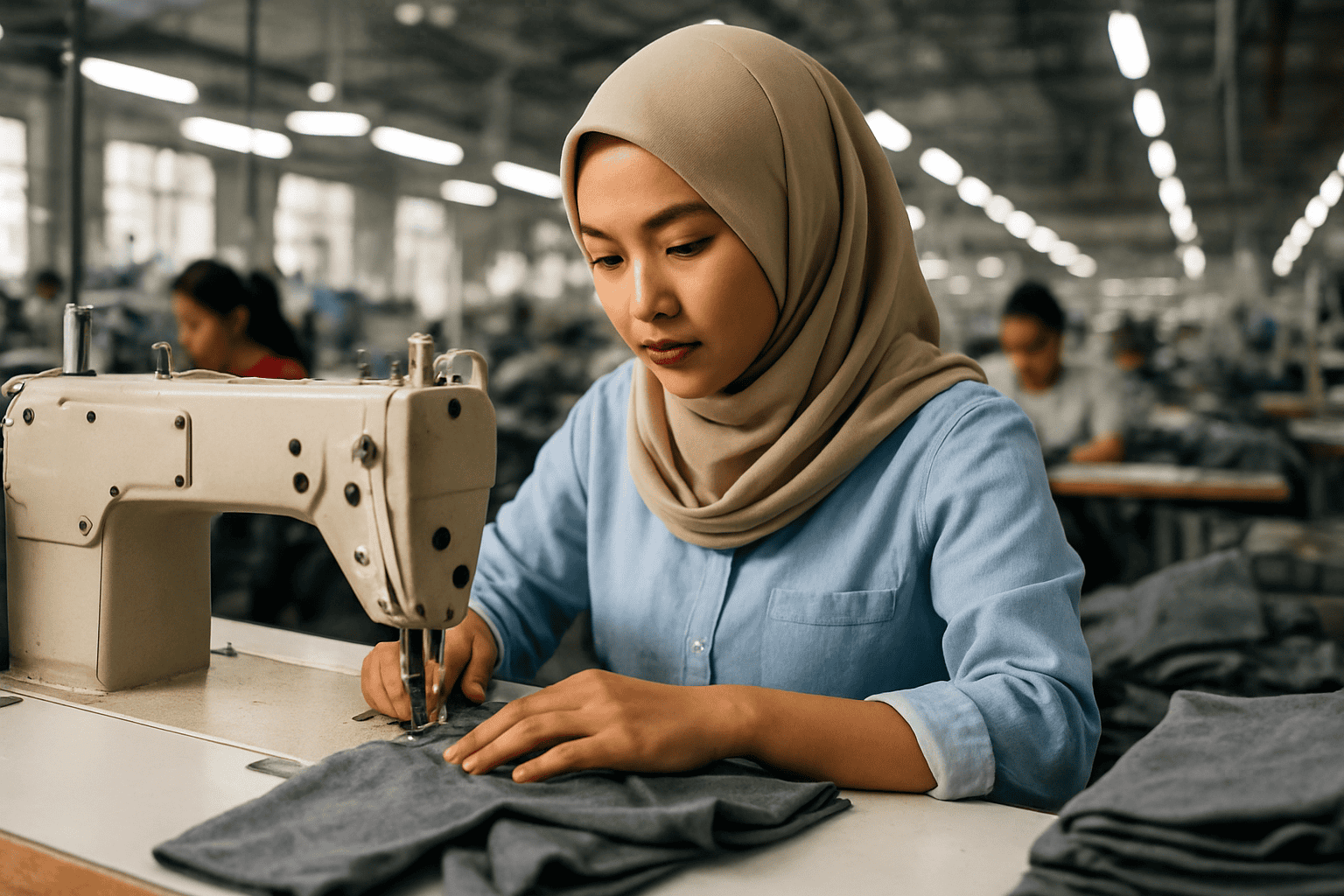
Our own floor is built around this idea. We make woven garments, which means shirts, dresses, pants, jackets, denim and uniforms, all cut from fabric tested before production and sewn on lines that run wovens every day. It is also why we say no to work outside the category: a factory that takes everything will compromise somewhere, usually quietly.
“We make everything” as a red flag
A generalist is not automatically a bad factory, but “we make everything” removes your ability to verify competence. Compare two claims. “We make woven shirts and dresses for Australian and Singapore brands, minimum 1,000 pieces per style, and here are the fabric tests we run” gives you specifics you can check. “We make all kinds of clothing, t-shirts, hoodies, jackets, whatever you need” gives you nothing to verify and predicts a floor where every category is somebody’s second choice. Sourcing checklists, including our own guide to vetting an Indonesian clothing manufacturer, treat specificity as a trust marker for exactly this reason.
The sharpest test: ask the factory what it does not make. A specialist answers instantly and without apology. A generalist stalls, because admitting a limit contradicts its pitch.
Matching the specialist to your garment
Specialisation has a direction, so match it honestly. A woven specialist is the right home for shirts, dresses, pants, uniforms and tailored pieces where structure and fit matter. Knit-heavy programmes, heavy fleece and highly technical stretch garments belong with factories whose lines and staff live in those categories. Some groups solve this with a sister structure: our own group runs this way, with Kizen Lab handling woven and non-woven programmes for smaller orders on the same campus standards, so brands can start small without landing in a generalist’s hands.
The question to ask any candidate is the same: what is this factory’s category, and what does it refuse? The answers tell you whether your garment will be made by the factory’s core skill or at its edges. You are welcome to run that test on us: send your questions through our contact page and the answers will come back specific.
How specialisation shows up in your quote
Specialists quote differently, and reading a quote is reading the specialisation. A woven specialist’s quotation separates fabric consumption from rate because it knows its consumption precisely; it prices finishing and packing as its own line because it controls them in-house; and its production window is stated with confidence because its calendar is real. Generalist quotes tend to carry wider disclaimers, longer validity caveats and vague delivery ranges, because every category is a first attempt. Our breakdown of what goes into a clothing manufacturer quote walks through the five cost blocks, and a specialist’s numbers are recognisable by how little guesswork they contain.
That confidence has a commercial value beyond quality: fewer disputes, fewer correction rounds and a production calendar that holds. Those are savings that never appear on the quote but always appear in the season.
Frequently asked questions
What is a woven garment manufacturer?
A factory specialising in garments made from woven fabric, where yarns interlace at right angles: shirts, dresses, pants, jackets, uniforms. Wovens hold shape and structure, and they cut and sew differently from knits, which is why specialists treat them as a distinct discipline.
Is a generalist factory always worse?
No. Some generalists are well run. But in garment manufacturing the depth of repetition drives defect rates, sampling quality and delivery reliability, and a generalist is shallow in every category by definition. For anything where fit and finish matter, a specialist is the safer bet.
How do I tell if a factory is a real woven specialist?
Ask three things: what the factory makes daily, what fabrics it runs most, and what it refuses. A real specialist answers all three specifically, shows woven-only lines on a video walk-through, and quotes with fabric consumption precision.
Can a specialist factory handle small orders?
Some can, often through a sister company. Our group runs this way: Kizen Lab takes woven and non-woven programmes from 500 pieces on the same campus, and styles that grow graduate to the specialist woven lines without changing quality standards.
Does a specialist cost more?
The per-piece price is rarely higher, because specialisation is efficient. What changes is the error rate: fewer defective panels, fewer rejected rolls and fewer late shipments, which are the costs that actually damage a season.