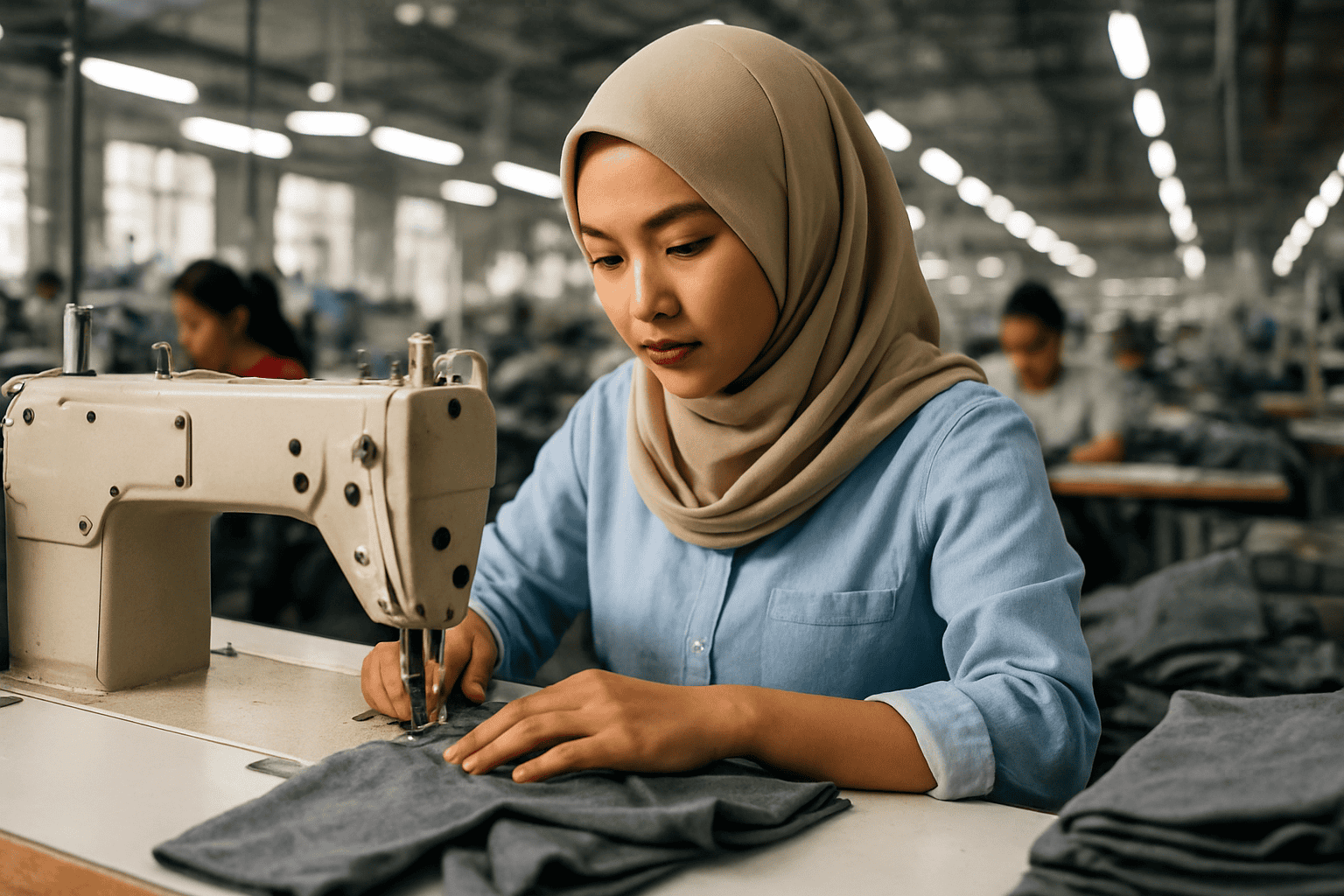
Most buyers evaluating Indonesian clothing manufacturers will never visit the factory before the first purchase order. Flights, schedules and distance make sure of that. The vetting job still has to happen, and it can: a structured remote verification covers most of the risk a site visit would, provided you run it in the right order and treat every claim as a claim until a registry confirms it. This is the sequence we watch serious buyers use.
Verify the company behind the factory name
Indonesian manufacturers operate under a 13-digit business identification number, the NIB, issued through the OSS licensing system. Emerhub’s NIB check guide shows how the number can be verified before money moves, and Acclime’s NIB guide explains what the licence covers and how it is issued. Ask for the NIB and the NPWP tax ID together, then check the KBLI activity codes attached to the licence: manufacturing codes mean the entity is registered to produce, not only to trade.
This step takes an afternoon and eliminates the oldest problem in offshore sourcing: the supplier who is a trading office wearing a factory’s name. ASEAN Briefing’s company registration overview covers the registry landscape for buyers who want to go deeper.
Ask for a live walk-through, not a highlight reel
A remote factory audit sounds like a compromise, and it is a strong one. One Aim Apparel’s 2026 audit template estimates that a structured remote audit screens roughly 80 percent of production risk, with an on-site visit adding the final margin later. The difference between a real audit and marketing is continuity: one live video walk-through that starts at the fabric store, moves through cutting, along the sewing lines and into finishing and packing, with your questions answered while the camera moves.
While you watch, use a checklist. BO-Asia’s clothing factory audit checklist covers the criteria that matter: fabric storage conditions, whether in-line quality checks sit between operations or only at final inspection, machine maintenance, lighting at the needle, and how finished cartons are sealed and labelled. A woven specialist should also show you how patterns are digitised and graded; we run every pattern through Lectra digital systems before the cutting table for exactly this reason.
Check certifications at the source
Any certificate a factory sends you should come with a number and an issuing body, and the issuing body’s registry should confirm it. The audit template is blunt about this: verify every certification at the registry, because certificates are copied between companies more often than anyone admits. Material standards, quality systems, ethical-trade claims: all of them check the same way, against the issuer’s own records.
Indonesia’s third-party verification industry is mature, which helps. SGS has run inspection and audit programmes in the country since 2002 through its joint venture with Sucofindo and Surveyor Indonesia, and buyers can commission factory audits, in-line checks and pre-shipment inspections without leaving home. Testcoo and similar agencies offer the same service class at price points that suit smaller programmes.
Let the sample round interrogate the factory
A sample is a document written in stitching. It shows whether the pattern was drafted from your measurements or approximated, whether the sewing line follows specification, and whether the finishing team cares about the details you care about. The first sample shows capability; the correction round shows process. Our guide to clothing sample fees explains what rounds typically cost and why serious factories credit sample fees against the first production order, and the tech pack mistakes that delay sampling covers the buyer-side half of that exchange.
Judge the second round as much as the first. A factory that explains what changed between rounds, in writing, is a factory with a process. One that sends a corrected sample with no commentary is asking you to trust the outcome instead of the system.
Scale the scrutiny with the order
Remote vetting has a natural ceiling, and the right response is to buy inspection, not faith. For a production run, an independent inspector checks goods against the approved sample while correction is still possible, and the fee is small against the shipment value. TradeAiders’ guide to SGS alternatives compares the agencies smaller buyers use, and Testcoo’s Indonesia coverage shows what a pre-shipment engagement looks like from booking to report.
Mention the inspection early, during vetting, and watch the response. Established factories build third-party checks into their calendar and expect them. Resistance without evidence is a data point, and on a woven programme of 1,000 pieces per style or more, it is an expensive one to ignore.
Read communication like a document
Everything above produces documents and footage. The last input is behavioural: how the factory answers you while you are still a stranger. Specific answers to technical questions, photos that match the words, names and titles instead of a generic sales voice. SourceReady’s supplier vetting sequence places communication quality immediately after credential checks for exactly this reason. Our own questions to ask a clothing manufacturer were written from the factory floor, and they double as a communication test: the questions a factory answers well are the questions it gets asked often.
Frequently asked questions
How reliable is a remote factory audit compared to visiting?
Industry guides put a structured remote audit at around 80 percent of the risk coverage of a site visit. The residual margin is workplace culture and things that only sit on a shelf for a camera. Most buyers close that gap with a third-party inspection on the first production order, then visit when volumes justify it.
What documents should an Indonesian factory provide before a deposit?
The NIB registration number, the NPWP tax ID, and the KBLI activity codes showing a manufacturing classification. A quotation on company letterhead, a bank account in the company name, and references from buyers in markets similar to yours complete the set.
Is a video walk-through as good as a real audit?
It is different. Live video proves the floors exist and shows process flow, but a third-party audit adds measured evidence: machine counts, worker headcounts on the day, and documentation review. Use both, in that order.
Should I hire an inspector for my first production order?
If the order is large enough that defects would hurt, yes. Pre-shipment and in-line inspections are standard practice for international buyers in Indonesia, and agencies publish their scopes openly. Book early: inspection calendars fill with the season.
What is the fastest red flag during remote vetting?
A factory that will not share its NIB, offers prices far below every peer without explanation, or pushes to move payment conversation to a personal account. Each one alone is a caution; two together are an answer.