Choosing a clothing manufacturer for Australian brands comes down to three numbers most labels only discover late: duty, minimum order quantity and lead time. Local production struggles to compete on any of them, which is why Fashion Journal’s interviews with Australian founders land where they do: making clothing locally is often impossible at volume or too expensive to price sensibly, so brands manufacture overseas. Indonesia sits closest of the serious manufacturing countries to Australian shores, and since July 2020 a free trade agreement has removed duty on qualifying Indonesian goods entirely.
This guide covers what that agreement means on a customs entry, what minimums look like for woven clothing, how long production really takes, and the checks worth running before any deposit leaves your account.
Why are Australian brands manufacturing clothing in Indonesia?
Deepwear’s comparison of onshore and offshore production for Australian brands lays out the trade plainly: offshore delivers lower labour costs, and in exchange the brand manages shipping, duties and longer lead times. Indonesia makes that exchange unusually attractive. The country sits around six hours by air from Sydney, its working hours overlap the Australian business day, and its textile industry keeps expanding: IMARC projects Indonesia’s textile manufacturing market to grow at roughly 4.8% a year through 2034. Dr Sheng Lu’s apparel sourcing outlook for 2026 points the same direction, with Asia remaining the most competitive sourcing region as brands diversify beyond any single country.
For a clothing manufacturer for Australian brands, proximity matters more than most buyers expect. Samples move by air within days. A Monday question gets an answer before Melbourne closes on Monday afternoon. When something needs fixing on the line, someone can be on a video call seeing the exact machine rather than reading a written description of it twelve hours old.
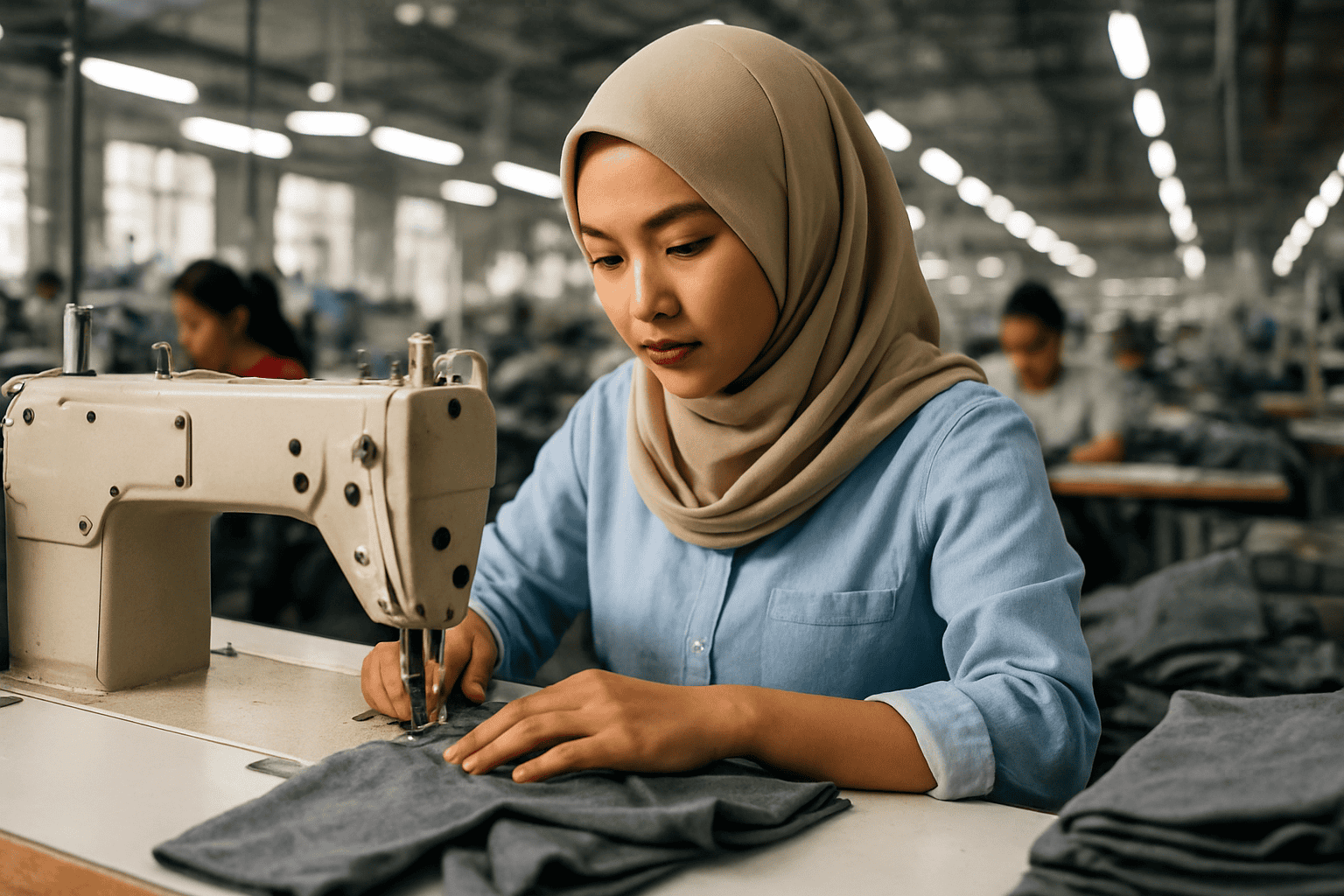
World KNK manufactures from Bandung (Indonesia), a city built around textile production, with around 700 people across the group producing roughly 200,000 pieces every month.
What does IA-CEPA mean for clothing imported from Indonesia?
Since July 2020, the Indonesia-Australia Comprehensive Economic Partnership Agreement (IA-CEPA) has been in force, and DFAT describes it as removing tariffs on nearly all products traded between the two countries. For clothing the practical effect is stark: Australia’s standard import tariff on clothing sits at 5%, while Indonesian garments that qualify under the agreement enter at zero.
Zero is not automatic. Consignments need to qualify as Indonesian origin under the agreement’s rules of origin, which Chapter 4 of IA-CEPA sets out. In practice the factory supplies a certificate of origin with the shipment, your customs broker lodges it with the import declaration, and the preferential rate applies. The Indonesian Trade Promotion Centre in Sydney helps exporters with exactly this paperwork, and any experienced forwarder on the Indonesia-Australia lane handles it routinely. If a quote arrives without a mention of a certificate of origin, ask for one; it is the difference between 5% and nothing on the duty line.
GST still applies at the border as it does on any commercial import into Australia, calculated as part of the landed cost. Our guide to shipping garments from Indonesia and landed cost breaks down every line between factory invoice and warehouse shelf. Budget on the landed number, not the factory invoice alone, and there are no surprises at clearance.
The duty difference compounds quietly across a range. On a shipment of woven shirts worth $80,000 at invoice, the 5% that a non-preferential source would pay is $4,000 kept in your account instead. Across four ranges a year, that is real money funding your next fabric buy.
What minimum order should an Australian brand expect for woven clothing?
Woven clothing is a different manufacturing discipline from knits. Fabric arrives in rolls, every panel is cut to a marker, and set-up costs concentrate at the front of the job. That is why woven specialists work to minimums expressed per style: at World KNK the public minimum is 1,000 pieces per style, across the full woven range from shirting to trousers to outerwear.
Buyers sometimes ask why the number cannot simply flex downward. The honest answer lives in the cutting room. A style at 1,000 pieces spreads pattern grading, marker making and cutting time across enough units for the economics to hold, and our Lectra digital pattern-making keeps that front-end precise. Below the minimum, the same fixed work spreads across fewer pieces, and either the factory loses money or the per-piece price climbs until the buyer flinches. Clear minimums protect both sides from a bad deal.
Custom fabric development is its own tier: 1,500 pieces with a four to eight week fabric development window before bulk cutting starts. Brands reach that tier when stock fabrics cannot deliver the handfeel, weight or composition their design needs. If your first range works on quality stock fabric, start there and move to custom from a position of sales data.
How long does production take from order to an Australian warehouse?
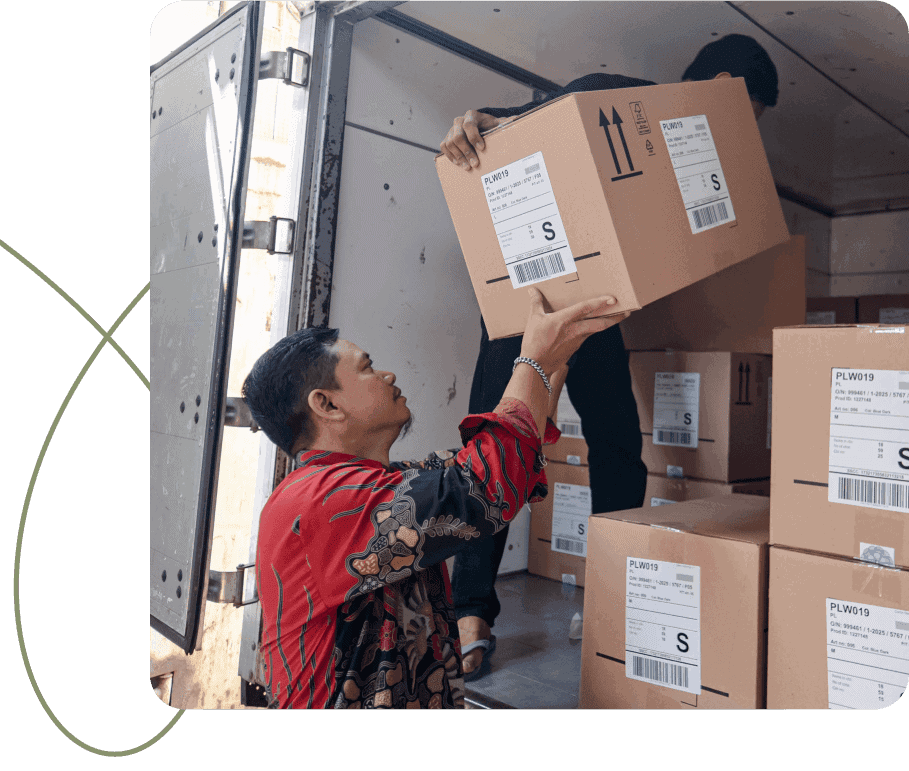
Plan on three phases. Sampling runs one to two weeks per round, and a focused brand usually settles a style in two rounds. Bulk production typically runs six to twelve weeks depending on the complexity of the style and the state of the production calendar. Freight from Java to major Australian ports is the shortest long-haul leg in offshore manufacturing, measured in days at sea rather than weeks, followed by routine customs clearance when the certificate of origin sits in the file.
The brands that land on time book backward from their launch date. If stock needs to be in a Melbourne warehouse by March, sampling finishes before Christmas and bulk holds a production slot from January. Capacity, not speed, is the constraint in busy months; factories that quote realistic lead times are protecting your launch, not padding an invoice. Our Ramadan 2027 production calendar explains the same backward-planning logic for seasonal buyers, and it applies to any fixed launch window.
Which service model fits an Australian label best?
We offer two ways to produce: CMT and FOB (full service), both with a minimum order of 1,000 pieces per style. On FOB (full service) we source the fabric, build the pattern, run sampling and production, and QC every piece, and you get finished garments at a quoted per-piece price. It is the model that suits most labels importing from Indonesia, because fabric sourcing in another country is where silent problems live: minimums at the mill, dye-lot variation, lead time slippage. Bundling all of it into one quote means one team answers for the whole run, and one number you can actually compare.
First-time importers usually do best on FOB (full service) for exactly that reason: the factory that sources the fabric is also the factory that answers when a dye lot drifts or a trim lands late. Our clothing manufacturing cost per piece benchmarks assemble what a fully bundled run really costs once those risks are priced.
Choosing a clothing manufacturer for Australian brands: the checks that matter
Distance turns small uncertainties into expensive ones, so checking matters more, not less, when the factory sits overseas. We published a full list of the questions to ask a clothing manufacturer, and honest factories welcome every line of it: who owns the sewing floor, what happens when a fabric fails a test, how you will see production progress between deposit and shipment. A factory that answers slowly before you have paid will answer slower afterwards.
Ask how communication works during bulk. A weekly written status report with photographs is the baseline; a WIP (work in progress) update every Monday is what we consider normal. Ask which parts of production happen in-house and which are subcontracted. Ask what happens when a shipment misses a vessel. The answers separate manufacturers from middlemen faster than any price comparison.
One more connection worth having: our sister company Kizen Lab shares this Bandung manufacturing group; its guide to shipping clothing from Indonesia unpacks the freight leg from the buyer’s side of the same lane.
Frequently asked questions
Does Australia charge duty on clothing from Indonesia?
Not when the shipment qualifies under IA-CEPA, in force since July 2020. With a certificate of origin confirming Indonesian origin, clothing enters at 0% instead of the 5% standard rate. Your customs broker lodges the certificate with the entry.
How many pieces do I need to start production?
At World KNK, 1,000 pieces per style for woven clothing. Custom fabric development is available from 1,500 pieces with its own development window before bulk.
Do I need a certificate of origin for every shipment?
Every consignment claiming the preferential rate needs one, issued for that shipment. Your forwarder or broker usually arranges it alongside the customs entry; the factory supplies the supporting documents.
Is GST payable on top of duty?
GST applies at the border on commercial imports as normal. With duty at zero under IA-CEPA, GST is calculated on the customs value plus freight and insurance. Your broker confirms the exact figure at clearance.
What does FOB mean for a first-time Australian importer?
FOB (free on board) means the quoted price covers finished garments loaded on the vessel at the Indonesian port. Freight, insurance and Australian clearance are then arranged by you or your forwarder. Most brands engage a freight forwarder for the lane; it is routine work for them.
Related Articles
- Indonesia vs Vietnam: Clothing Manufacturing Compared
- Sample Fees Explained: What Factories Charge and Why
- Tech Pack Mistakes That Delay Sampling Rounds
- Clothing Cost Per Piece: What Small Brands Pay in 2027
- uniform manufacturing for Australian programmes
- Banker Shirts & Corporate Uniform Programmes at Scale
- Travel Agency Network Uniforms from 1,000 Pieces
- Pest Control Company Uniforms from 1,000 Pieces
- Sourcing clothing from Indonesia for Australian buyers: the procurement desk’s view