Table of Contents
- Australian Brands on the World Stage and the Nearshoring Dialogue
- Introduction
- 2. From Design to Delivery: End-to-End Capabilities in Nearshored Models
- 3. Case Study: World KNK’s End-to-End Garment Manufacturing in Asia
- 4. Policy and Market Forces Driving Nearshoring in Fashion
- 5. Strategic Pathways for Australian Brands to Nearshore Successfully
- 6. Impacts on Brand Positioning: Quality, Speed, and Nearshoring Strategy
- FAQ
- Conclusion
Australian Brands on the World Stage and the Nearshoring Dialogue
You already know Australian fashion moves beyond borders. The global spotlight on Australian design, especially through outlets like Vogue Australia, Refinery29, and Glamour UK, is shaping how brands think about nearshoring influence Australian brands seeking faster turnaround times and closer supply chain collaboration.
Nearshoring is not a buzzword here. It reflects a practical shift in the fashion supply chain. By pairing Australia design sensibilities with production closer to core markets, brands can shorten lead times, improve transparency, and accelerate collaboration between designers and makers. This is where the conversation moves from offshore myths to tangible gains in speed, quality, and adaptability.
Two forces are driving this shift. First, global sourcing patterns show brands seeking stability amid recurring supply chain disruptions. Second, consumer demand is pushing for clearer sourcing narratives and faster response to trends. For Australian brands, that means considering reshoring opportunities or hybrid supply chains that blend domestic capabilities with regional partners to sustain growth in a volatile world market.
The reshoring movement is gaining policy and industry momentum. Initiatives like the National Manufacturing Strategy for Fashion and Textiles signal government support for rebuilding Australia’s textile, clothing, and footwear capabilities. This is not about returning to the old model alone; it is about upgrading to modern, skilled, local production while maintaining access to global markets.
In practice, brands are weighing the benefits of local manufacturing: greater supply chain transparency, speed to market, and closer collaboration on technical textiles and specialised products. Proximity enables real-time problem solving, faster prototyping, and tighter control over quality. For designers and production teams, this translates into stronger brand stories that resonate with consumers who value authenticity and immediacy.
Practical steps to start nearshoring
People are at the heart of nearshoring success, from designers partnering with local mills to production teams adapting to regional standards for Australia’s brands.
- Choose a regional manufacturing partner based on technical capability, not just cost. Request sample swatches, conduct a 48-hour QC sprint, and document results.
- Establish a shared digital platform for specs, BOMs, and production calendars to boost transparency with vendors.
- Set a short feedback loop for prototyping. Aim for a 5-day turnaround from sample to revision.
Real-world examples show brands staging co-design sessions with local mills, enabling on-loom testing of fabrics and finishes. Such collaborations shorten iteration cycles and lock in the story you want to tell about quality, ethics, and locality.
From the brand perspective, nearshoring also intersects with broader industry dynamics. Globalisation continues to shape where value is created, but the push for local capability helps reduce risk in a world of tariffs, policy shifts, and trade frictions. Australia’s own history, moving from domestic production to offshore hubs, frames current decisions about reshoring and hybrid approaches. The goal is not to abandon global channels but to recalibrate them so Australian fashion remains competitive and responsive.
As brands experiment with Asia production hubs and regional manufacturing partners, the role of global fashion supply networks becomes more nuanced. The right mix supports faster scaling, preserves design integrity, and keeps Australian design at the core of storytelling. For readers and buyers, the takeaway is clear: nearshoring is less about abandoning global sourcing and more about crafting resilient, transparent, and responsive supply chains that align with Australian branding and retail ambitions.
Introduction
Overview of World KNK brings more than two decades of Indonesian garment manufacturing experience to global brands and its role in nearshoring narratives
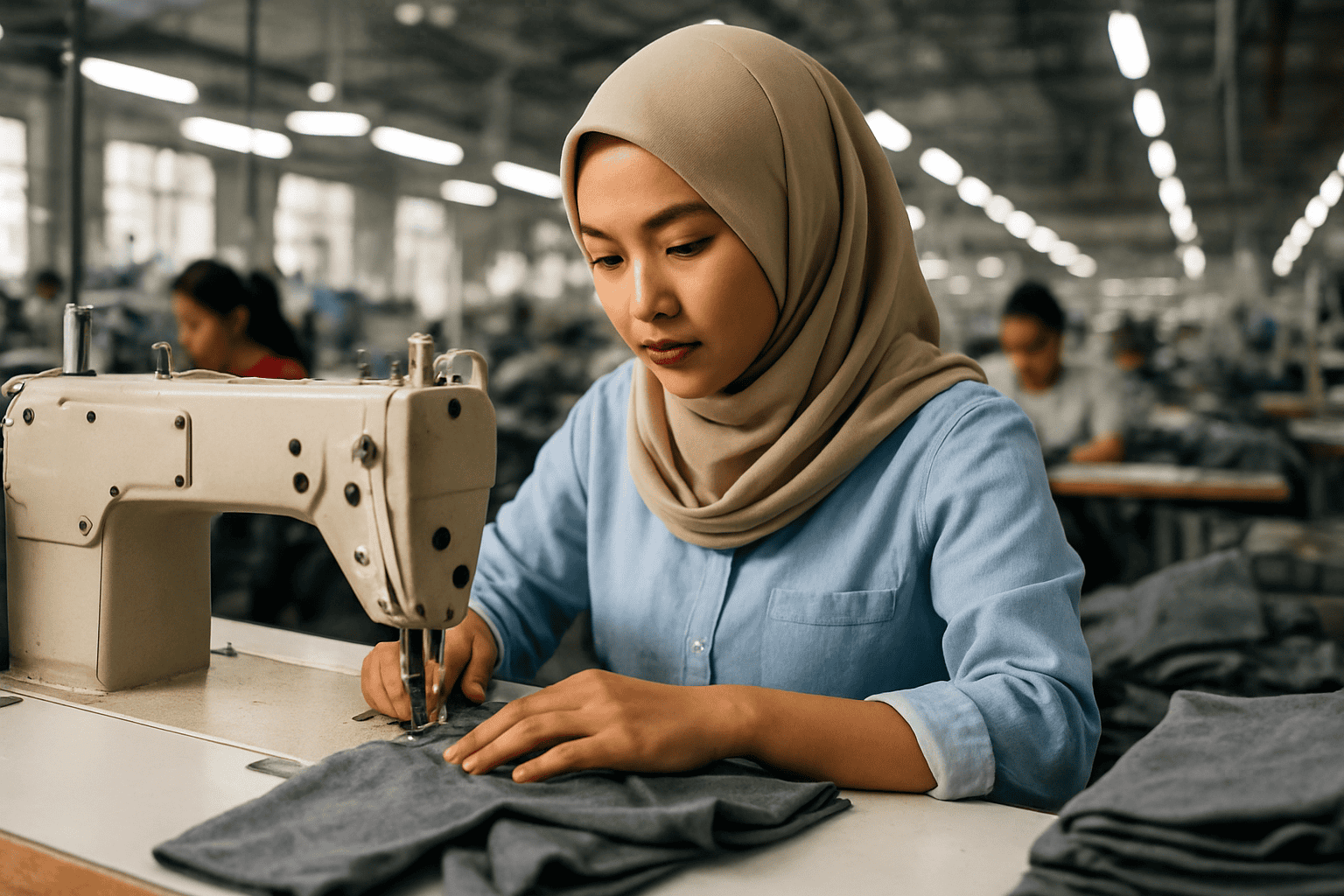
World KNK brings more than two decades of Indonesian garment manufacturing experience to global brands. Our end-to-end service covers fabric sourcing, development, production, and delivery, with reliable communication at the core. Australian Brands Manufacturing sits at the heart of this ecosystem, linking Australian design leadership with regional production for faster, more transparent outcomes. Exports are streamlined through regional hubs, enabling faster market access and stronger international reach.
We frame nearshoring as a practical pathway that pairs Australia design with nearby manufacturing ecosystems. The approach aims for worry-free production journeys, scalable capacity, and consistent quality across volumes and styles, backed by transparent timelines and dependable sourcing.
2. From Design to Delivery: End-to-End Capabilities in Nearshored Models
Fabric sourcing, product development, and quality control
You gain tighter collaboration with local fabric partners who understand Australia design cues. Clear feedback loops let you specify weight, drape, and finish, accelerating sample cycles and reducing back-and-forth. For example, a designer might request a mid-weight cotton with a matte finish for a spring capsule, and supplier samples arrive quickly for fast approvals.
End-to-end teams align textiles, trims, and prototypes before production starts, minimizing rework and preserving fit as styles scale. A practical approach is a two-week sprint: fabric and trim reviews, pattern checks, and a wearable mockup to test fit in real bodies, followed by final adjustments before bulk orders.
Quality control occurs at multiple milestones, from fabric arrival to final packaging, ensuring consistency as volumes grow. Inline checks at key points document deviations and guide corrective actions to prevent recurrence in future batches.
Logistics, import duties, and time-to-market considerations
Nearshored production shortens travel distances, yielding more predictable lead times. Layered domestic handoffs reduce stockouts during peak seasons, such as splitting shipments between Melbourne and Sydney warehouses to smooth last-mile delivery.
Clear visibility into duties and compliance reduces border surprises. Streamlined documentation and pre-clearance checks speed customs clearance, helping products reach retailers faster. HS code accuracy audits and thoughtful pre-packaging labeling minimize holds at import points.
- Dedicated sourcing teams to vet fabrics and suppliers
- Integrated product development platforms for real-time status updates
- Tiered quality checks focused on critical fit points
- Transparent logistics with staged milestones and contingency plans
| Aspect | Nearshored Advantage | Traditional Offshore |
|---|---|---|
| Lead time | Shorter, more predictable | Longer, variable |
| Communication | Close time zones, fewer delays | Greater cultural and language gaps |
| Quality control | Inline checks, rapid iteration | Risk of late-stage revisions |
3. Case Study: World KNK’s End-to-End Garment Manufacturing in Asia
How nearshoring fits into a global supply strategy
Nearshoring Australia-bound product to Asia creates a bridge between local design leadership and global scale. The model prioritizes predictable lead times, shared logistics, and synchronized quality milestones with regional partners. It also enables rapid scaling during peak periods without losing control of fabric and finishes. Indonesian apparel sourcing helps brands tap into regional strengths for faster timelines and scalable partnerships.
For brands, the arrangement provides a pragmatic path to international reach while preserving domestic branding. By pairing Australia design intent with Asia-based execution, brands can pursue faster scaling and broader retail exposure.
4. Policy and Market Forces Driving Nearshoring in Fashion
Tariffs, trade agreements, and domestic versus offshore balancing
Tariffs and trade terms shape where it makes sense to produce. Australian brands compare duty structures, currency movements, and lead times to decide where manufacturing sits. Trade arrangements can unlock preferential access to key markets, steering material and finished goods flows.
To choose between domestic and offshore sites, you must look at total landed cost, not just unit price. Proximity to design hubs can reduce compliance complexity and speed up cycles, while offshore options may offer economics for certain volume bands. The overall value is more than price alone.
- Tariff visibility across target markets
- Access to regional trade agreements
- Cost of compliance and customs clearance
Public investments and incentives shaping nearshoring decisions
Government programs that subsidise transport, warehousing, or workforce training can tilt the economics toward nearshoring. Strategic investments in infrastructure boost reliability of supply chains, making nearshore routes more predictable.
Programs that support local manufacturing ecosystems encourage collaboration between designers, suppliers, and factories. This coordinated approach helps brands align on quality, speed, and storytelling from concept to consumer.
| Policy Focus | Effect on Nearshoring | Industry Impact |
|---|---|---|
| Tariff policy | Shifts cost-benefit of sourcing regions | Greater transparency in price modeling |
| Trade agreements | Unlocks preferential access | Expands market opportunities |
| Incentive programs | Reduces upfront investment risk | Fuels regional manufacturing capabilities |
5. Strategic Pathways for Australian Brands to Nearshore Successfully
Partner selection and geographic options
Governance considerations are central to nearshoring success, ensuring clear standards, accountability, and ethical sourcing across regional partners.
Geographic options matter. Asia production hubs offer scale and efficiency, while closer options in the region can trim transit times and reduce risk. Consider proximity to logistics nodes and how easily you can coordinate with local teams. If you run rapid prototyping, a nearby facility may cut sample cycles by days and enable quicker design iterations. Culture will keep design intent aligned with regional capabilities and consumer expectations.
- Assess factory track records in similar product categories
- Verify certifications and compliance with Australian standards
- Prioritize partners with transparent communication and weekly status updates
Risk management, quality assurance, and cultural fit
Implement a clear risk framework that accounts for supply shocks, currency shifts, and regulatory changes. Map critical components to alternative suppliers to avoid single points of failure. Create a simple contingency plan with trigger points and predefined reorder thresholds.
Quality assurance should be built in at multiple stages, not just final inspection. Inline checks at key milestones preserve fit and finish and reduce rework. For instance, inspect fabric width and color fastness at arrival, verify seam allowances in pre-production, and perform fit checks during inline production.
- Inline quality checks at fabric arrival, pre-production, and in-line production
- A shared quality scorecard with penalties and remediation timelines
- Cultural alignment reviews to ensure designers and production teams speak the same language on fit, styling, and timelines
| Strategic Area | What to Do | Expected Benefit |
|---|---|---|
| Partner diligence | Screen for scale, stability, and export experience | Predictable execution across collections |
| Geographic choice | Balance proximity with capacity and cost | Faster time-to-market and reliable sourcing |
| Quality framework | Inline checks and a shared scorecard | Consistent fit and finishes |
6. Impacts on Brand Positioning: Quality, Speed, and Nearshoring Strategy
How proximity shapes quality and delivery speed
You gain tighter control over fit, fabric choices, and construction details when production sits closer to Australia’s design hubs. Proximity shortens the feedback loop between designers and factories, reducing rework and keeping branding consistent as you scale.
Nearshoring also trims the end-to-end timeline from concept to consumer. Shorter transits enable more accurate planning, fewer stockouts, and quicker responses to seasonal shifts.
- Inline checks at critical milestones cut rework and preserve finishes
- Regular on-site collaboration supports consistent branding and styling
- Smaller batch runs enable faster market testing and iteration
Nearshoring and the fashion supply chain: speed, transparency, and collaboration
Proximity supports greater supply chain transparency and closer collaboration across design, development, and production. Brands can align on material selection, trims, and finishes in real time, reducing misfires and accelerating go-to-market timelines.
Nearshoring and the Australian design ecosystem
For Australian fashion brands, nearshoring preserves the essence of Australia design while leveraging regional production hubs. This balance supports faster scaling, more predictable schedules, and a tighter link between product concepts and actual garments.
Quality benchmarks in a nearshore model
Quality is improved when you can conduct inline checks, sample with real-time feedback, and confirm specs with local craftsmen who understand technical textiles and finishing techniques. The result is a product closer to your original vision at launch.
Economic and policy context: what reshoring means for brands
Rising momentum for reshoring and local manufacturing reflects a broader strategy to rebuild Australia’s textile, clothing, and footwear capabilities. A more resilient, responsive supply chain can reduce the impact of global disruptions and tariff changes, while still leveraging global sourcing advantages.
Operational considerations: capacity, lead times, and scale
Assess production capacity, lead times, and seasonality when choosing nearshore partners. Smaller, flexible facilities can offer faster scaling for limited drops or capsule collections, while larger partners provide steady capacity for core lines.
Sustainability and sourcing implications in nearshoring
Proximity enables brands to demand higher environmental standards from partners, including traceability and responsible waste practices. Local or regional suppliers can help reduce freight emissions and packaging miles, while supporting visibility into material sourcing decisions.
Practical steps to implement nearshoring
1) Map your product families by lead time and seasonality. 2) Run a two-phase supplier pilot: sample and small batch production with real-time feedback loops. 3) Establish clear KPI thresholds for quality, on-time delivery, and waste. 4) Build a cross-functional weekly review with design, sourcing, and production leads. 5) Leverage World KNK as a regional partner to identify compliant factories with technical textile expertise.
Historical context: why nearshoring matters now
Over decades, Australian fashion manufacturing shifted offshore due to policy reforms and globalization. The reshoring movement, backed by policy reforms and strategic plans, aims to rebuild skilled jobs and local capability. This context matters as brands weigh the benefits of faster delivery, closer collaboration, and transparency against the costs and risks of offshore production.
What this means in practice for Australian brands
Expect to blend global production with local collaboration. Nearshoring should be viewed as a strategy to shorten cycles, improve quality control, and tell a more transparent brand story to consumers who value speed and provenance.
Key takeaway: Proximity reshapes how you design, produce, and present your products. Use it to shorten lead times, tighten quality control, and tell a compelling brand story grounded in real-time collaboration and regional capabilities.
FAQ
What does nearshoring mean for Australian fashion brands? Nearshoring brings production closer to design hubs, cutting transit times and enabling tighter collaboration between your design and manufacturing teams.
- How does proximity affect timelines? Shorter lead times enable faster iterations and quicker responses to market shifts. For example, a Melbourne label can adjust fabric orders within days rather than weeks, aligning with a sudden trend vector seen in Sydney pop ups.
- Is nearshoring suitable for all product categories? It works best for items with clear seasonal edits and reliable fabric availability within regional networks. Knit tops and lightweight dresses often benefit, while complex evening wear may require staged offshore components for specialized finishes.
- What roles do local partnerships play? Strategic partners provide compliance support, quality controls, and alignment with brand aesthetics. A local cut-and-sew facility can tighten color consistency across runs and accelerate approvals with your design team. When production sits in Indonesia, the same discipline comes as standard under FOB (full service): we source the fabric, build the pattern, run sampling and production, and QC every piece.
What are common risks and how are they mitigated? Common risks include supply disruptions and currency fluctuations. Mitigation involves diversified supplier maps, clear risk frameworks, and predefined remediation timelines. Outline a quarterly risk review with your partners to catch early warning signs.
- Do tariffs affect nearshoring decisions? Tariffs can shift the economics of sourcing regions and should be included in cost modeling. Build scenario plans that compare regional duty changes year over year.
- How important is transparency? A shared quality scorecard and open communication reduce rework and misalignment. Use visible dashboards and weekly check-ins during critical runs.
What should brands measure to track success? Focus on time-to-market, batch accuracy, defect rates, and the ability to scale production for peak seasons. World KNK finds that a 20 percent faster time-to-market with a 15 percent defect-rate reduction yields meaningful brand momentum.
| Measurement | Why it matters | How to track |
|---|---|---|
| Lead time variability | Indicator of supply resilience | Capture cycle times across milestones |
| Quality during inline checks | Prevents rework later | Scorecards at key milestones |
| Supply diversification | Reduces single points of failure | Document alternate sources per component |
Conclusion
Key takeaways for Australian brands
Nearshoring brings you closer to design teams, accelerating feedback and delivering more predictable timelines. When production sits near Australia, lead times shrink and your team can respond quickly to seasonal shifts and market needs. Note: China remains a pivotal sourcing hub for many brands seeking scale, yet nearshore strategies are redefining how Australia partners with regional suppliers to balance cost, speed, and provenance. In policy circles, Prime Minister Anthony Albanese has consistently emphasised the importance of supporting Australian manufacturing through targeted incentives and a resilient domestic supply chain. Tourism plays a growing role in showcasing Australian fashion craftsmanship to global audiences, turning supply chain success into tangible destination-brand storytelling.
Immigration & Investment play a pivotal role in shaping Australia’s ability to attract talent and capital for nearshoring initiatives. Streamlined visa pathways and targeted incentives help brands access skilled workers and regional expertise essential for modern, local production ecosystems.
Select partners carefully. Work with manufacturers that have scale, export experience, and aligned quality standards to protect brand storytelling across markets.
- Balance proximity with capacity to avoid bottlenecks
- Adopt a shared quality framework to preserve fit and finishes
- Invest in transparent communication channels to speed approvals
Historical context and the reshaping of the fashion supply chain
Australian fashion moved overseas over decades due to policy shifts and globalisation, and not just China. Today, around 97% of Australia’s $28 billion fashion output is manufactured offshore, underscoring the global sourcing system in place. Tariff reforms from the 1970s and the import environment in 2024 accelerated offshoring, diminishing domestic capacity.
Rising momentum for reshoring and local capability
Despite the long trend offshore, support for rebuilding local capacity is growing. The reshoring movement is backed by policy initiatives like the National Manufacturing Strategy for Fashion and Textiles, aimed at reviving Australia’s textiles, clothing, and footwear skills and jobs. Local production promises transparency, speed, and closer designer, maker collaboration, especially in technical textiles and specialised products.
- Example: a midsize brand switching to a near-Australia partner to cut design-to-sample time from 6 weeks to 2 weeks
- Best practice: define a joint quality standard and a 4-week sample approval cycle with suppliers
- Expert tip: pilot a small capsule with local makers to test co-creation workflows before full rollout
Practical considerations in rebuilding domestic capability
Reviving Australia’s textile skills requires investment in spinning, weaving, and garment manufacturing infrastructure. It also means addressing an aging workforce and skills shortages. Balancing this with the need for scalable production is essential for brands that want to reduce disruptions and improve resilience in their supply chains.
- Invest in modular machinery and flexible looms to handle small batches and rapid changes
- Offer training subsidies or apprenticeships to attract new talent
- Map risk by cataloging critical components and their lead times to avoid shortages
What this means for your brand strategy
Nearshoring supports faster time-to-market and greater resilience by enabling hybrid supply chains and closer collaboration with suppliers. For Australian brands, this shift sustains brand storytelling through improved transparency, closer design feedback loops, and more reliable delivery while still leveraging global production hubs when appropriate.
Implementation playbook for World KNK and Kizen Lab clients
Start with a 90-day plan to test nearshore partners. Define clear milestones, set shared quality gates, and establish daily check-ins during critical product phases. Track metrics like design-to-sample time, defect rates, and on-time delivery to quantify impact.
- Phase 1: shortlist 3, 5 nearshore partners with export experience
- Phase 2: run a small capsule and measure feedback loops
- Phase 3: finalize a hybrid production roadmap with contingency buffers