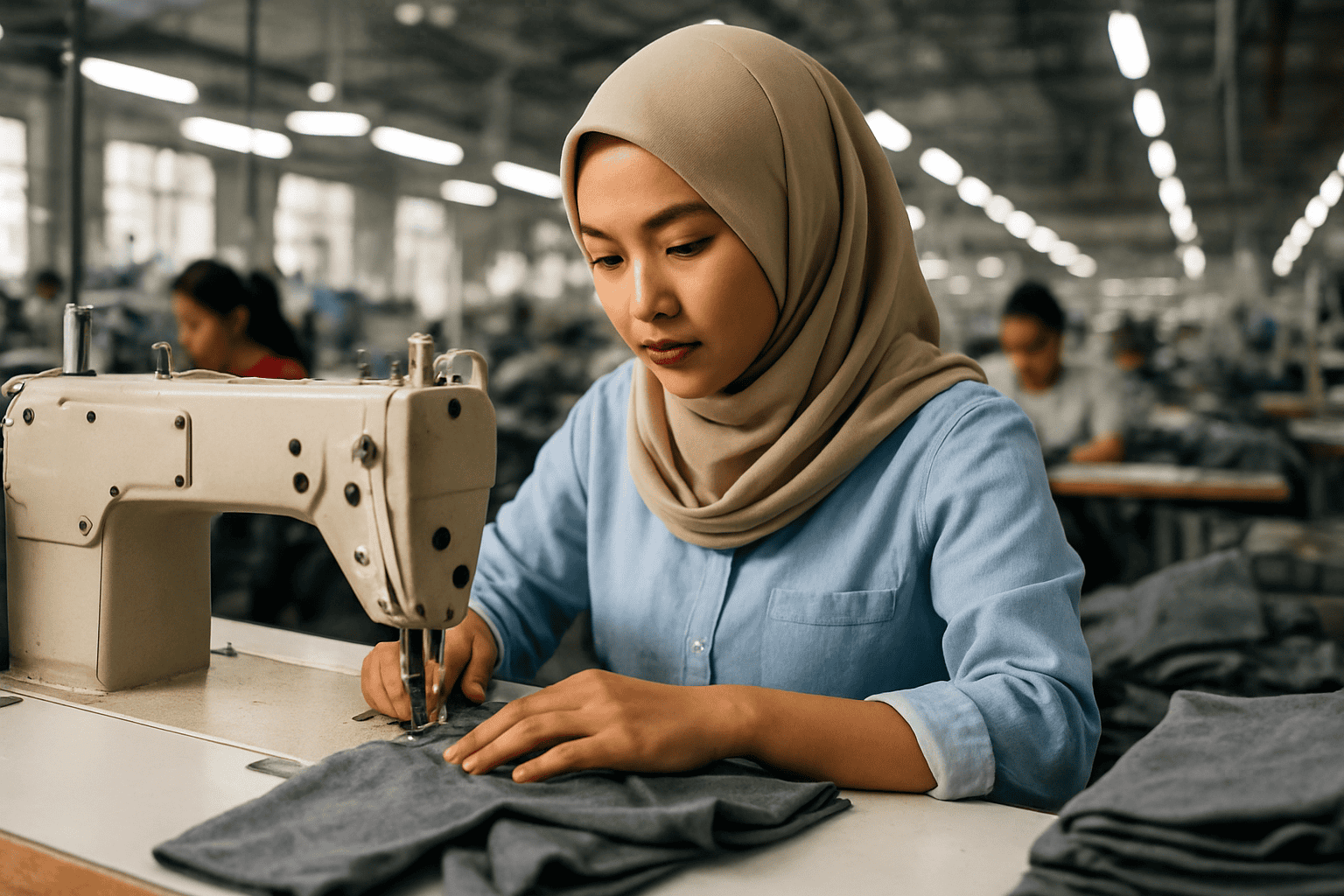
From One-Country Dependency to Diversified Sourcing: The New Global Fashion Map
Table of Contents
- Introduction
- 1. The Decline of One-Country Dependency: Why Diversification Became Imperative
- 2. The New Geography: Emerging Destinations in the Global Fashion Network
- 3. Tariffs and Trade Policy as Strategic Levers
- 4. Multi-Hub Sourcing: The Operational Model Behind Diversification
- 5. Quality, Compliance, and Proximity: Balancing Cost and Risk
- 6. The Indonesia Advantage: Bandung as a Catalyst for Diversified Sourcing
- 7. Designing a Resilient Global Fashion Map: Practical Frameworks
- FAQ
- Conclusion
Introduction
World KNK’s Perspective: Indonesia as a Strategic Hub
From Bandung, Indonesia, we see a practical path to diversification. Our end-to-end capabilities, from fabric sourcing to final delivery, support a multi-hub approach without sacrificing quality. Indonesia combines traditional craft with scalable production, enabling brands to spread output across regions while maintaining standards.
Honduras is emerging as a potential nearshore option for knit goods and casual wear, offering competitive labor costs and proximity to North American markets that help shorten lead times and reduce freight risks. the global apparel industry is increasingly navigating a multi-hub sourcing paradigm to balance cost, speed, and resilience in a volatile trade environment. American Apparel & Footwear Association members are actively engaging in policy discussions to advocate for fair trade and sustainable sourcing standards that support diversified, resilient supply chains.
Our stance: diversify with partners who deliver reliable execution and long‑term stability. This approach cushions timelines against trade swings and strengthens supplier continuity.
1. The Decline of One-Country Dependency: Why Diversification Became Imperative
Early signals: evolving buyer strategies and market pressures
Buyers diversified suppliers in response to cost volatility and lead-time risk. They mapped alternate centers and tested capacity near markets. The result is a shift toward multi-country networks that can adapt to conditions and protect margins.
World KNK has observed gains when firms add a secondary supplier within 1,000 miles of major markets, reducing transit times and exposure to policy shifts.
2. The New Geography: Emerging Destinations in the Global Fashion Network
Vietnam as a rising powerhouse
Vietnam is increasingly integrated as a core node in production networks. Its strengths include skilled labor, improving textile capabilities, and scalability for mid to high-volume orders. Brands are choosing Vietnam to shorten lead times without compromising quality.
Practical example: a mid sized sneaker line shifts 20 percent of cut and sew to Vietnam, cutting overall lead times by about two weeks. Real world impact: greater reliability during seasonal spikes and fewer last minute rush charges.
Actionable steps: map your bill of materials to Vietnam suppliers, pilot a small run with a local QC team, and build a shared production calendar with partners. World KNK clients report benefits when integrating fabric sourcing, cutting, and finishing under unified timelines.
South Asia and the rise of Bangladesh, India, and Pakistan
Bangladesh is expanding capacity in knit and woven apparel, with competitive unit economics and ongoing investments in compliance and workforce training. India is strengthening its textiles position through growing textile parks and broader domestic capacity.
Pakistan is drawing attention for niche production clusters and potential cost advantages in specific fabric and sewing operations. These markets complement nearshore options and diversify risk across the region.
Practical caveat: multiple exchange rates and tariff changes can erode gains. Mitigation: lock in long term supplier terms and include price revision clauses in contracts. Real world data shows firms reducing freight costs by routing seasonal lines through Bangladesh while testing high quality woven goods from India.
Sri Lanka is emerging as a values-driven hub for knitwear and basics, offering strong textile heritage, reliable compliance, and nearshore proximity to Europe and the Middle East that complements broader diversification.
Connections in Southeast Asia: Indonesia’s evolving role
Indonesia serves as a strategic connector between established hubs and newer centers. Its end-to-end service model, from fabric sourcing to delivery, supports multi-hub strategies while maintaining quality control.
Bandung and nearby provinces are shaping collaborative opportunities with global brands, enabling closer-to-market access without sacrificing scalable capacity.
Actionable tip: establish a regional quality council that includes Indonesian suppliers, a local QA firm, and a brand representative. Track lead times, defect rates, and cost per unit across hubs to optimize allocations for the next season. World KNK notes that near-term pilots in Bandung can reveal quick wins in fabric sourcing and post production finishing.
3. Tariffs and Trade Policy as Strategic Levers
Tariff-driven realignments: how costs shift across regions
Tariff changes redraw cost advantages across regions. When duties rise on one country, brands reallocate output to areas with lower or no tariffs, altering unit economics and lead times. This reshapes production planning, supplier selection, and inventory strategy in real time.
Manufacturers respond with parallel sourcing and pricing adjustments to preserve margins. Small shifts in duty levels can tip the balance between nearshoring and offshore options, driving a more nuanced production network rather than a single cheapest origin.
World KNK and its subsidiary Kizen Lab recommends testing regional clusters with pilot runs: keep a small portion of capacity in alternative hubs and measure impact on cycle time, costs, and quality. Use real data from tariff cycles to forecast break-even points between origins. Additionally, consider the strategic advantages for mid-scale runs.
Policy uncertainty and contingency planning
Policy signals create a moving target for planners. Firms build buffer capacity, maintain multi-country supplier lists, and run scenario analyses to anticipate possible tariff hikes or reversals. This reduces reaction time when policy upticks occur and protects delivery commitments to retailers.
Contingency plans often include pre-negotiated line capacities, flexible MOQs, and staged production that can switch destinations without eroding quality or timelines.
Practical step: map your critical components to at least two eligible sources per region, with a 60, 90 day supply cushion for the most volatile parts.
Case studies: U.S. and China dynamics and ripple effects
Tariff policies in the United States have shifted production toward diversified hubs. The ripple effects extend to fabric markets, logistics pricing, and cross-border testing programs.
Rising duties have encouraged brands to test regional clusters that can absorb demand surges with tighter control over compliance and traceability, creating more resilient production networks across multiple nations.
4. Multi-Hub Sourcing: The Operational Model Behind Diversification
Factory networks across multiple regions
You should not rely on a single origin. Brands now build factory footprints that span several regions to balance capacity, quality, and cost. This diversification reduces exposure to tariffs and helps maintain steady production during peak seasons or disruptions.
New insight: align hub roles to product complexity and market access. For example, reserve nearshore or regional hubs for high-velocity SKUs while keeping bulk items in established centers. This approach preserves quality while enabling quicker responses to regional demand shifts.
Concrete steps: map product families to suitable regions, then assign preferred vendors with matching capabilities. Standardize technical specs and a single audit process across sites. Maintain transparent communication with monthly scorecards so a delay in one region never blindsides the rest.
Production agility: switching between destinations
Agility comes from modular production lines and scalable capacity. When demand shifts or a disruption hits one hub, you can reassign runs to alternate destinations without major retooling. The result is preserved lead times and consistent output fidelity.
Practical approach: create a regional production calendar, predefine alternative line setups, and run quarterly tabletop exercises. Track setup times, changeover costs, and yield impacts to stay within target lead time and cost bands.
Supply chain resilience through distributed sourcing
- Redundancy: duplicate critical capacities to absorb shocks from weather, logistics, or labor disruptions. For example, pair a Southeast Asia line with a Central America backstop for knit tops.
- Inventory posture: diversify safety stock placement across regions to protect service levels. Use data to size regional buffers by demand velocity and seasonality.
- Risk monitoring: continuously assess geopolitical and regulatory changes to inform proactive reallocation decisions. Set triggers for automatic supplier rotation when exchange rates or tariffs cross thresholds.
5. Quality, Compliance, and Proximity: Balancing Cost and Risk
Labor costs, quality control, and compliance in a diversified map
Measure regional labour cost variance alongside the skill mix required for each product family. Compare wages for specific operations, like seamstressing in different markets, and align these costs with defect-rate targets to balance cost and quality.
Adopt an integrated quality management approach across sites. Use a unified set of inspection checklists from fabric sourcing to final assembly, and conduct cross-site audits on a regular cadence to detect drift early.
- Centralized supplier scorecards consolidate defects, on-time delivery, and audit results in one view.
- Uniform testing regimes across sites protect consistent product specs, from fabric weight to stitch density.
- Periodic capability reviews keep suppliers aligned with evolving brand standards and new materials.
Proximity considerations: time-to-market and nearshoring potential
Proximity can shorten transit times for select SKUs, supporting tighter replenishment and faster seasonal responses. Use nearshoring for time-sensitive lines while preserving longer-haul hubs for bulk items.
Account for local constraints such as port queues, rail bottlenecks, and customs timelines. Build flexible routing options and regional buffers to safeguard lead times.
- Near-term production in closer zones accelerates cycles and reduces disruption exposure.
- Staged production provides a fallback if a facility experiences a shutdown or quality issue.
- Collaborative forecasting with regional partners lowers stockouts and boosts responsiveness.
Brand expectations and CSR in a multi-country setup
CSR remains a live risk factor for global brands. Embed welfare, environmental responsibility, and traceability into sourcing decisions rather than treating them as separate efforts.
Balance cost with verifiable standards by selecting partners who publish third-party audit results and clear remediation plans. This approach supports supply-chain resilience amid tariff shifts and geopolitical volatility.
6. The Indonesia Advantage: Bandung as a Catalyst for Diversified Sourcing
Indonesia’s manufacturing strengths and capabilities
Bandung sits at the center of a broad textile ecosystem, spanning fiber to finished garments. The region provides access to skilled labor and scalable production capacity tailored to mid-market fashion lines. This enables closer collaboration with mills, dyeing houses, and cutting facilities, accelerating feedback on fit and finish.
Proximity to regional markets supports faster feedback loops and more predictable timelines. Local suppliers increasingly align with global brands on standardized specs and quality controls, reducing rework and delays.
End-to-end service model from fabric to delivery
The Bandung footprint supports an integrated workflow that covers fabric sourcing, processing, and garment assembly under a single program. This consolidation shortens handoffs and enhances traceability across stages.
Logistics planning leverages regional freight corridors and duty timeline awareness to optimize delivery windows. Brands can experiment with smaller runs and then scale up with clearer visibility.
Opportunities for collaboration with global brands
Foreign partners can co-create programs with Bandung-based suppliers to share technical standards, compliance frameworks, and CSR practices. Local factories welcome technology transfers that improve efficiency while preserving quality.
Casual-to-premium segments benefit from Bandung’s flexibility in MOQs, staged productions, and rapid rerouting when demand shifts, helping brands hedge against regional disruptions.
7. Designing a Resilient Global Fashion Map: Practical Frameworks
Strategic diversification playbook
Begin with a diversification thesis that aligns with your brand position and cost realities. Map production needs by product family, volume, and lead time to guide hub selection. Build a phased plan that grows from core suppliers to secondary centers as volumes rise and market conditions change.
- Define target production shares by region to balance risk and cost across a multi-country network.
- Allocate smaller, flexible capacity in nearby markets to support quick turns and near real-time adjustments.
- Maintain a run-rate baseline in established hubs while testing new centers to avoid disruptions.
Risk assessment and contingency planning
Use a structured risk framework that tracks geopolitical developments, currency movements, and infrastructure reliability. Run scenario analyses to quantify potential impacts on lead times and costs. Build contingency buffers in both capacity and inventory so service levels stay intact during shocks.
- Regularly review supplier financial health and political risk indicators.
- Predefine alternative routing and production switches for critical SKUs.
- Schedule periodic drills to validate contingency readiness.
Vendor and partner selection for multi-country networks
Choose partners by capability fit, quality consistency, and compliance track records. Favor suppliers with transparent data, integrated ERP systems, and clear escalation procedures. Formalize collaboration through staged onboarding and performance gates tied to real-world metrics.
- Reality check: Run pilots with two to three vendors in adjacent regions to compare lead times and defect rates within 60 days.
- Concrete steps for onboarding: define data sharing, SLAs, and escalation paths before signing.
- Common pitfalls: overloading early suppliers with excessive custom requirements or vague KPIs.
| Criterion | What to look for | How to measure |
|---|---|---|
| Capability | End-to-end production capacity across multiple product lines | Output per month, on-time delivery rate |
| Quality | Consistent adherence to specs and testing regimes | Defect rate, audit frequency |
| Compliance | Labor standards, environmental controls, traceability | Certifications, audit results |
FAQ
What is driving the shift from a single country dependency to diversified sourcing?
Brands diversify to mitigate risk from tariffs, political shifts, and unexpected disruptions. The move to multiple hubs also unlocks regional proximity benefits, which can shave lead times and support local demand patterns. Real world example: a mid-market apparel brand splits production among Vietnam for knits, Mexico for woven tops, and a small Poland facility for EU orders to reduce customs checks.
Which regions are emerging as viable production centers?
Southeast Asia accelerates its role with Vietnam and India textiles gaining momentum. Nearshoring gains traction in Mexico and nearby Central American markets. Indonesia, Bangladesh, and Pakistan are increasingly woven into diversified networks. Practical step: run a quarterly hub viability review using total landed cost and regional risk scores, updating plans as tariff regimes change.
How does multi-hub sourcing affect lead times and quality control?
A distributed network can shorten regional lead times when production aligns with local demand. It raises quality control complexity, so brands standardize specs, implement uniform quality protocols, and deepen supplier collaboration. Actionable tip: implement a shared quality dashboard across hubs and run monthly cross-site audits with a single corrective action log.
What role does the Bandung region in Indonesia play in this map?
Bandung functions as an end-to-end node for fabric sourcing, processing, and garment assembly. Its proximity to regional suppliers enables integrated delivery and rapid responsiveness, often reducing warehouse dwell time by 15 to 30 days in peak seasons.
How should a brand start building a diversified production network?
Begin with a diversification thesis aligned to product families and volumes. Map hub roles, plan phased expansion, and set contingency plans for critical SKUs. Evaluate partners on capability, quality, and compliance track records. Practical steps: pilot with three hubs, set a 90-day performance window, and lock in capacity commitments before scaling.
Yes. For smaller orders, seek facilities offering flexible MOQs and scalable capacity. These centers let you test new hubs prior to committing to larger runs. World KNK recommends starting with a pilot run of 2,000 units per SKU and measuring on-time delivery, defect rate, and response time to changes.
| Topic | Key Insight | Practical Note |
|---|---|---|
| Diversification rationale | Reduces risk and improves resilience | Balance cost with lead times across hubs |
| Hub selection | Capability, quality, and compliance matter most | Use staged onboarding and performance gates |
| Smaller orders | Test new centers with flexible MOQs | Monitor feedback loops and adjust quickly |
Conclusion
Key takeaways about the new global fashion map
The fashion industry now relies on a distributed production network across multiple hubs. This structure hedges against tariffs and political shifts while shortening lead times and boosting responsiveness to regional demand.
Think in terms of regional clusters rather than single suppliers. Diversification supports faster market access, closer collaboration with local partners, and more predictable schedules.
Implications for brands, manufacturers, and buyers
- Brands: adjust sourcing to include nearshoring and Southeast Asia hubs, balancing cost with speed to market. For example, a midtier label might shift denim production to Mexico for North American launches while keeping knitwear in Vietnam for faster Asia shipments.
- Manufacturers: invest in flexible capacity and implement detailed lead-time dashboards so partners can anticipate changes and optimize sequencing across regions.
- Buyers: expect shorter feedback loops, stricter quality controls, and diversified risk profiles across the network. Build quarterly reviews to detect bottlenecks early.
World KNK’s path forward in diversified sourcing
World KNK expands end-to-end capabilities from fabric sourcing to delivery, anchored by Bandung’s strategically positioned ecosystem. We enable reliable collaboration across multiple hubs, helping brands cut risk while preserving quality and predictable lead times. Case in point, a recent rollout reduced sample cycles by 22 percent for a Southeast Asia co-production project.
References
- Will President Trump Redraw Fashion’s Global Sourcing Map? | BoF
- U. S. Reconfigures Sourcing Amid Industry Challenges | Modaes Global
- The 2013 global apparel sourcing map , balancing cost, compliance, and …
- How Tariffs Reshaped the Global Fashion Map
- The Sourcing Story: Industry Rewrote Its Geography Without Rewriting …