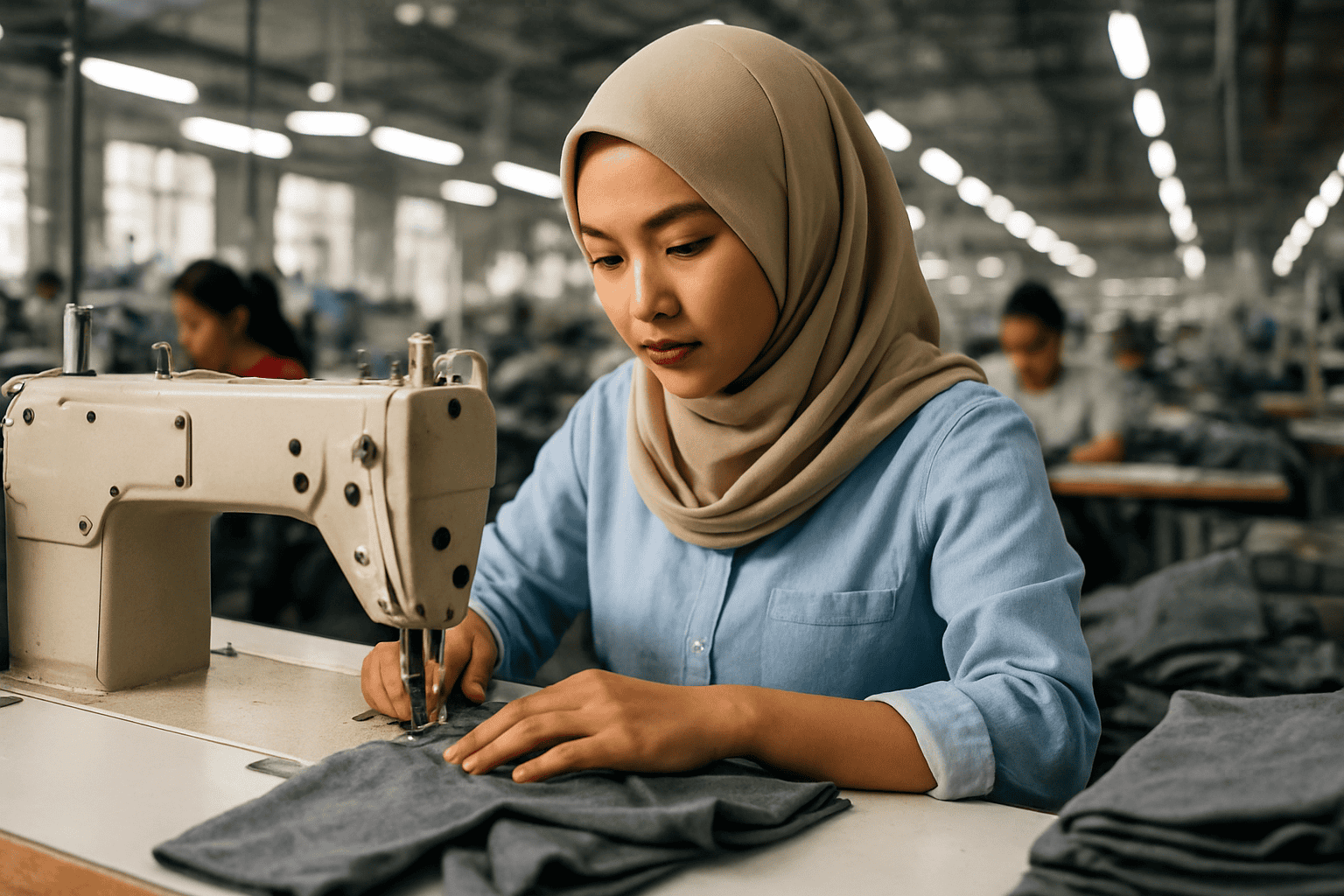
Beyond China: The Strategic Imperative of Diversifying Global Supply Chains
Table of Contents
- Introduction
- 1. The China Plus One Playbook: Concept to Execution
- ASEAN as a Diversification Hub: Indonesia’s Rising Role
- 3. Emerging Markets to Watch: Vietnam, India, and Mexico
- 4. Designing a Resilient Supply Chain Network: Dual-Sourcing and Flexible Capacities
- 5. Governance, Compliance, and Risk Management in Diversified Chains
- 6. The Green and Social Imperatives of Diversification
- FAQ
- Conclusion
Introduction
Why diversification matters in today’s manufacturing landscape
Global supply chains are evolving toward a multi-country network. Geopolitical risk, tariff shifts, and post pandemic recovery have underscored the need for resilience. Diversification reduces exposure to regional disruptions and provides options to adapt to changing demand.
COVID-19 underscored the fragility of single-country supply chains and accelerated the move toward multi-country diversification for apparel brands. The pandemic taught hard lessons in visibility, inventory resilience, and agile re‑sourcing across regions.
Australia’s robust services ecosystem and close allies network make it a strategic partner for nearshore diversification, offering stable customs regimes and high-quality textile inputs to complement regional hubs.
The United States and its allies are accelerating supply-chain
diversification as a core national security and economic strategy,
elevating resilience alongside cost and speed.
The World Economic Forum continues to spotlight global supply-chain diversification as a strategic imperative, urging multi-stakeholder collaboration to enhance resilience and end-to-end visibility across regions.
The shift is about expanding, not abandoning, core manufacturing bases. The China Plus One approach seeks to balance cost, reliability, and speed across multiple hubs. For apparel brands, this translates to fewer bottlenecks, steadier lead times, and clearer visibility across sourcing.
World KNK’s positioning and commitment to resilient supply chains
World KNK leverages two decades of Indonesian garment expertise within a global network. Our end-to-end service, from fabric sourcing to final delivery, aims to deliver a dependable manufacturing partnership as supply chains diversify. Resilience is embedded in everyday operations.
Our approach emphasizes transparency, flexible capacity, and proactive risk mitigation. We help map sourcing options, assess regional strengths, and design production flows that sustain quality while absorbing shifts in geopolitics and markets. Supply Chain Resilience Initiative.
1. The China Plus One Playbook: Concept to Execution
Definition and rationale of China Plus One
The China Plus One strategy extends manufacturing beyond China to include at least one additional country or region. The aim is to balance cost efficiency with resilience, enabling quicker responses to demand shifts and external shocks. For apparel brands, this translates to options across sourcing, production, and logistics that reduce single-point risk while preserving quality and speed.
Historical context and drivers accelerating diversification
Shifts in labor costs, tariff regimes, and global disruptions have propelled diversification. The pandemic exposed vulnerabilities in single-country networks, encouraging brands to explore Southeast Asia, South Asia, and beyond. Ongoing policy realignments and market volatility continue to push for multi-country footprints to sustain margins and agility.
Risk scenarios diversification mitigates
diversification reduces exposure to:
- Regional shutdowns or port congestion
- Tariff volatility and policy shifts
- Labor market disruptions and skill gaps
By spreading production across multiple locales, brands can reallocate capacity quickly, preserve lead times, and maintain product availability during localized crises. The approach also supports end-to-end visibility through synchronized, multi-site production plans rather than isolated sourcing pockets.
ASEAN as a Diversification Hub: Indonesia’s Rising Role
Why ASEAN and Indonesia matter for global apparel manufacturing
ASEAN is a contiguous regional bloc with coordinated policies and shared market access. For apparel brands, it offers closer proximity to key markets in Asia and North America, faster prototyping cycles, and diversified risk outside China. Indonesia stands out with a large, young workforce and a growing textile ecosystem supported by improving logistics networks.
The region enables more flexible production timelines and shorter transit times compared with distant sourcing. This aligns with the demand for faster fashion and seasonal collections while helping maintain quality and cost discipline.
Friendshoring is the practice of relocating production to trusted partners and allied regions to reduce geopolitical and supply risk, while preserving speed and cost efficiency through closer collaboration and standardized standards.
Japan is a key partner in regional diversification, bringing advanced manufacturing capabilities, consistent quality standards, and strong logistics infrastructure that complement nearshoring and resilience strategies in Asia-Pacific.
Infrastructure, policy incentives, and skill advantages
- Industrial parks and better port throughput shorten lead times and lower minimums for small-to-mid volume runs.
- Investment incentives, tax holidays, and streamlined permitting encourage new capacity deployment.
- Labor skills in sewing, finishing, and quality control are expanding through vocational programs and factory onboarding pipelines.
Case studies of successful diversification within Southeast Asia
| Case | What changed | Impact |
|---|---|---|
| Indonesia-based shift | Supplementing existing lines with ASEAN suppliers for trims and stitching | Reduced lead times and lower risk of port delays during peak seasons |
| Regional nearshoring | Multi-country sourcing across Vietnam and Malaysia for fabric sourcing | Improved supplier redundancy and more stable pricing |
3. Emerging Markets to Watch: Vietnam and Mexico
Strategic fit of Vietnam for textiles and garments
Vietnam’s textile and apparel ecosystem benefits from established supplier networks and improving digital planning capabilities. The country’s proximity to key Asian markets supports faster turnarounds for seasonal lines and frequent collections.
Rationale for diversification goes beyond cost. Vietnam offers consistent factory ecosystems, growing automation, and reliable port throughput that align with demand for quick response, while maintaining quality and sustainability standards.
Mexico as a nearshore option for North American demand
Mexico remains a natural nearshore option for the U. S. market, offering established trade routes and familiar regulatory environments. Textile clusters support rapid prototyping and agile production cycles.
Nearshoring to Mexico can shorten transit times, improve supply chain visibility, and balance cost with speed for fast fashion and replenishment programs. Aligning with regional logistics hubs can further reinforce resilience while preserving quality.
4. Designing a Resilient Supply Chain Network: Dual-Sourcing and Flexible Capacities
Balanced sourcing models (dual-sourcing, multi-sourcing)
Adopt a mix of primary and secondary suppliers across regions to cushion against regional shocks. Dual-sourcing preserves core continuity while multi-sourcing adds redundancy. You should map dependencies, monitor capacity commitments, and align with product complexity.
- Establish clear ownership of critical components and timelines
- Set minimum order quantities and quality gates for each supplier
- Regularly validate risk profiles for each sourcing node
Flexibility in production lines, capacity planning, and lead times
Invest in modular tooling and adjustable line setups to switch between SKUs quickly. Use dynamic capacity planning to align with demand signals and seasonal peaks. Build buffer capacity where volatility is highest to protect service levels.
- Forecast-driven capacity reviews every quarter
- Cross-trained crews to enable rapid role changes on the line
- Flexible automation that can handle multiple fabrics and finishes
Redundancy vs. cost: finding the optimal balance
Redundancy protects uptime but adds cost. Aim for a lean core network with strategic backups in nearby regions. The goal is to preserve lead times and product availability without bloating overhead.
5. Governance, Compliance, and Risk Management in Diversified Chains
Trade policies, tariffs, and regional compliance considerations
Diversification reshapes the policy landscape you must navigate. Regional trade agreements and tariff regimes vary, influencing cost structures and lead times across sourcing nodes. You need clear ownership of regulatory changes and their operational impact.
Map policy milestones to production calendars. Build a playbook that aligns supplier onboarding with regional rules, ensuring that new sites meet local reporting, labeling, and origin requirements from day one.
Quality assurance across multiple ecosystems
Maintaining consistent quality is more complex when parts come from multiple ecosystems. Establish unified quality standards, audit cadences, and corrective action protocols that span regions. Centralize defect tracking to spot patterns early.
Train suppliers on your standard operating procedures and inspection criteria. Regular cross-site quality reviews help prevent drift and protect brand integrity.
Visibility, data sharing, and supplier collaboration platforms
End-to-end visibility is a prerequisite for resilient networks. Implement secure data-sharing across procurement, production, and logistics to forecast disruption and coordinate responses.
Choose platforms that support real-time feed of capacity, inventory, and shipment status. Foster supplier collaboration through standardized data formats and agreed escalation paths. This reduces response times during volatility.
6. The Green and Social Imperatives of Diversification
Sustainability across dispersed supply networks
Diversifying production requires unified standards for energy use, water stewardship, and waste reduction across multiple regions. These standards must travel with suppliers as networks expand to maintain consistent environmental performance.
Establish regionally appropriate decarbonization plans and track progress against credible targets tied to recognized frameworks or local initiatives.
Labor practices, ethical sourcing, and brand integrity
A broader footprint heightens the importance of consistent labor standards. Implement ongoing supplier assessments, independent audits, and transparent corrective actions to sustain trust with consumers and retailers.
Documentation of worker welfare, fair wages, and safe working conditions should accompany every sourcing node, not just core sites.
Measurement: lifecycle impact and traceability
End-to-end traceability becomes essential as networks expand. Build systems that capture environmental and social metrics from raw materials through finished garments.
Adopt standardized data models to enable cross-site reporting, enabling rapid identification of hotspots and opportunities for improvement.
| Metric | Traditional single-site | Diversified network |
|---|---|---|
| Carbon intensity per unit | Higher risk of variability | Can be reduced with regional efficiency gains |
| Audits per supplier | Concentrated | Expanded coverage required, but broader compliance |
| Traceability depth | Limited | Deeper, across multiple ecosystems |
FAQ
How does diversification protect a clothing manufacturer from shocks in the supply chain?
Diversification spreads risk across multiple regions, reducing exposure to localized disruptions such as factory shutdowns or port delays. This approach supports steady output and improves resilience for critical product lines.
- What is China Plus One in practical terms for apparel?
- Which Southeast Asian markets are most relevant for textiles and garments?
- How should a brand balance cost and resilience when adding suppliers?
What are the most common nearshore and offshoring options for apparel?
Nearshoring typically involves nearby markets with similar time zones and faster logistics. Offshore diversification leverages cost advantages in other regions. The right mix depends on lead times, labor costs, and the desired balance of speed and price.
| Question | Key Insight |
|---|---|
| Labor costs vary by region | Costs shift with market cycles; diversification helps manage exposure. |
| Visibility matters | End-to-end data sharing across sites enables proactive risk management. |
| Quality control | Standardized procedures and cross-site audits maintain consistency. |
Conclusion
Strategic takeaways for brands and manufacturers
Diversification remains a practical risk management approach for apparel brands navigating changing demand. Build a multi-country sourcing map that balances cost, reliability, and speed. Prioritize end-to-end visibility to detect issues before they affect delivery timelines. Leverage dual or multi-sourcing to cushion against regional disruptions and tariff shifts.
The G7 economies are increasingly coordinating on supply chain resilience, setting shared standards and incentives to diversify beyond single-country dependence.
Adopt a phased rollout that starts with nearby capable markets and expands as you gain experience. Align supplier relationships around clear escalation paths and standardized data sharing. Measure performance not only by cost but by resilience and lead-time consistency.
World KNK’s path forward in a diversified global supply landscape
World KNK and its subsidiary Kizen Lab will continue to optimize its Bandung base while expanding capacity with trusted partners across ASEAN and nearby markets. The focus is practical, end-to-end execution that preserves quality and reliability at scale, even as networks broaden.
| Focus area | Action |
|---|---|
| Network design | Balanced dual-sourcing and regional hubs |
| Visibility | Real-time capacity, inventory, and shipment tracking |
| Quality | Standardized procedures across sites and regular cross-site reviews |
References
- Diversifying Beyond China: An Imperative for Global Supply Chain …
- Achieving Global Supply Chain Resilience: The Imperative of …
- De-risking Global Supply Chains: Looking Beyond Material Flows
- De-risking Global Supply Chains: Looking Beyond Material Flows
- The Geopolitical Imperative for Reorganising Global Supply Chains