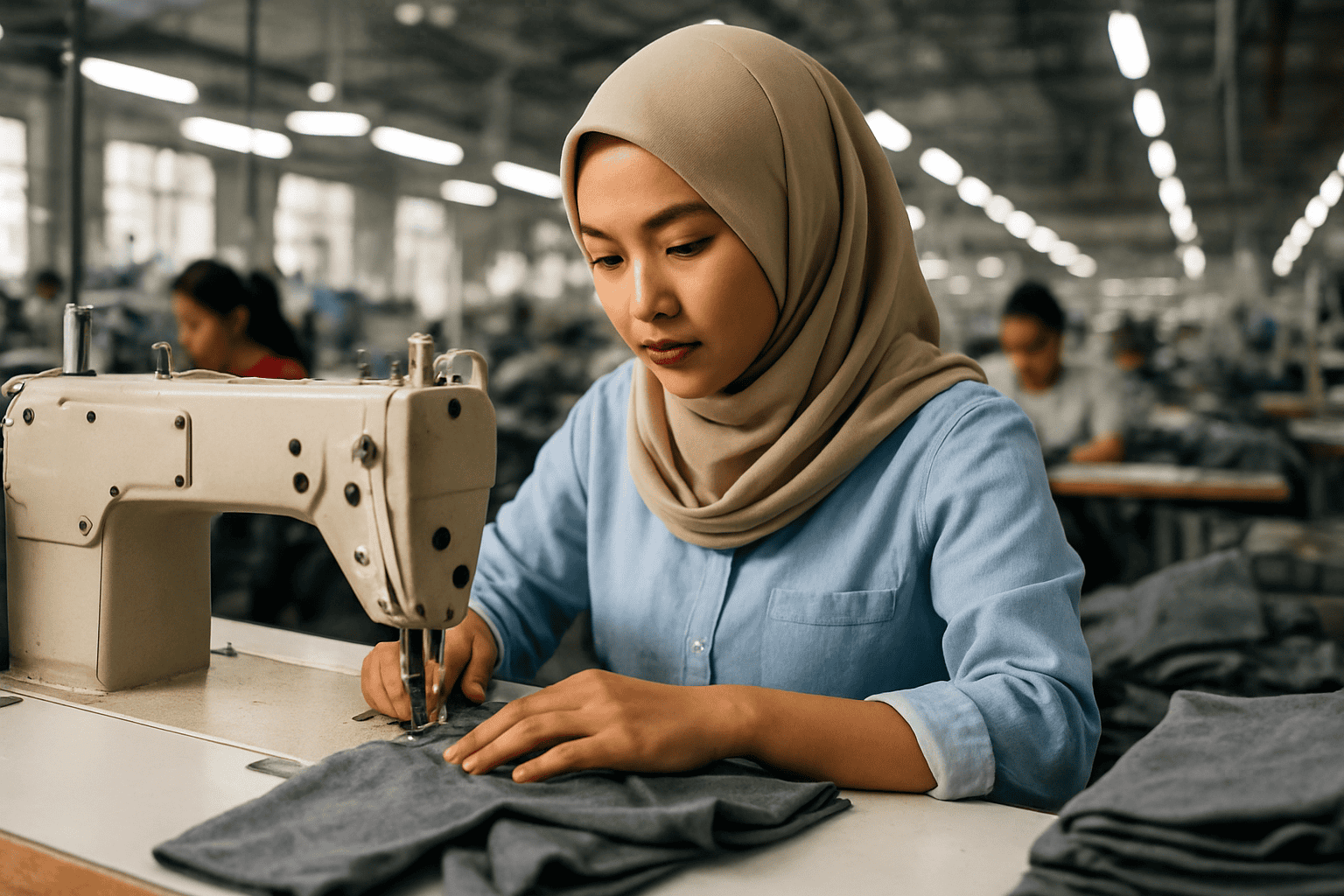
A British school, uniform shop or reseller that wants garments under its own name orders them private label: patterns cut to the buyer’s design, crest and labels sewn in during production, and nothing of the factory’s on the finished piece. For the September 2027 term the working order window is May to June 2027, and the landed-cost settings for the UK sit below.
What does private label mean for school uniforms?
The buyer brings the design and the programme dates; the making follows that brief. Garments are cut to the buyer’s patterns in the buyer’s colourway, sized across the full run, and the branding is stitched in while the garment is on the line, so the finished piece carries the school’s or the shop’s identity alone. A decorated blank bought from stock cannot match that, because the cloth, the cut and the branding all belong to someone else’s specification.
When should UK buyers order for the September 2027 term?
England’s 2027/28 school year begins in the first days of September, with council pages already showing 1 and 2 September starts; Scottish councils run earlier, with some pupils back in mid-August. A made-to-pattern programme ordered from Indonesia carries a long clock: sampling at 1 to 2 weeks per round, bulk sewing at 6 to 12 weeks from cut to packed cartons, and sea freight to UK ports in the 30 to 50 day planning range. Counted back from a September term, that sets the May to June 2027 order window, with April into early June suiting buyers serving Scottish mid-August returns and June orders running on the fastest clock, confirmed at quote.
How does the DfE uniform cost guidance shape a private label programme?
English schools work to statutory guidance on the cost of school uniforms, and from September 2026 that guidance limits the number of branded items, including PE kit, a uniform can require. If you are reviewing a uniform policy against that guidance, base garments in the school’s colours are the pieces that suit made-to-pattern production, and the crest sits on the few items the guidance allows. Schools weighing their own purchasing decisions against the guidance will find the per-piece build of a quote makes that comparison straightforward.
What duty and VAT apply to school uniforms entering the UK?
The trade settings changed for 2027: Indonesia graduated from the UK’s Developing Countries Trading Scheme on 1 January 2027, so from that date the UK Global Tariff applies, and woven clothing typically sits around 12 percent, with the exact rate set per garment code on the UK trade tariff. VAT at 20 percent applies on top, calculated on the price plus freight plus the duty. The landed arithmetic per style is set out in the quote before it is final, so the margin on a private label range is known before ordering. The buyer’s side needs an EORI number and a customs declaration, with declarations required for consignments over £135.
What does the production run look like for a UK programme?
Sampling opens the programme: one round on a proven specification, two where the design is new, with samples couriered for wear-testing between rounds. Bulk follows at 6 to 12 weeks from cut on lines that have cut only wovens, with checks placed between operations along the line and patterns held as digital files against the programme. Sea freight then carries the consignment to a UK port across the planning range above. A first range below bulk scale runs on the 500-piece FOB lane at Kizen Lab, our sister company on the same campus.
What happens to the patterns between seasons?
For a mid-year intake or an autumn restock, the pattern file is what the top-up runs from, so the garments match the first delivery without a new sampling programme. Branding specifications travel with the file, which keeps the buyer’s identity identical across every later run, and a second season is mostly production rather than preparation.
Private label questions from UK buyers
What is the minimum order for private label school uniforms?
Bulk programmes run from 1,000 pieces per style on these lines, mixed across the size run. A first range or single-school trial runs from 500 pieces per style on the FOB pilot lane at Kizen Lab, and scales up when the styles prove out.
Who books the freight on an FOB order?
Under FOB terms production and export packing are completed to the loading port, and the ocean leg and final delivery are arranged from the buyer’s side, typically by a forwarder. We confirm transit windows at the quote stage so the delivery date is known early.
Does the duty on Indonesian garments make private label uneconomic?
Duty is charged on the garment value at its code’s rate, and VAT sits on the price plus freight plus that duty, so the landed arithmetic matters. The quote sets it out per style, which lets a shop or school compare private label against decorated stock with the numbers in front of them.
What labels must UK-bound uniforms carry?
Fibre content labelling is mandatory under the UK’s textile products regulations, so every garment states its composition. Care labelling is voluntary in the UK, but we cut a care label into every programme, because parents read it far more often than anyone expects.
When is the latest order for the September 2027 term?
June 2027 is the latest for a first-days-of-September term, running on the fastest clock with no sampling slack. Buyers serving the earliest start dates, and Scotland’s mid-August returns, order in May.