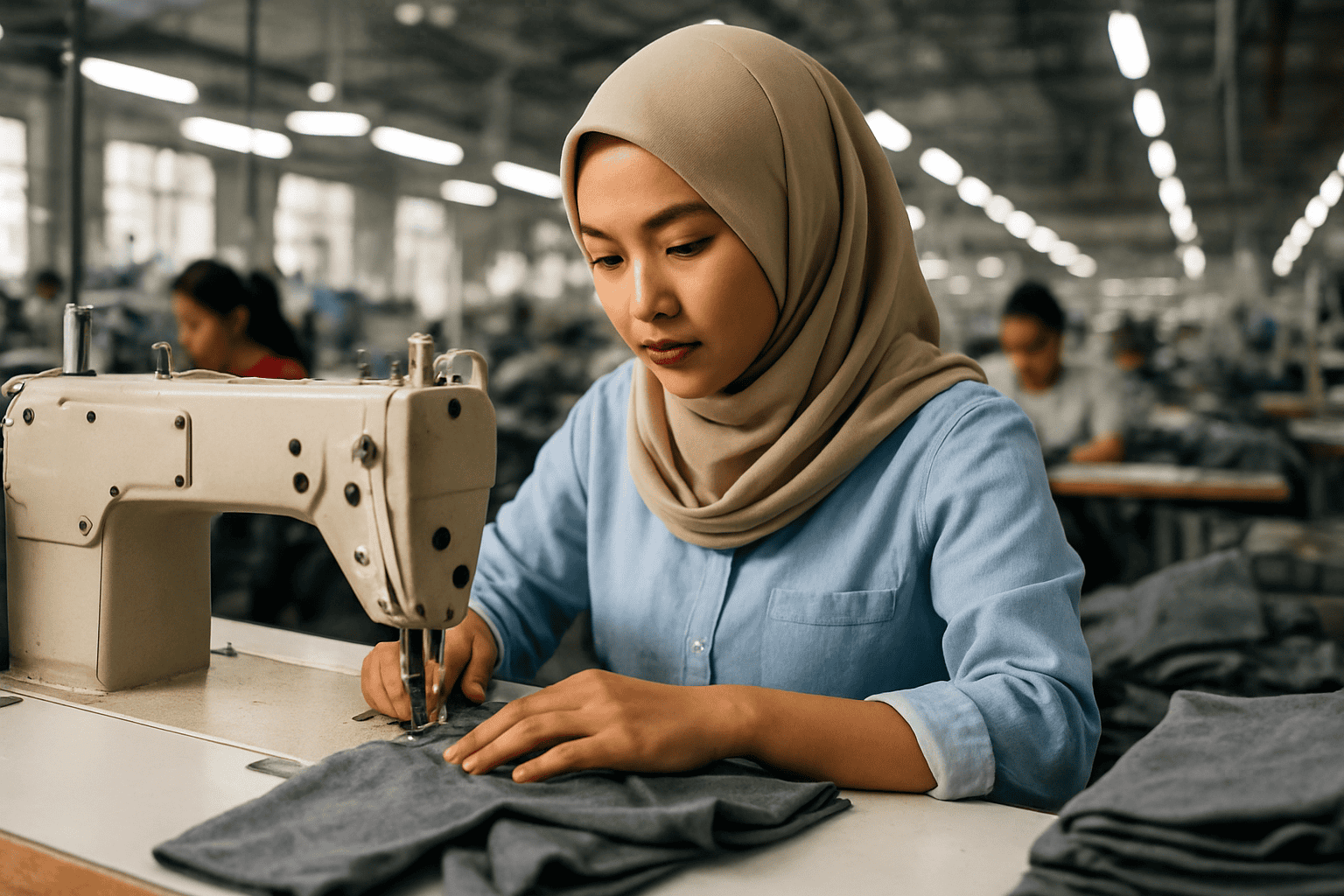
Denim weights are where spec conversations start, and the ounces are where most of them go wrong. A US brand asks for “14 ounce denim” without knowing what the ounces measure, orders raw denim without knowing it can shrink up to ten percent, and pays a selvedge premium without knowing selvedge only describes the loom’s edge. Denim is one of the product lines we cut and sew on our floor in Bandung, and this is the fabric guide we give US brands before a jeans or jacket program is specced.
The short answer: denim weight is ounces per square yard, and three bands cover nearly everything: under 12 ounces for shirts, skirts, and summer-weight jeans; 12 to 16 ounces for the classic jeans weight; over 16 ounces for heavy jeans and jackets. Sanforized denim shrinks under 1 percent; unsanforized can shrink up to 10 percent on the first wash. Selvedge describes the loom edge, not the quality.
What do denim weights actually mean?
The ounces measure fabric weight per square yard, and the bands break at 12 and 16:
- Under 12 ounces: lightweight. Shirts, skirts, and summer-weight jeans. Below about 10.5 ounces, denim is typically woven 2×1 rather than the classic 3×1.
- 12 to 16 ounces: midweight. The most common and versatile band, and the classic jeans weight: durable enough for daily wear, workable on standard equipment.
- Over 16 ounces: heavyweight. Jeans and, occasionally, jackets. Stiff out of the box, slow to break in, and built to last for years.
The garment mapping is consistent across mills even where the band edges differ, so spec the weight by what the garment is, not by a number that sounded right on a forum.
What is the difference between raw, washed, and sanforized?
Three labels get confused constantly, and they sit on different axes:
- Raw versus washed describes what happened after dyeing: raw denim is unwashed and unworn, left stiff and dark.
- Sanforized versus unsanforized describes pre-shrinking. Sanforization mechanically compacts the fabric so residual shrinkage is under 1 percent; unsanforized, loom-state denim can shrink up to 10 percent on the first wash and keeps settling until the third.
- One-wash is unsanforized denim the maker has pre-washed to remove the shrinkage, so the buyer gets raw character without the ten percent surprise.
For a production program, the shrinkage axis belongs in the tech pack, and we ask for it there on every denim program we quote. A spec that says “denim” without saying sanforized or unsanforized is leaving a 10 percent size swing to chance, which is a returns log, not a spec.
What do the different washes do?
Washes are finishing treatments that change how the denim looks and wears:
- Stone wash tumbles the garment with pumice, abrading indigo off high-friction areas for a broken-in look, at the cost of some fabric strength.
- Enzyme wash uses cellulase enzymes to lift the indigo more gently, delivering a soft vintage fade while preserving fabric strength, with no stone sludge.
- Acid wash uses chlorine to strip color into high-contrast, marbled patches, a statement finish rather than a subtle one.
Wash choice is a design decision made at the sample stage, where the production clock also starts, and it is one more reason the PP sample is cut from the actual bulk fabric: a wash reads differently at 14 ounces than it does at 8.
Does selvedge mean better denim?
No. Selvedge describes the self-finished edge that shuttle looms produce on narrow fabric; modern projectile looms weave wider fabric without that edge. Selvedge denim is not automatically heavier, stronger, or better wearing. It is a construction detail with a devoted following, and it is a real option to spec, but it is an edge, not a grade.
What about stretch denim?
Stretch denim typically blends 1 to 3 percent elastane into the weft. The trade: stretch adds comfort and recovery, and elastane breaks down over time, which reads as baggy knees and a shorter garment life. Rigid denim molds to the wearer instead and develops the fades stretch cannot produce. Spec the exact elastane percentage; the stretch and rigid versions wear like different garments.
Denim in Indonesia: the fabric supply line
Sritex, Indonesia’s largest textile group and a major denim maker, ceased operations in March 2025, so the public picture of who weaves denim domestically is thinner than it was. The practical line for a US brand is simpler than the market news: the fabric is specced by weight, weave, and finish with the factory, and our fabric sourcing step secures the rolls that match before cutting. The denim capability is the floor’s; the fabric program is named in the tech pack.
Denim weights and washes: the quick answers
What do denim weight numbers mean?
Ounces per square yard of fabric. Under 12 ounces is lightweight (shirts, skirts), 12 to 16 is the classic jeans band, and over 16 is heavy jeans and jackets.
How much does raw denim shrink?
Unsanforized raw denim can shrink up to 10 percent on the first wash and keeps settling until the third. Sanforized denim is pre-shrunk to under 1 percent. One-wash denim is unsanforized fabric pre-washed by the maker.
Does selvedge denim last longer?
Selvedge describes the self-finished loom edge, not the fabric’s weight or quality. Spec it for the edge itself if you want it, not as a durability upgrade.
What is the best weight for jeans?
12 to 16 ounces is the classic, versatile jeans band. Under 12 ounces suits shirts, skirts, and summer jeans; over 16 ounces builds heavy jeans and jackets.
What is the difference between stone wash and enzyme wash?
Stone wash abrades the indigo with pumice for a broken-in look at some cost to fabric strength; enzyme wash lifts the fade gently with cellulase enzymes and preserves the fabric.
Bring the weight, the shrinkage spec, and the wash to the quote, and the denim program is built on numbers instead of guesses. Start a quote here or book capacity with the spec already named.