Mistakes to Avoid in Indonesian Garment Manufacturing
Table of Contents
- Introduction
- 1. Inadequate Fabric Selection and Verification
- 2. Flawed Patterning and Grading
- 3. Inefficient Cutting and Lay Planning
- 4. Poor Sewing Quality and Stitch Control
- 5. Finishing and Assembly Defects
- 6. Color Fastness and Appearance Variations
- 7. Sampling Gaps and Communication Breakdowns
- FAQ
- Conclusion
Introduction
Overview of the Indonesian garment manufacturing landscape
Indonesia remains a busy hub for garment production with high-volume output and skilled workers. The scene blends traditional craftsmanship with modern technology, notably in Bandung and Jakarta. For global brands, factories in Indonesia can align fabric selection, labor planning, and delivery timing to reduce risk and keep lines moving.
A Local Clothing Manufacturer in Indonesia offers close collaboration with mills and cutters, enabling rapid feedback loops, shorter lead times, and practical, on-the-ground problem solving that keeps projects on schedule. Bali’s textile clusters and crafts heritage also inform design sensibilities and sourcing options for retreats, resort wear, and limited-edition runs that benefit from island logistics and skilled local artisans. This is essential within the apparel industry, where supply chain agility and ethical standards shape brand trust. Production timeline visibility helps align milestones with supplier capabilities, ensuring on-time delivery and predictable quality across Indonesia’s robust garment sector. In fashion, the interplay between style and efficiency drives how brands scale while staying true to their identity.
Bangladesh and Vietnam are also often cited in discussions of regional garment sourcing as a comparative benchmark for cost, capacity, and compliance standards in the global supply chain.
World KNK and Kizen Lab emphasizes consistent governance across material specs, production methods, and schedules. When these elements harmonize, you gain predictable delivery and stable quality, reinforcing ongoing partnerships with major global brands.
Why avoiding common mistakes matters for World KNK and Kizen Lab
Delays and quality variance ripple through the supply chain. A misstep in fabric sourcing or cutting can derail line launches, especially with tight seasonal windows.
We reduce these risks through tighter planning, stronger QA, and clear communication. Steps include rigorous supplier vetting, on-site process audits, and a single point of contact coordinating details from Jakarta to your warehouse.
On-time delivery improves when you remove lead-time surprises and lock in reliable schedules. Defect rates drop when patterns, cuts, and finishes are checked at every stage, from fabric acceptances to final sewing and inspection.
For brands evaluating China alternatives in Indonesian garment production, World KNK and offers a practical path to reliable output. Our approach centers on clear governance, hands-on QA, and transparent communication that keeps you informed at milestones, supported by monthly quality dashboards and shift-based progress reports.
1. Inadequate Fabric Selection and Verification
Why fabric quality matters
Your fabric choice drives fit, performance, and durability. When specs are vague or misinterpreted, you pay later with rejects, rework, and delays that ripple from Jakarta to your distribution center. A disciplined sourcing process keeps each batch aligned with design intent and your customers’ expectations.
Quality checks should begin before you place an order. Clear targets for stretch, weight, and finish prevent misinterpretation at the factory level. This discipline reduces variance between samples and bulk runs, supporting reliable production across the Indonesian manufacturers have the equipment and expertise to handle performance fabrics supply chain.
Pre-purchase steps for reliable fabric verification
- Define exact specs up front: fiber content, GSM, weave structure, and color tolerance.
- Require third-party certificates for critical textiles and dyes to verify compliance.
- Set up a pre-purchase fabric inspection with a qualified QA partner in Indonesia to verify weight, shade, and defect density before bulk orders.
- Document acceptance criteria in a written spec sheet shared with suppliers to minimize interpretation gaps.
World KNK recommends pairing a spec sheet with a sample yardage program. Use batched color checks under standardized lighting and maintain a digital record of lot numbers to trace issues quickly. Plan for 2, 4 weeks for early-stage sampling and allocate time for corrective actions if a batch misses targets.
2. Flawed Patterning and Grading
Impact of pattern inaccuracies on fit and cost
Pattern mistakes ripple through the production cycle. A seam allowance offset or a misaligned dart can drive tailoring time, raise labor costs, and trigger final inspection rejects. Tight lead times in Indonesia amplify these effects, delaying shipments and eroding reliability. For example, a 2 mm seam error can require rework on a portion of a batch, adding days to the schedule. Additionally, stitching precision remains a primary driver of garment performance, which cannot be overlooked.
Inconsistent patterning harms sizing harmony across batches. If the size curve shifts between runs, you end up with ill fitting garments that frustrate retailers and customers. The cost impact shows up as fabric waste, rework, and returns, squeezing margins in tighter ranges.
Best practices for pattern making, grading, and size consistency
- Use a standardized pattern block as the reference for all styles, aligned to a single size set.
- Digitize patterns and apply controlled grading rules to maintain proportionality across sizes.
- Run cross size fittings with real models to verify ease and silhouette before bulk production.
- Maintain a centralized pattern library with version control and clear documentation of changes.
- Link grade rules to fabric stretch and target body measurements common in the Indonesian market.
- Adopt a quarterly pattern review with QA sign off to catch drift early and minimize last minute changes.
3. Inefficient Cutting and Lay Planning
Common cutting errors and their downstream effects
Cutting mistakes ripple through the line. Misaligned marks, inappropriate knife settings, or inconsistent fabric tension produce skewed panels and wasted material. In World KNK operations, these slipups drive rework downstream, increasing cycle times and labor costs.
Single-layer cutting without proper nesting compounds the problem. It yields uneven edge quality, more waste, and misaligned layers during assembly. A small cut-stage error multiplies as parts move toward stitching and finishing.
Real-world example: a mid-sized Indonesian factory saw a 12 percent rise in rework when nesting was skipped for a dense jersey knit, with loose edge scallops causing fit issues at the sleeve cap.
Edge cases matter: very thin laminates or metallic foils behave differently under heat and pressure, so presets must be tuned to fabric type to prevent tearing or shifting during handling.
Optimizing lay plans to minimize waste and ensure accuracy
- Use automated nesting tools where possible to maximize fabric yield and reduce human error.
- Establish standardized lay plans for each fabric width and garment style, with clear reference points on the bolt.
- Schedule regular lay plan reviews during pre-production to catch alignment issues before cutting begins.
- Implement a double-check system: verify the lay plan against the bill of materials and the production schedule.
4. Poor Sewing Quality and Stitch Control
Tension, stitch type, and seam quality pitfalls
Inconsistent needle tension, ill suited stitch choices, and uneven seam allowances drive flaws like loose threads, skipped stitches, and puckering that degrade fit and durability. A knit tee, for example, can lose shape when the stitch is too tight for the fabric’s stretch.
Practical steps: calibrate machines to fabric type, run test swatches each shift, and use a reliable tension gauge. Keep a quick reference near the press area listing which stitch and needle size pairings work best for each material.
Quality checks to prevent loose threads, puckering, and mis-sewn components
- Place in-process checks at critical stations to catch tension drift and needle wear before finishing.
- Use a seam gauge on every panel edge to confirm consistent width.
- Require visual and tactile seam inspection for protruding threads and fabric compression.
- Cross-train operators on common fault patterns to speed root cause resolution.
| Issue | Early Warning | Mitigation |
|---|---|---|
| Loose threads | Thread tails visible at seam ends | Recheck tension, rethread needle, verify bobbin winding |
| Puckering | Fabric gathers along seam | Match stitch length to fabric finish; test on swatches |
| Mis-sewn components | Parts misaligned or out of order | Single-pass checks; confirm orientation at each stitch |
To protect margins, implement concise standard operating procedures detailing stitch type selections, needle sizes, and precise seam allowances. A well documented sewing standard reduces training time and stabilizes output across shifts, aligning with World KNK’s efficiency goals.
5. Finishing and Assembly Defects
Untrimmed threads, missing buttons or zippers, incorrect labeling
Finishing defects appear at final inspection. Untrimmed threads can snag fabric and cause fraying, while missing fasteners or labels ruin the consumer experience and raise return risk. In Indonesian garment manufacturing, these issues often stem from rushed handwork or gaps in final-line checks.
Develop a crisp final-assembly checklist that covers hardware, labeling, and branding placement. Use a simple visual guide to verify button and zipper counts, and confirm each label aligns with the product spec before sealing packaging. This helps maintain consistency from Jakarta to retailers.
Pressing, packaging, and final QA steps to ensure presentation
Pressing quality shapes drape and perceived value. Standardize heat settings and finish temperatures by fabric type, then validate with a quick thermal check on sample garments.
Key steps to lock in presentation:
- Define packaging specs early: polybag size, hanger type, and carton labeling.
- Run a pre-pack QC pass to catch fold marks, shine irregularities, or lingering creases after pressing.
- Document a two-step final QA: bulk run review plus selective mid-bulk spot checks to catch drift before shipping.
Labeling integrity and size consistency
Label integrity ensures traceability from Jakarta to the retailer. Check size tags, care labels, and country of origin stamps for legibility and accurate sizing. Use a centralized labeling matrix to prevent mismatches across SKUs and to support reliable garment supply chain transparency.
| Defect Type | Impact | Mitigation |
|---|---|---|
| Untrimmed threads | Aesthetic flaws and fabric snag risk | Final trim pass; implement thread-tension checks at finish |
| Missing buttons/zippers | Functionality loss and returns | Hardware checklist; verify every piece matches BOM |
| Incorrect labeling | Brand misrepresentation and compliance issues | Labeling matrix; cross-check against product spec |
Quality metrics and practical proof
To demonstrate reliability, track on-time delivery and defect rates across batches. A typical Indonesian garment project should aim for on-time delivery above 95 percent with defect rates under 2 percent for finishing issues like untrimmed threads or missing hardware. Regularly review data with the manufacturing team to identify drift early and keep the line performing at a high standard.
6. Color Fastness and Appearance Variations
Color variations across batches and how to minimize them
Consistency matters when you ship Indonesian garments across stores and SKUs. Color drift can erode trust and complicate merchandising. Variations arise from different dye lots, fabric blends, and batch-specific chemistry, leading to rework and returns.
Aim for predictable color by tightening checks and aligning with suppliers. Start with a firm color standard at design, and secure formal approvals before bulk dyeing. Demand traceable dye lots and maintain lot codes from fiber sourcing to finish so you can pinpoint and correct deviations quickly.
Concrete steps you can take now:
- Seal color expectations with a written spec and an approved physical sample before production starts.
- Require dye lots to be traceable from fiber to finish and obtain certificates of conformity with each batch.
- Set up a color review at key milestones using controlled lighting and calibrated references to catch drift early.
Dyeing quality controls and test methods
Quality checks during dyeing reduce post-production rework. Use batch-level color checks, spot tests on representative swatches, and standardized lighting to ensure objective comparisons across plants.
- Adopt a color assessment protocol with a calibrated spectrophotometer and reference samples to quantify Delta E against your standard.
- Document dye lot numbers and fabric weight, then correlate shifts with parameters such as dye bath temperature and dwell time.
- Run pre dyeing and post dyeing inspections to catch shifts caused by chemistry or fabric prep before bulk runs.
| Test | Purpose | When to Run | Typical Pass/Fail Criteria |
|---|---|---|---|
| Colorimetric match | Verify shade against the standard | Pre production and bulk dyeing | Delta E within the defined tolerance |
| Fading resistance | Assess light and wash fastness | Mid production and final finish | No perceptible shift after standardized exposure |
For World KNK users, coordinate with suppliers who provide batch-specific certificates and maintain a shared color database. A disciplined, data-driven approach keeps colors aligned from the first design cue to store shelf, preserving your brand integrity across the Indonesian supply chain.
7. Sampling Gaps and Communication Breakdowns
Skipping representative sampling creates drift between bulk production and what ends up on shelves. When samples don’t reflect final fabric, trims, or construction, you lose early warning signs and push defects into mass output.
The risk of skipping representative sampling
Representative sampling acts as a reality check before full production. If the sample set misses variations in fabric weight, finish, or stitch tension, defect trends often surface only after a bulk run. That can trigger rework, delays, and higher costs.
- Avoid relying on a single fit or color sample to represent all SKUs.
- Include worst-case fabric batches and trim combinations in samples.
- Use quantifiable pass/fail criteria tied to bulk specifications.
Aligning sample specs with bulk production and clear factory communication
Clear alignment between sample specs and bulk production is essential. Misalignment leads to misinterpretation, re-sampling, and schedule slippage. Build a shared blueprint from design to final cut and lock it with the factory before starting production.
- Document fabric weight, finish, seam allowances, and thread type in a master spec sheet.
- Assign a single point of contact for questions and updates to maintain continuity.
- Set up a formal change-notification process to capture design edits and their bulk impact.
| Aspect | Best Practice | Impact |
|---|---|---|
| Representative sampling | Include multiple fabrics, trims, and colorways | Early defect detection |
| Spec alignment | One source of truth for all specs | Consistency in bulk |
| Communication | Dedicated POC and change controls | Fewer reworks |
FAQ
What defines reliable production in Indonesian garment manufacturing?
Reliable production starts with disciplined planning, transparent sourcing, and strict quality controls aligned to global standards. Expect consistent lead times, clear accountability, and measurable defect reductions across batches. This supports on time delivery even during peak seasons like festive periods or new collection launches.
How does World KNK help with supplier vetting?
World KNK uses a structured supplier evaluation that covers capability, capacity, compliance, and traceability. You receive documented supplier scores, on-site verifications, and ongoing performance reviews so you can see who reliably delivers. For example, compare a fabric mill against a cut-and-sew partner using a standardized scorecard that weighs peak-week capacity.
What should I expect from a typical quality control process?
Expect a multi-stage approach: pre-production checks, in-line sewing inspections, and final random samplings with defect tracking and root-cause analysis. Each stage yields actionable data to stop defects early and protect your brand integrity. Set practical thresholds, such as 2% pre-production deviations and 0.5% final defect rate, and require corrective actions within 5 days.
Which metrics matter for on-time delivery and quality?
Key metrics include lead-time accuracy, defect rate by type, first-pass yield, and supplier response time for corrections. Regular dashboards reveal trends and accountability. Track seasonal variability and target improvements, like lifting first-pass yield from 92% to 97% across key suppliers within six months.
Planning, Quality, and Communication
Integrated planning aligns forecast accuracy with production start dates. For quality, track defect types, conduct root-cause analyses, and implement corrective actions. On the communication front, maintain a single point of contact, clear escalation paths, and status updates to keep everyone aligned. World KNK can assign a dedicated account manager to coordinate supplier changes and share weekly performance packets.
| Topic | Typical Question | What to Expect |
|---|---|---|
| Planning | Lead time accuracy | Forecast alignment with production start dates |
| Quality | Defect types | Root-cause analysis and corrective actions |
| Communication | Single point of contact | Clear escalation paths and status updates |
Conclusion
Key takeaways for reducing defects
Quality starts with thoughtful planning and clear checkpoints. Align bulk specs with samples from the outset to prevent drift later.
Set up transparent communication channels and a single point of contact to boost accountability and speed up issue resolution.
- Prioritize representative sampling to catch variations before bulk production.
- Keep a single source of truth for fabric, trims, and seams through clear documentation.
- Institute a formal change-notification process to capture design edits and their impact.
How World KNK elevates end-to-end garment quality
We blend traditional craftsmanship with modern systems to deliver reliable production in Indonesia. Our focus on clear sourcing, strict quality control, and proactive risk management keeps schedules intact and defects low.
With more than 20 years of experience and over 5 million pieces produced, we bring a practical, data-driven mindset to every project, enhancing transparency across the garment supply chain.
| Area | What We Do | Impact |
|---|---|---|
| Planning | Structured lead-time forecasting and supplier vetting | Reliable start dates and lower variability |
| Quality Control | Multi-stage inspections with defect tracking | Fewer reworks and clearer root causes |
| Communication | Dedicated single point of contact and formal change controls | Faster issue resolution and alignment |
Addressing high-priority topics with practical context
Worker safety and factory conditions matter. In Indonesia, facilities are generally safe, but independent assessment access remains limited. We advocate clear safety protocols and routine audits to protect workers and ensure steady output.
Wage levels and the race to the bottom are real concerns. Indonesian garment workers earn a fraction of a living wage, with prevailing wages far below what families need. Brands must balance competitive pricing with fair compensation to sustain a stable, motivated workforce.
Post crisis shifts in manufacturing locations have accelerated Southeast Asia sourcing. Brands moved production toward places like Indonesia for safer, more stable environments and established industries, which aligns with our capability to deliver reliable production at scale.
Understanding how wages relate to retail prices helps brands price responsibly. For example, a sweatshirt retailing at $75 reflects a portion of the total cost structure, while workers still operate far from a living wage. Our models translate these dynamics into practical sourcing decisions that protect margins while supporting workers fairly.
Data-driven proof: what you gain with World KNK
Our track record speaks to value in action. We deliver on-time delivery metrics and reduced defect rates across batches, supported by structured lead-time forecasts, representative sampling, and a transparent change-management framework.
Real-world impact includes lower rework costs, faster issue resolution, and clearer root-cause analysis, enabling brands to scale with confidence.
Risk mitigation: the top five risks and practical mitigations
- Supply disruption , diversify approved suppliers and maintain safety stock for critical materials.
- Quality drift , enforce strict initial sample alignment and ongoing defect tracking to catch drift early.
- Communication gaps , implement a dedicated point of contact and formal escalation paths.
- Change management delays , require formal change-notification and impact assessment before approvals.
- Capacity shortfalls , engage in proactive capacity planning and contingency arrangements for peak seasons.
Call to action: tailor a manufacturing plan with World KNK and Kizen Lab
Ready to reduce defects and improve reliability in Indonesian garment manufacturing? We translate complexity into clear steps, backed by two decades of experience and a proven track record.
Next step: book a consult to review your specs, timelines, and quality expectations. Our team will map a practical path from sourcing to delivery.
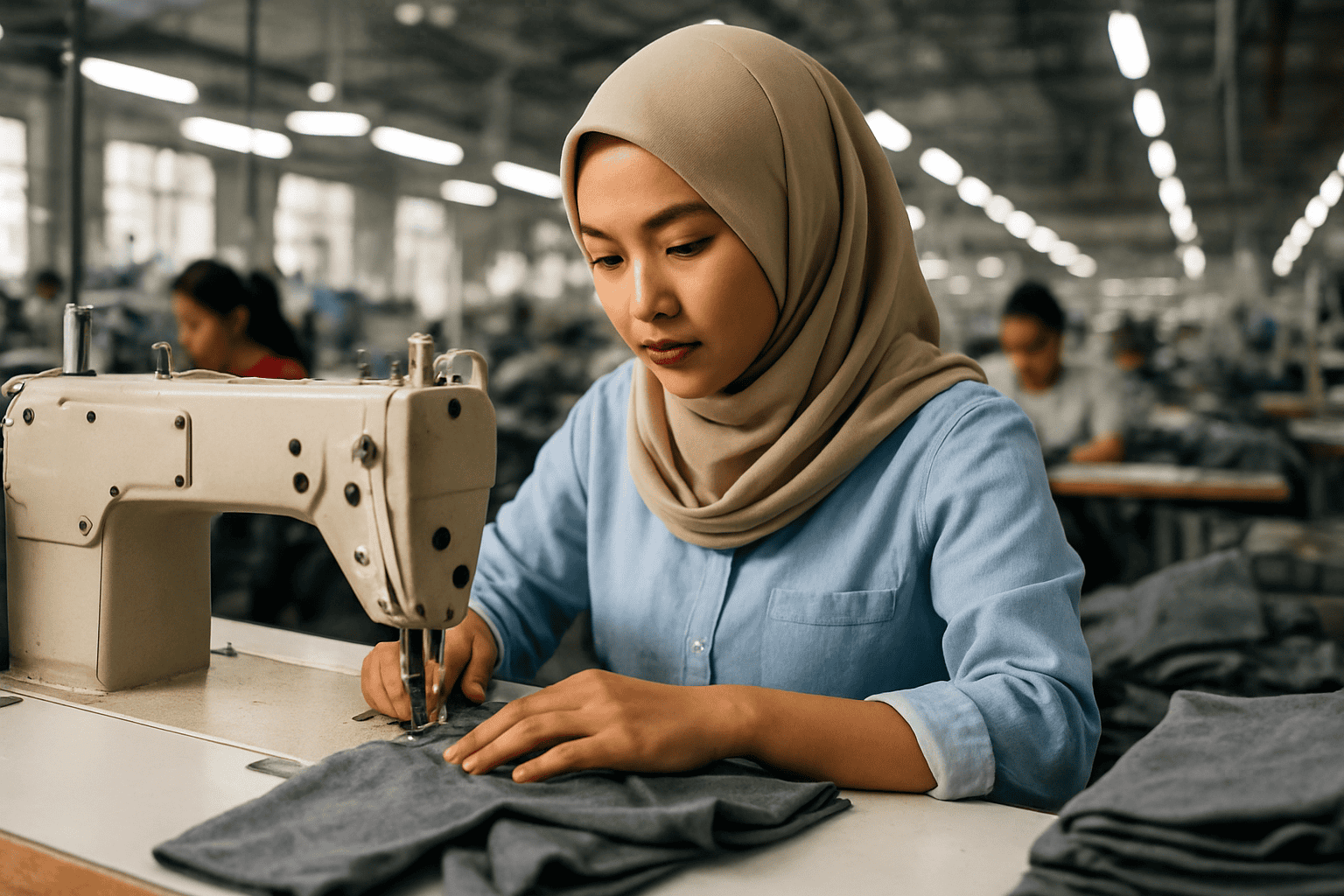
Header image concept: A clean, organized Indonesian garment facility floor showing staged QA checks, with a visible World KNK control dashboard on a monitor and a craftsman inspecting a seam. This visual communicates reliability, process discipline, and end-to-end quality.