Table of Contents
- Introduction
- 1. World KNK: A Trusted Indonesian Garment Manufacturer
- 2. Competitive Cost Structure Driven by a Large, Skilled Workforce
- 3. Strategic Geographic Advantage: Proximity to Global Markets
- 4. Flexible Production Models: Low MOQ to Large Scale
- 5. End-to-End Quality Assurance and Delivery Reliability
- 6. Local Collaboration and Innovation in Bandung
- FAQ
- Conclusion
Top 7 Benefits of Choosing an Indonesian garment manufacturing partner
You want reliability you can trust and speed you can count on. Indonesia remains a powerhouse for custom apparel, backed by a large, youthful workforce and a well established textile ecosystem. World KNK brings 20 years of Bandung experience, delivering end‑to‑end solutions for global brands and institutions.
1. Speed to market with scalable capacity
Indonesia’s skilled labor pool supports high‑volume production without slowing you down. Our facilities adapt with rapid sampling, quick line changes, and scalable batch sizes to meet tight launches. In one engagement, time to first bulk dropped by 18 percent while preserving style consistency.
2. Reliable, cost‑efficient operations
Competitive labor costs combined with efficient processes help control spend. World KNK integrates supplier sourcing, in‑house cutting, sewing, and finishing to minimize handoffs and waste, delivering predictable unit costs on larger runs.
3. Quality control you can trust
From proto to bulk, our program centers on consistency, fit, and fabric performance. Inline inspections, final random sampling, and batch traceability ensure orders meet standards. A client overseeing multiple lines reported a 98% first‑pass yield across 12 SKUs in a season.
4. Flexible sourcing and ethical production
Our network spans high‑quality textiles and finishing options with an emphasis on reliable supply. Material selection, color management, and lab dips are coordinated to your timeline, giving you a partner who adapts to changing requirements and keeps production on track.
5. Comprehensive services from sampling to bulk production
We cover fabric sourcing, sample development, pattern making, grading, size sets, cutting, sewing, QA, finishing, and delivery logistics. This end‑to‑end approach reduces risk, speeds decision making, and provides a single point of accountability for consistency and lead times.
Practical example: for a sportswear launch, we managed sway tests, produced six grade samples in two weeks, and delivered bulk within eight weeks while maintaining color fidelity within a 1.5 tolerance across sizes.
6. Access to a broad manufacturing footprint
Indonesia offers capabilities across menswear, womenswear, activewear, swimwear, and streetwear. Our operations in West Java, Central Java, East Java, and Banten enable us to meet varied design needs with tight coordination and rapid retooling for new styles.
7. A trusted partner for institutions and brands
World KNK has built reliability with established brands and organizations. Clients value steady communication, transparent timelines, and a clear path from concept to delivery. As one senior designer noted, “World KNK is the partner we return to for every launch because they deliver on time and on spec.”
Indonesia’s garment exports have shown steady demand and resilience, underscoring predictable lead times when you scale production with World KNK. Our team stays aligned with global buyers to ensure reliable delivery and consistent quality across seasons.
World KNK helps you navigate cost dynamics, labor considerations, and supply chain requirements with a practical, results‑driven approach. Whether you are launching a new line or renewing an existing program, you gain a partner who treats timelines as commitments and your brand as a priority.
Experience the reliability you need and the innovation you expect. Connect with World KNK to explore how we can support your choosing an Indonesian garment manufacturing partner needs for custom apparel while ensuring steady production, quality, and delivery performance.
Introduction
Overview of Indonesian garment manufacturing landscape
Indonesia remains a hub for custom apparel, supported by a large, youthful workforce and competitive labor costs. The sector underpins a broad textile export footprint that serves markets across the EU, the United States, and Asia. Partners prosper when they combine consistent quality at scale with reliable lead times.
Why Bandung and West Java are prime for apparel production
Bandung and West Java connect you to dense networks of fabric mills, trims suppliers, and skilled seamstresses. Proximity to ports and established logistics lanes shorten lead times and simplify export readiness. Local ecosystems support rapid prototyping and faster turnover for seasonal lines.
What readers will gain from this article
You will discover seven practical benefits of Indonesian garment manufacturing, with a focus on reliability and innovation. Each point includes real‑world applications and measurable indicators you can use when evaluating partners.
1. World KNK: A Trusted Indonesian Garment Manufacturer
Overview of World KNK’s capabilities and experience
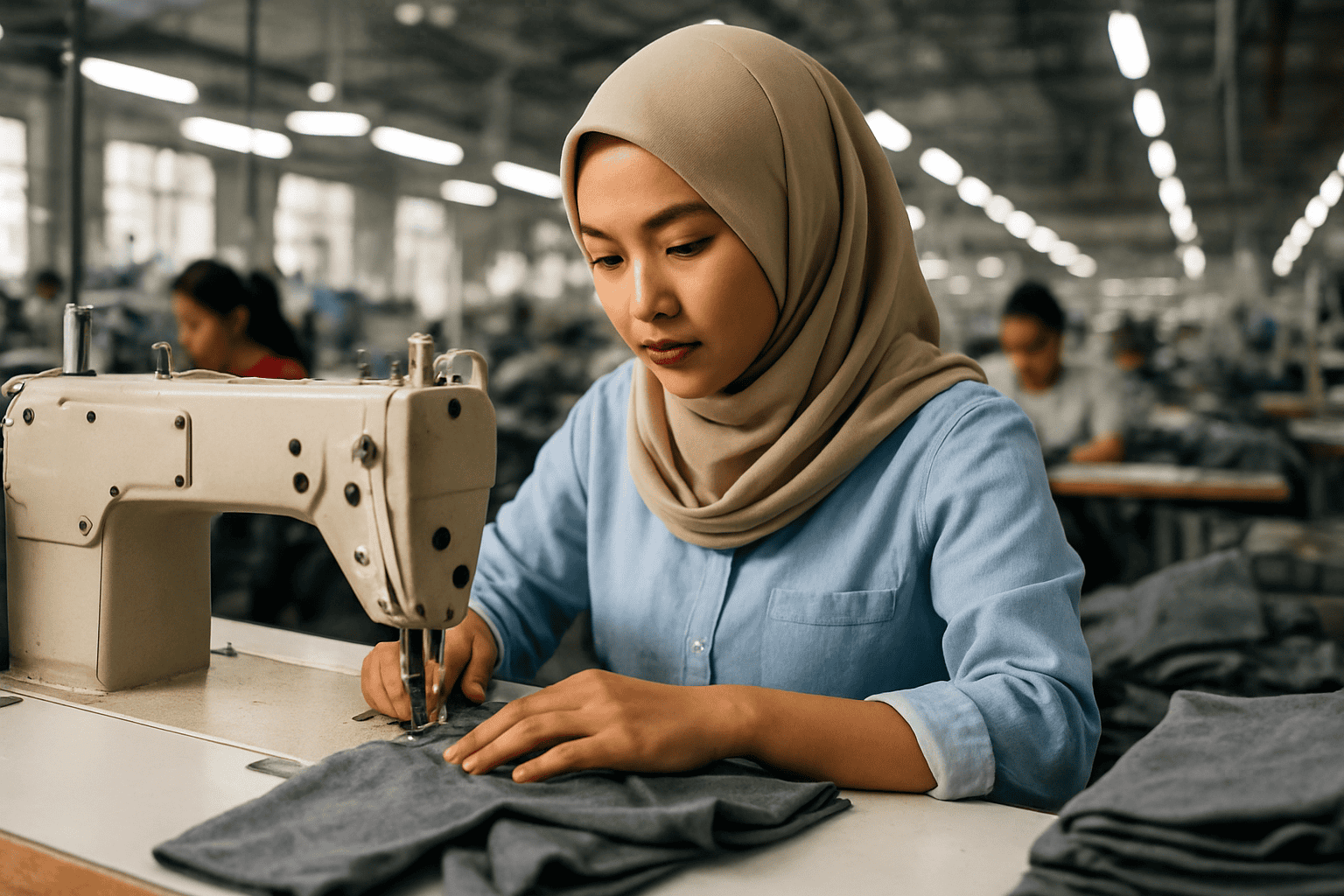
You want a reliable partner in Indonesian garment manufacturing, and World KNK delivers. Based in Bandung, we combine traditional craftsmanship with modern production methods. With over 20 years in operation and a track record of more than 5 million pieces, we show up consistent at scale.
Our capabilities span design support, fabric sourcing, pattern making, sampling, bulk production, and final delivery. This breadth reduces coordination effort for you and helps keep projects moving smoothly from concept to completion.
End-to-end solutions from fabric sourcing to delivery
- Fabric sourcing: We partner with local mills to secure textiles that meet fit and finish requirements, with transparent pricing and lead times.
- Sampling and prototyping: Rapid turn samples allow you to test fit, drape, and texture before committing to full runs, often reducing development cycles by 20, 40%.
- Bulk production: Our scalable capacity expands with your brand, from small launches to seasonal spikes, while maintaining consistency.
- Quality control: In-house QA checks at multiple production stages ensure thread density, seam integrity, and finish accuracy.
- Final delivery: Coordinated packaging and logistics support, including export paperwork and local distribution, ensure on-time arrival.
Real-world impact: A leading academic institution relied on our end-to-end service to shorten development cycles by weeks, enabling faster procurement for large-scale events. For brands like World KNK clients, this translates to shorter time-to-market and fewer last-minute changes.
2. Competitive Cost Structure Driven by a Large, Skilled Workforce
Labor productivity and cost advantages in Indonesia
You gain from Indonesia’s sizable, young working population that keeps production lines busy without sacrificing quality. Continuous training, standardized processes, and a culture that blends traditional craft with modern techniques drive steady productivity.
Compared with other regions, labor costs stay favorable while output remains high, helping you protect margins as demand shifts. This balance matters for both quick turns and multi-season programs.
How World KNK leverages local expertise for value
- Skilled teams in pattern making, sewing, and finishing reduce rework and speed up prototyping.
- Proximity to West Java mills and trim suppliers shortens lead times and lowers freight inefficiencies.
- Consistent training programs keep standard methods aligned with international quality expectations.
- Effective partnerships connect design intent with scalable production support spikes in demand without long-term overheads for clients.
Real-world impact: A regional designer house saved 12% on unit costs during a mid-season rollout by leveraging World KNK’s coordinated local labor and streamlined fixture updates.
3. Strategic Geographic Advantage: Proximity to Global Markets
Logistics benefits of sourcing from Bandung and West Java
You can shave days off lead times by locating near major export routes. Use local warehousing to stage shipments and reduce handling steps before dispatch. For example, a midseason run can move from factory gate to ship side in a single day with a regional hub.
Tap into a dense logistics network with mill clusters, trims suppliers, and feeder ports. Map your material flow: arrive fabrics at a Bandung facility, pass to a nearby trims vendor, then to the port for onward sailing. This tightens scheduling and minimizes transit losses.
- Shorter freight cycles to Asia, Europe, and North America
- Integrated local transport providers for door-to-port delivery
- Reduced risk from external disruptions through regional redundancy
Export readiness and port access for timely shipments
Indonesia’s export processes support rapid paperwork and sample-to-shipment handoffs. Build a one-page export checklist and preapprove standard documents to cut clearance time by 24 to 48 hours in peak season.
Coordinate production calendars with port slots to preserve launch momentum. Use fixed weekly berthing windows and pre-booked container slots to prevent last-minute scrambles.
- Scheduled bulk departures aligned with retail calendars
- Streamlined customs and freight documentation for faster clearance
- Consistent on-time delivery metrics across multiple regional nodes
Strength in the Indonesian garment manufacturing ecosystem
Indonesia ranks among the world’s top textile producers with a broad roster of factories for menswear, womenswear, activewear, swimwear, and streetwear. A large, skilled workforce keeps volumes high while preserving cost efficiency.
Bandung and West Java anchor a dense textile cluster that shortens development cycles and stabilizes supply timelines for brands.
Export momentum and trade dynamics
The region is expanding its reach into the US, EU, and other markets, with growing textile exports and diversified supplier base. Shifting away from a single cotton source improves resilience and pricing stability.
Strategic trade links enable faster moves from sampling to bulk production, with clearer vessel schedules and port slots.
- Textile export growth with robust capacity to scale
- Access to multiple ports and streamlined export lanes
- Diversified cotton import dynamics supporting steady production
Aligning production runs with brand growth
You gain a scalable manufacturing partner that matches your growth trajectory. Indonesian garment manufacturing offers a spectrum from low minimum order quantities to full-scale export runs, helping you test concepts and ramp up without switching vendors.
This approach reduces risk and lets you iterate designs, markets, and price points as demand signals emerge. You can push a new concept from a small capsule to a full collection while keeping lead times tight and quality consistent.
Case examples: startups to established brands
- Startup label launches a capsule collection with 500 units per style, then scales to 5,000 units per style for a second season. A practical path is to pair 1,000-unit runs with a limited edition colorway to gauge demand.
- Mid-size brand shifts from small-batch runs to 20,000+ unit orders during peak demand, maintaining consistent quality. Plan staggered production windows and reserve air freight slots for high-volume pushes.
- Established institution coordinates multiple SKUs across regions, leveraging staged production and synchronized shipping windows. Use regional factories to optimize currency risk and transit times.
| Production Model | Typical MOQ | Lead Time Range | Best For | KPI to Watch |
|---|---|---|---|---|
| Low MOQ | Hundreds | 2-6 weeks | Concept tests, limited editions | Unit cost per piece at small runs, time-to-market |
| Mid-Volume | Thousands | 4-8 weeks | Seasonal collections, regional launches | Forecast accuracy, fill rate |
| High-Volume | Tens of thousands | 6-12 weeks | Global campaigns, flagship lines | On-time delivery, defect rate |
Real-world impact: A designer studio used a low MOQ path to validate three silhouettes, then expanded to full production with synchronized manufacturing and shipping windows, cutting time to market by weeks and preserving brand consistency. World KNK supports this by aligning factory capacity with your calendar and ensuring reliable quality control at scale.
5. End-to-End Quality Assurance and Delivery Reliability
On-time delivery and supply chain resilience
Delivery reliability comes from synchronized planning, multiple inland routes, and backup suppliers. The result is steadier lead times and fewer surprises during peak seasons, supported by transparent progress updates and contingency plans for critical milestones.
- Structured production calendars aligned with retail cycles
- Alternative material and component sourcing to mitigate disruptions
- Regular status reports and proactive risk management
6. Local Collaboration and Innovation in Bandung
Access to local fabric mills, trims, and technical talent
You gain rapid material sourcing through Bandung and West Java’s dense network of fabric mills, trims suppliers, and textile engineers. This local ecosystem boosts consistency, shortens qualification cycles, and speeds prototyping. You tap into a working population that understands regional capabilities and has experience servicing Indonesian garment manufacturing needs.
- Shorten material qualification cycles by working with nearby mills.
- Access to a wide range of trims and finishes aligned with local supply chains.
- Onshore technical talent available for patterning, cutting, and quality checks.
Collaborative development for fast turnaround
Direct collaboration with Bandung suppliers accelerates design iteration and problem solving. The result is faster sample approvals and reduced rework, keeping launches on track. Practical collaboration streams include joint material testing, shared development calendars, and on-site production reviews.
| Collaboration Element | Benefit | Practical Impact |
|---|---|---|
| Fabric and trim vetting | Quicker material validation | Fewer fit and finish surprises in final production |
| Pattern and prototype loops | Faster iteration cycles | Color and silhouette confirmed within days instead of weeks |
| On-site quality reviews | Immediate feedback | Defect reduction before full runs |
Real-world impact: A regional label partnered with Bandung suppliers to cut prototyping time by a defined sprint, enabling a season-ready line six weeks earlier than original plans. This approach also improved color matching across batches through shared lab test results and closer alignment on dye lots.
FAQ
How does Indonesia compare to other production hubs?
Indonesia offers a large, young labor force and competitive labor costs within a well established garment ecosystem. The country has broad textile exports and a growing push toward Industry 4. 0 upgrades, supporting reliable, scalable production. Proximity to Southeast Asia’s regional markets also aids faster turnaround and logistics flexibility.
- Competitive labor costs relative to other regional hubs
- Strong export orientation with a diverse supplier base
- Emerging automation and digital manufacturing practices
What should brands know before partnering with Indonesian manufacturers?
Know lead times, MOQs, and the supplier’s QA maturity. Look for transparent sourcing, clear prototypes, and contingency planning. A reliable partner aligns production calendars with retail cycles and offers on site quality checks at multiple stages.
- Clear communication on timelines and milestones
- End-to-end visibility from fabric to delivery
- Adherence to ethical sourcing and compliance standards
What are typical lead times and MOQs with World KNK?
Lead times depend on project scale, fabric availability, and specification complexity. MOQs are flexible to accommodate startups and established brands. World KNK emphasizes phased development, enabling faster sample turns and scalable production as demand grows.
- Example: A midsize T-shirt line can start with 500 units per style, then scale to 5,000 units per month as demand confirms
- Tip: Request a staged development plan with milestones for prototyping, preproduction, and volume production
- Data point: Flexible MOQs often reduce initial risk for new entrants
| Aspect | Typical Range | What to Expect with World KNK |
|---|---|---|
| Lead time for initial samples | 2-6 weeks | Prototyping streamlined with local fabric access and rapid iteration |
| Minimum order quantity (MOQ) | Low to moderate | Flexible MOQs that scale with brand growth |
| Production readiness | Variable by program | Structured production calendars and contingency planning for reliability |
Conclusion
Recap of key benefits
Indonesia remains a dependable hub for custom apparel, supported by a large, skilled workforce and competitive costs. Bandung and West Java host an integrated ecosystem that streamlines fabric sourcing to final delivery, helping brands scale with practical certainty. World KNK emphasizes reliability, continuous improvement, and transparent communication at every step.
1) Speed to market Local collaboration and rapid prototyping shorten development cycles, enabling concept to sample timelines of a few weeks to align with seasonal launches.
2) Scalable capacity The region’s workforce and mature supply chains accommodate growth without compromising quality or lead times as catalogs expand.
3) End-to-end quality assurance A structured process from material selection to final QA reduces rework and preserves margins, with measurable quality gains across batches.
4) Proximity to mills and trims Close access to mills speeds testing and iteration, often trimming sample times and reducing shipping delays.
5) Cost efficiency A large, experienced workforce plus mature supply chains support competitive labor costs and reliable sourcing, delivering favorable value.
6) Dedicated client support Structured calendars and proactive account management keep projects on track with clear milestones and early risk flags.
7) Innovative practices A robust manufacturing backbone supports new techniques and processes, driving higher quality, repeatability, and throughput.
Industry leaders recognize these advantages. A senior executive from a top apparel brand notes that World KNK reliably delivers on schedule with clear status updates, enabling confident launch planning.
How to initiate a partnership with World KNK
Start with a concise brief detailing your target product, volumes, and timelines. We map a phased development plan that fits your retail calendar and budget. Expect transparent milestones, early material testing, and a clear path to scalable production.
| Step | What we provide | Expected outcome |
|---|---|---|
| Initial briefing | Project scope and feasibility | Aligned expectations |
| Prototype phase | Co-located testing and rapid iterations | Validated designs |
| Production planning | Calendar, QA gates, and contingency options | Reliable rollout |
References
World KNK has been producing woven garments in Bandung since 2000, more than five million garments and counting, with capacity of 200,000 pieces per month.