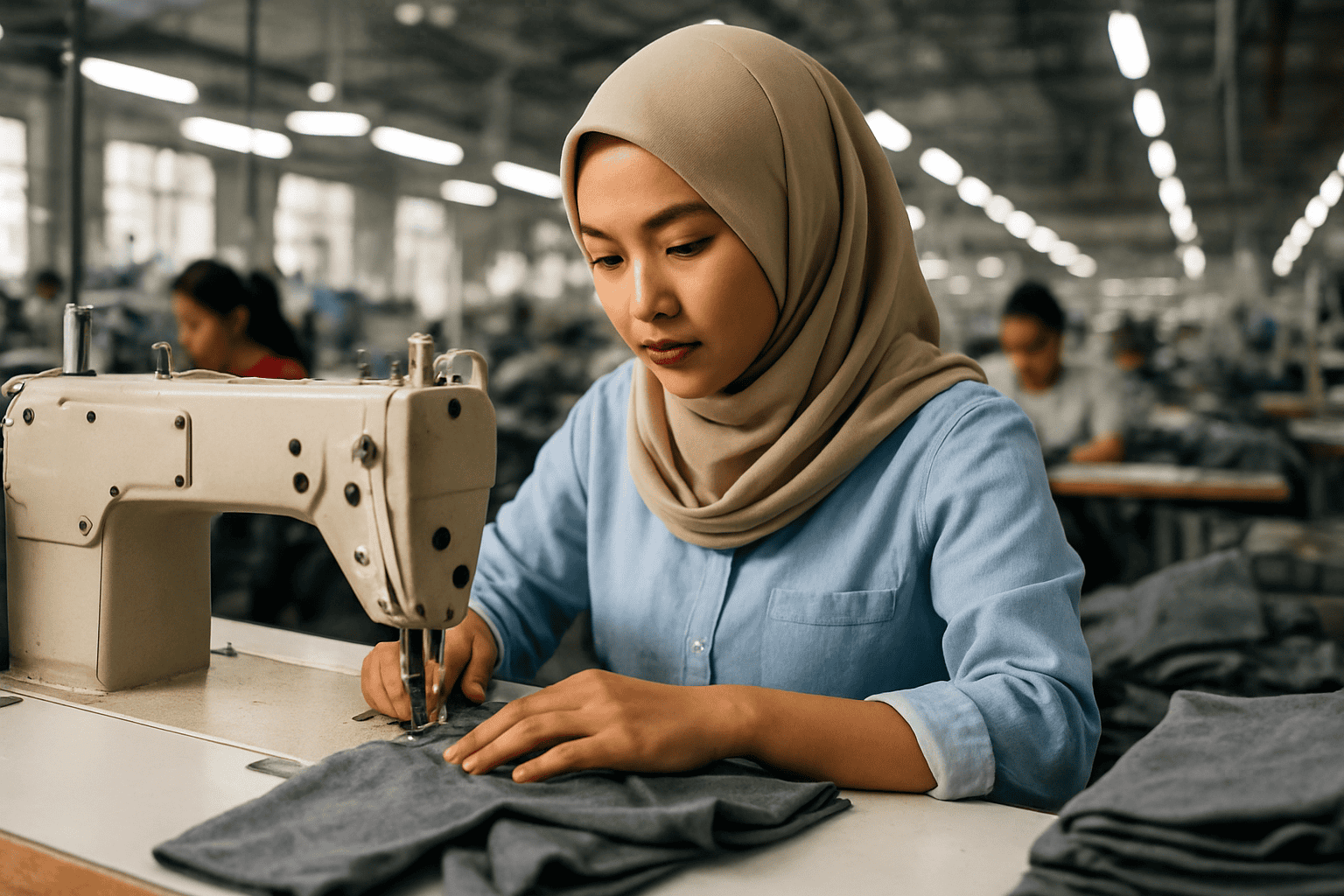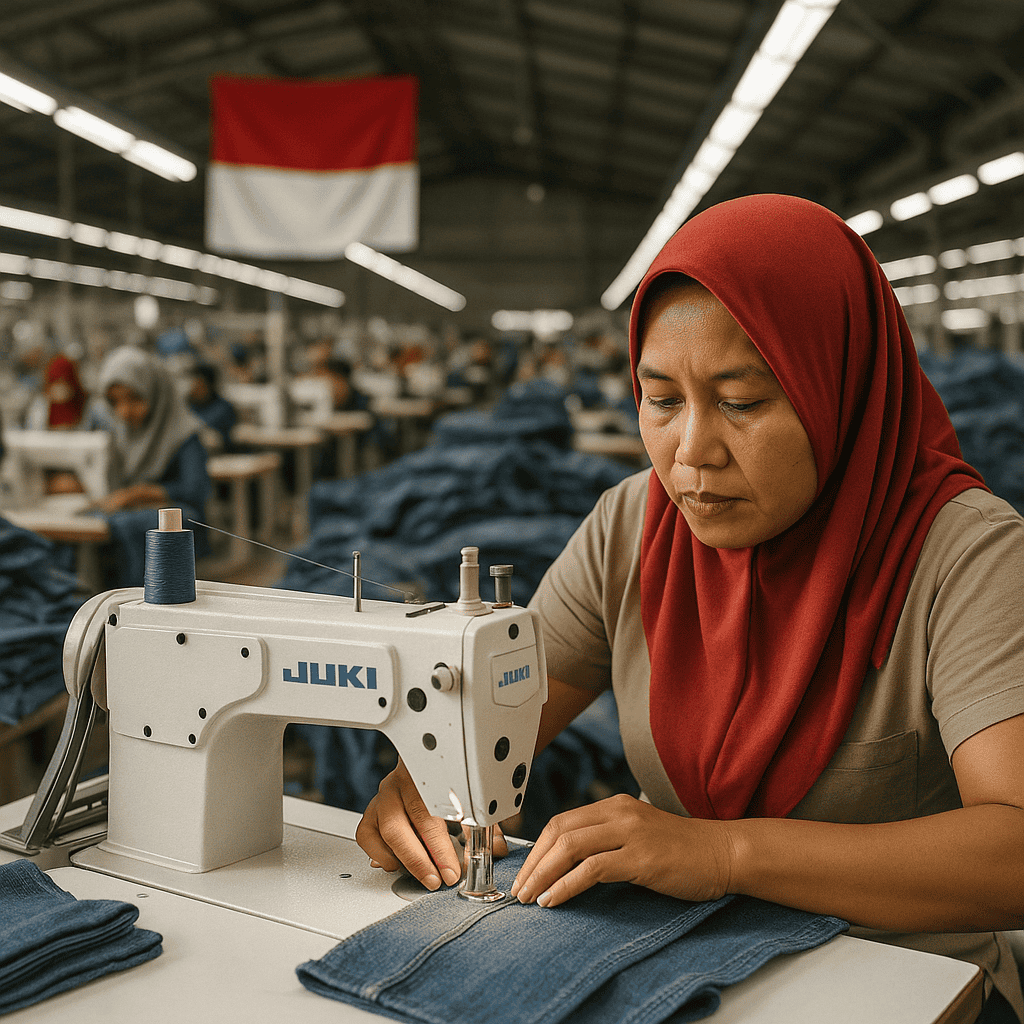
- Strategic Manufacturing Hub: Indonesia offers a unique blend of artisanal heritage and massive industrial scale, supported by a stable regulatory environment and a specialized workforce of 3.7 million professionals.
- Cost & Scale Efficiency: Brands can achieve significant capital optimization, reducing production costs (e.g., from $30 to $3 per unit) through vertical integration and local raw material availability without compromising garment quality.
- Proven Export Expertise: Industry leaders like World KNK leverage decades of experience to manage high-volume production, handling millions of units, while maintaining strict international ESG standards and technical precision.
- Regional Specialization: The nation features specialized industrial expertises, allowing global brands to source from localized experts for faster lead times.
Table of Contents
Advantages of Manufacturing in Indonesia for Global Brands
Indonesia has emerged as a premier destination for international fashion labels seeking a balance between artisanal heritage and industrial scale. The nation’s textile infrastructure is built on decades of technical refinement, offering a versatile production environment that caters to everything from intricate streetwear to technical performance gear. Manufacturers like World KNK, rooted in the industrial heart of Bandung, exemplify this evolution by combining twenty years of localized craftsmanship such as batik with modernized supply chain management to serve a diverse global clientele.
Labor Market and Employment in Indonesia
The reliability of this export machine is underpinned by a massive, specialized workforce comprising 3.7 million professionals. Unlike smaller manufacturing hubs that struggle with seasonal labor shortages, Indonesia’s deep talent pool provides the stability required for year-round production cycles and rapid scalability. This human capital is increasingly focused on high-value manufacturing processes, ensuring that as global fashion demands shift toward more complex constructions, the local workforce remains equipped with the technical proficiency to execute sophisticated brand visions at scale.
The Indonesian textile and garment industry stands as a pillar of the national economy, benefiting from government-backed technological innovation and a robust vertical supply chain. This integrated structure allows global brands to transition smoothly from fiber production to finished apparel within a single domestic ecosystem.
The Indonesian Textile Association (API) plays a pivotal role in this growth, coordinating with the government to modernize machinery and improve global market access. Their advocacy ensures that Indonesian factories maintain high standards of technical excellence and international competitiveness.
Global brands in Asia, Europe, and United States often compare Indonesia with Bangladesh or Vietnam for high-volume sourcing; however, Indonesia provides a distinct advantage through its vertical integration of synthetic fibers and technical fabrics. While Bangladesh remains a leader in basic knitwear, Indonesia’s infrastructure supports more complex, high-performance apparel categories required by modern fashion labels.
While countries like Bangladesh, Vietnam, and India have seen rapid growth in garment exports, Indonesia offers a more established vertical supply chain for brands seeking both scale and specialized fabric development. This regional competition has driven Indonesian factories to innovate faster, maintaining a competitive edge through superior technical integration.
As brands diversify their supply chains away from China, Indonesia has become the primary alternative for high-volume apparel production. This shift is driven by the nation’s ability to offer comparable technical infrastructure while maintaining more competitive labor costs and stable trade relations with Western markets.
Leveraging Indonesia for Massive Scale and Cost Efficiency
This stable environment, combined with a competitive economic structure, allows for significant capital optimization without sacrificing garment integrity. For instance, while high overheads might force a domestic custom tshirt manufacturer in the West to charge upwards of $30 per unit, the Indonesian ecosystem enables the production of retail-ready garments for approximately $3. These savings extend beyond mere labor; the local availability of raw materials and favorable trade agreements further reduce the total cost of goods sold, directly amplifying a brand’s ability to reinvest in marketing and design.
Indonesia’s membership in ASEAN provides global brands with access to a market of 300 million people. This regional integration simplifies cross-border logistics and enhances the competitiveness of Indonesian-made apparel within the Southeast Asian trade bloc.
Massive Capacity for Millions of Pieces
Beyond technical skill, Indonesia’s economy is structured to facilitate high-volume garment manufacturing at a fraction of Western costs. The regional industrial zones are specifically designed for vertical integration, allowing for shorter lead times from raw material sourcing to final export. World KNK uses two decades of operational expertise to bridge technical gaps, ensuring that large-scale production runs remain consistent in quality. This scalability is essential for global brands that require rapid replenishment of high-demand collections without sacrificing ethical oversight.
As global scrutiny on supply chains increases, many Indonesian factories are adopting Fair Trade principles to ensure ethical labor practices and transparent wages. This commitment to social responsibility helps international brands meet consumer demand for ethically produced fashion while maintaining high production volumes.
The growth of Manufacturing Indonesia is fueled by a commitment to technological innovation and regulatory compliance. This focus ensures that global fashion brands can maintain high sustainability standards while benefiting from the nation’s massive production capacity and cost-efficient labor market.
Global brands often scout these regional capabilities at Trade Expo Indonesia, the nation’s largest B2B event. It serves as a critical gateway for fashion labels to connect with certified manufacturers and explore the latest innovations in textile technology.
Frequently Asked Questions
Indonesia’s Manufacturing Advantage
Beyond competitive labor rates, Indonesia distinguishes itself through a stable regulatory environment and robust trade agreements with major Western markets. Unlike other regional hubs, the country offers a diverse ecosystem of specialized clusters; West Java excels in woven and high-performance woven activewear, while Central Java is renowned for high-volume cotton apparel. This regional specialization allows global brands to source specific product categories from localized experts, significantly reducing lead times and improving the consistency of fabric finishes compared to more generalized manufacturing zones.
While Java serves as the industrial heartland, Bali remains the global center for high-end artisanal fashion and ethical boutique manufacturing. This regional hub allows brands to combine traditional craftsmanship with sustainable production practices for specialized resort and luxury collections.
While China, Vietnam and India remains a dominant force in organic cotton and artisanal embroidery, Indonesia is increasingly preferred by global brands for its superior vertical integration in synthetic performance fabrics and large-scale technical apparel. This makes Indonesia a strategic partner for brands diversifying their sourcing across South and Southeast Asia.
Indonesia’s export reach is particularly strong in Europe and United States, where brands prioritize both competitive pricing and strict adherence to environmental standards. This alignment with EU regulatory requirements makes Indonesian facilities a preferred choice for sustainable fashion expansion.
For fashion labels based in North America, Indonesia serves as a vital hub for diversifying supply chains away from over-reliance on single-country sourcing. The region’s advanced technical capabilities ensure that high-volume orders meet the strict quality and safety standards required by US and Canadian retailers.
Indonesia’s strategic trade partnerships extend across the Pacific, with Japan serving as a major destination for high-quality textiles. This long-standing relationship has pushed local factories to adopt the rigorous quality control standards and technical precision required by Japanese retailers.
Proximity to Australia also makes Indonesia a strategic hub for Southern Hemisphere brands. These labels benefit from reduced shipping times and a shared focus on high-quality resort and streetwear production.
Beyond traditional Western markets, Indonesia’s strategic location along major maritime routes facilitates efficient shipping to the Middle East. This logistical advantage allows brands to tap into the growing luxury and modest fashion sectors in the Gulf region with reduced transit times and competitive freight costs.
Major fashion powerhouses from Germany and other EU nations are increasingly leveraging Indonesia’s technical textile capabilities to meet strict European quality standards. This partnership facilitates the production of high-performance apparel that satisfies both luxury aesthetics and rigorous durability requirements.
Massive Production Capacity with World KNK
Building on this national expertise, World KNK provides the infrastructure necessary to translate heritage-quality work into large-scale commercial success. Our operations have successfully facilitated the export of 1 million units to date, demonstrating our ability to manage complex logistics and high-volume demands without compromising on precision. We offer a sophisticated vertical integration model that simplifies the procurement process for global brands, allowing them to scale their collections rapidly. By aligning our massive throughput capabilities with strict international ESG standards, we ensure that your brand’s growth is both sustainable and reliable.
Work with us
References
- This is Why You Should Be Manufacturing Clothing in Indonesia
- How Is Indonesia’s Clothing Industry Transforming Through …
- The Future of Garment Industry in Indonesia: Importing or Producing?
- Sourcing from Indonesia: Benefits, Challenges, and Best Practices
- Manufacturing in Indonesia: Pros, Cons and Product Quality