Choosing the right clothing manufacturer is one of the most important decisions you’ll make as a fashion brand owner. The partner you select will directly influence your product quality, production costs, delivery timelines, and ultimately, your brand reputation. Whether you’re launching a new fashion line or scaling an established brand, finding a manufacturer that aligns with your vision and values requires careful research and consideration. This guide walks you through the essential factors and practical steps to help you make an informed choice that supports your brand’s long-term success.
Why Choosing the Right Manufacturer Matters for Your Brand Success
Your manufacturing partner does more than just produce garments. They shape how your customers experience your brand through the quality and consistency of every piece. A skilled manufacturer with attention to detail ensures that your products meet customer expectations, which builds trust and encourages repeat purchases. When you work with the right production partner, you gain access to their expertise, efficient processes, and quality control systems that protect your brand reputation.
The long-term benefits of partnering with experienced manufacturers extend beyond product quality. Reliable manufacturers help you scale production smoothly as your brand grows, maintain consistent quality across production runs, and adapt to changing fashion trends or customer demands. They become an extension of your team, offering insights on fabric choices, construction methods, and cost-effective production strategies. This partnership approach saves you time and reduces the stress of managing complex production processes.
Common pitfalls when selecting the wrong production partner can set your brand back significantly. Poor quality control leads to customer complaints and returns that damage your reputation. Unreliable delivery schedules disrupt your inventory planning and disappoint customers waiting for orders. Communication breakdowns create misunderstandings about specifications, resulting in products that don’t match your vision. These problems not only cost money but also consume valuable time that you could spend growing your business.
Essential Factors to Consider When Selecting a Clothing Manufacturer
Evaluating potential manufacturing partners requires looking at multiple factors that impact your production success. Start by identifying manufacturers whose capabilities match your specific needs, then assess their quality standards, communication practices, and reliability track record. Taking time to evaluate these factors upfront prevents costly mistakes and establishes a foundation for a productive long-term relationship.
Production Capabilities and Specialisation
Manufacturers typically specialise in specific garment categories based on their equipment, expertise, and workforce skills. A factory that excels at producing woven shirts may not have the same proficiency with complex outerwear or delicate dresses. Assess whether the manufacturer has proven experience creating the types of garments your brand needs. Review their portfolio, ask for examples of similar products they’ve made, and understand their production volume capabilities.
Matching production capabilities with your brand’s product line ensures better quality outcomes and smoother production cycles. A manufacturer familiar with your garment type understands the technical requirements, common challenges, and quality benchmarks specific to those products. They can offer valuable suggestions on construction methods, fabric choices, and design modifications that improve durability or reduce costs without compromising appearance.
Specialisation impacts both quality and efficiency in meaningful ways. Experienced manufacturers work faster because their teams have refined their skills through repetition. They spot potential issues early in the production process and know how to resolve them quickly. Their specialized equipment and established workflows mean fewer errors, less waste, and more consistent results across your entire production run.
Quality Control Standards and Craftsmanship
Quality assurance processes separate exceptional manufacturers from average ones. Ask potential partners about their inspection protocols at different production stages. Strong manufacturers check fabric quality upon arrival, monitor construction during production, and conduct final inspections before shipping. They should willingly explain their quality control procedures and show you documentation of their standards.
Consistent stitching, proper finishing, and attention to detail are visible markers of quality craftsmanship. Examine how seams are finished, whether stitching is straight and secure, if buttonholes are cleanly made, and whether garments are pressed properly. These details seem small individually, but collectively they determine whether your products look professional and last through regular wear. Quality craftsmanship reflects a manufacturer’s pride in their work and commitment to excellence.
Evaluating sample products gives you direct insight into production standards before committing to large orders. Request samples in your exact specifications and examine them thoroughly. Check measurements against your tech pack, test seam strength, wash the garments to see how they hold up, and wear them to assess comfort and fit. Pay attention not just to what looks good initially, but to how well the garment maintains its quality after use.
Communication and Reliability
Clear communication forms the backbone of successful manufacturing partnerships. You need a partner who responds promptly to questions, provides regular production updates, and proactively addresses potential issues before they become problems. Poor communication leads to misunderstandings about specifications, missed deadlines, and frustration on both sides. During initial conversations, notice how quickly the manufacturer responds and whether they ask clarifying questions that show genuine understanding of your needs.
Responsive customer service and effective project management make the production process smoother and less stressful. Your manufacturer should assign you a dedicated contact person who understands your brand and maintains continuity across projects. This person should provide production timelines, send progress photos or updates, and be available to discuss concerns. Strong project management keeps your production on track and gives you confidence that your orders are being handled professionally.
Language barriers and time zone differences can complicate collaboration, so consider these factors when evaluating international manufacturers. While many overseas manufacturers have English-speaking staff, assess whether communication is clear enough for detailed technical discussions. Time zone differences mean responses may take longer, so establish expectations about communication frequency and preferred channels. Some manufacturers use communication platforms that make collaboration easier despite geographical distance.
Understanding Manufacturing Locations and Their Benefits
Manufacturing location influences costs, quality, delivery times, and supply chain stability. Different regions offer distinct advantages based on their infrastructure, labor expertise, and trade relationships. Understanding these geographical factors helps you make strategic decisions about where to produce your garments.
Why Southeast Asia Is Emerging as a Manufacturing Hub
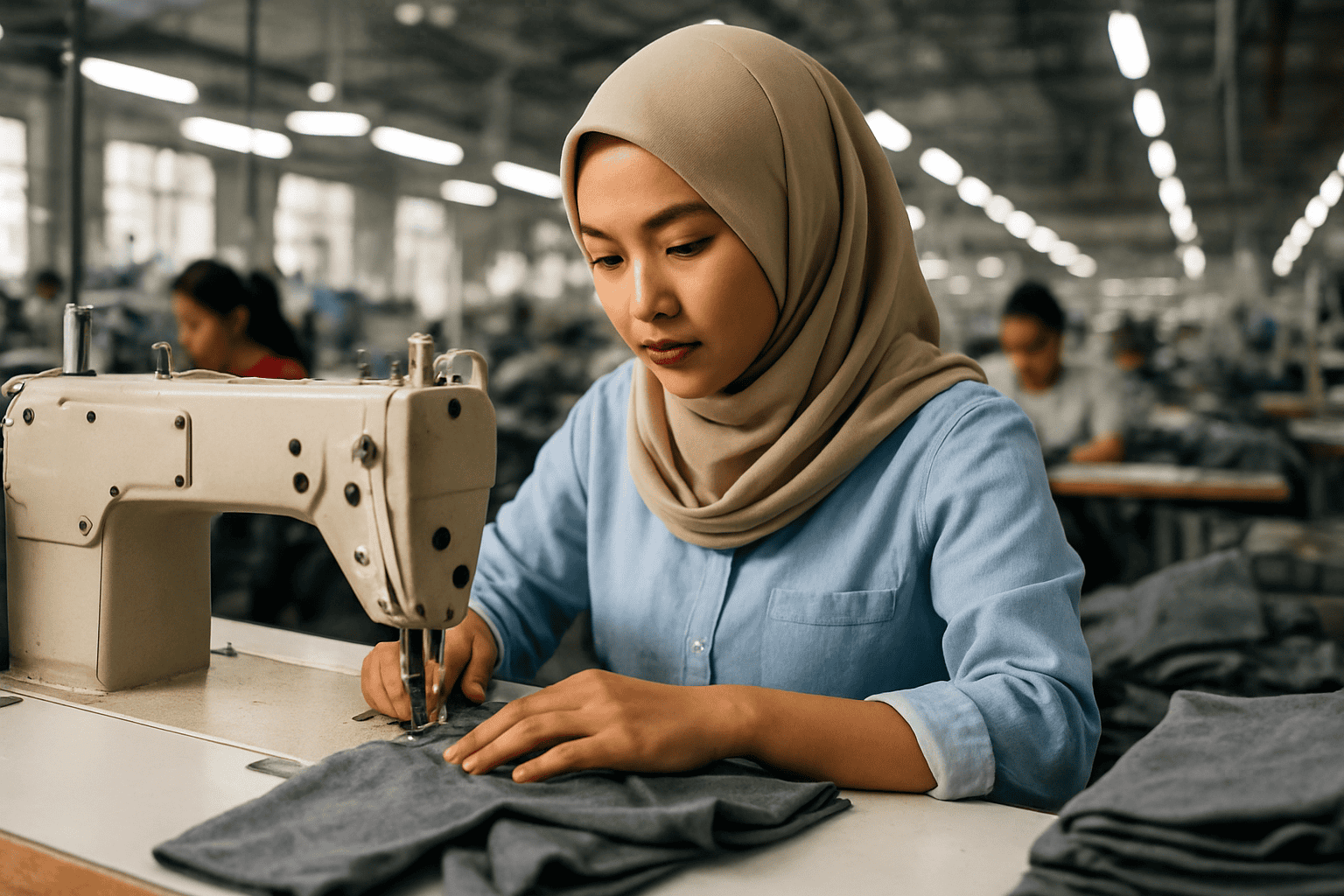
Southeast Asian countries, particularly Indonesia, have become increasingly attractive manufacturing destinations for fashion brands seeking quality production at competitive prices. Indonesia’s fashion industry has matured significantly, with manufacturers developing sophisticated capabilities across various garment categories. The country offers a skilled workforce experienced in producing both basic and complex garments, modern factory facilities with updated equipment, and growing expertise in quality control standards that meet international expectations.
Competitive pricing without compromising quality standards makes Southeast Asia appealing for brands at various stages of growth. Labor costs remain reasonable compared to Western countries while infrastructure investments have improved production capabilities. Many Southeast Asian manufacturers have adopted modern production methods and quality systems, allowing them to compete on quality while maintaining cost advantages. This combination helps fashion brands maintain healthy profit margins without sacrificing the product quality their customers expect.
Supply chain stability and favorable tariff considerations add practical benefits to manufacturing in this region. Southeast Asian manufacturers often have established relationships with fabric suppliers and other production partners, creating reliable supply chains less vulnerable to disruption. Additionally, trade agreements and tariff structures can make importing from Southeast Asia more cost-effective than some alternatives. In 2026, as brands continue seeking supply chain diversification, these factors make Southeast Asia an increasingly strategic manufacturing location.
Comparing China vs Alternative Manufacturing Locations
China has long dominated global garment manufacturing, but many brands now explore alternative locations for various strategic reasons. Cost analysis shows that while China offers scale and established infrastructure, other locations can provide comparable or better value depending on your specific needs. Labor costs in Southeast Asian countries like Indonesia often come in lower than China’s increasingly expensive manufacturing centers, particularly for mid-volume production runs. Quality comparisons reveal that manufacturers in alternative locations have closed the gap significantly, with many now matching Chinese quality standards.
Trade policies, tariffs, and supply chain diversification concerns have accelerated interest in manufacturing alternatives. Tariffs on Chinese imports have increased costs for brands selling in certain markets, making production in tariff-free or lower-tariff countries more economical. Beyond costs, smart brands recognize the risk of concentrating all production in one country. Supply chain disruptions, whether from trade tensions, natural disasters, or other factors, can halt production completely if you rely on a single location.
Benefits of exploring manufacturing alternatives in 2027 extend beyond simple cost savings. Diversifying your manufacturing base provides flexibility to shift production based on changing circumstances. You gain bargaining power by having multiple qualified partners. Some alternative locations offer faster turnaround times for smaller orders, better communication due to time zone or language factors, or specialization in specific garment types. Testing alternative manufacturers allows you to find partners whose working style and capabilities align better with your brand’s specific needs.
Evaluating End-to-End Manufacturing Services
Comprehensive manufacturing services that handle everything from fabric sourcing to final delivery simplify the production process significantly. Instead of coordinating with separate suppliers for fabric, trim, production, and logistics, you work with one partner who manages all these elements. This integrated approach reduces the complexity you face as a brand owner and minimizes the coordination challenges that often cause delays or miscommunication.
Working with manufacturers who handle multiple production stages provides several practical advantages. They take responsibility for the entire production timeline rather than blaming delays on external suppliers. Their established relationships with fabric and trim suppliers often mean better pricing and priority access to materials. Quality control becomes more consistent when one team oversees the entire process rather than multiple vendors passing products between stages. You also save time by communicating with one partner instead of managing multiple vendor relationships.
End-to-end services prove particularly valuable for emerging brands with limited production experience. You benefit from your manufacturer’s expertise in sourcing appropriate fabrics, securing necessary trims, and managing logistics without needing to become an expert in each area yourself. This support lets you focus on designing your collection, marketing your brand, and serving your customers while your manufacturing partner handles the complex production details.
Minimum Order Quantities and Scalability Considerations
Minimum order quantity requirements vary significantly between manufacturers based on their business model and production setup. Large factories focused on mass production typically require higher MOQs, sometimes thousands of pieces per style. Smaller manufacturers or those specializing in emerging brands may accept orders starting at 100-300 pieces per style. Understanding MOQ requirements upfront helps you identify manufacturers whose minimum order sizes match your current production needs and budget capacity.
Choosing a partner that grows with your brand requires thinking beyond your immediate needs. While you might start with small production runs, consider whether the manufacturer can scale up as your brand expands. Ask about their maximum production capacity, whether they can handle increased order volumes, and how they accommodate growing brands. The ideal partner offers reasonable MOQs for startups while having the capacity to support significantly larger production as your sales increase.
Balancing startup needs with long-term production goals means finding a middle ground between accessibility and capability. Starting with a manufacturer whose MOQs are too high strains your cash flow and leaves you with excess inventory. However, partnering with a very small operation that can’t scale up means you’ll eventually need to find a new manufacturer, which disrupts your supply chain and requires rebuilding quality standards and communication patterns. Look for manufacturers who work with brands at your current stage but have demonstrated ability to support larger clients as well.
Delivery Timelines and Production Schedules
On-time delivery directly impacts your inventory management, marketing campaigns, and customer satisfaction. Late deliveries leave you without products to sell during planned promotions, force you to disappoint customers who pre-ordered items, and create cash flow problems when revenue doesn’t arrive as expected. Reliable manufacturers understand that meeting deadlines is essential to your business success and build their operations around consistent, predictable delivery performance.
Assessing manufacturer reliability and track record requires asking specific questions and checking references. Request references from current clients and ask those brands about delivery performance. Find out what percentage of orders ship on time, how the manufacturer handles unexpected delays, and whether production timelines provided at the start typically match actual delivery dates. Be cautious of manufacturers who make unrealistic promises about very fast turnaround times, as these often lead to disappointment.
Setting realistic timelines and building buffer periods protects your business from unexpected delays. Understand that quality production takes time, and rushing the process usually compromises results. Work with your manufacturer to establish a production timeline that accounts for fabric sourcing, sample approval, production, quality control, and shipping. Add buffer time between your product arrival and when you need to start selling, particularly for seasonal items or planned marketing campaigns. This cushion accommodates minor delays without derailing your entire business plan.
Ethical Production and Sustainability Practices
Ethical manufacturing has moved from a niche concern to a mainstream expectation among fashion consumers in 2027. Customers increasingly care about how and where their clothing is made, with many willing to pay more for products from brands that demonstrate social and environmental responsibility. Partnering with manufacturers who maintain ethical labor practices and sustainable production methods aligns your brand with these values and protects you from reputational damage associated with unethical manufacturing.
Questions to ask about labor practices and working conditions help you assess whether a manufacturer meets ethical standards. Ask about worker wages and whether they meet or exceed local minimum wage requirements. Inquire about working hours, overtime policies, and whether workers receive benefits like healthcare or paid leave. Request information about workplace safety measures and whether the factory has been audited by independent organizations. Ethical manufacturers are transparent about their practices and willing to discuss these topics openly.
Sustainable production encompasses environmental practices alongside social responsibility. Ask potential partners about their waste management systems, water usage and treatment, energy sources, and chemical handling procedures. Find out if they use eco-friendly dyes or sustainable fabrics, and whether they have certifications like OEKO-TEX or other recognized sustainability standards. While not every manufacturer will be perfect on sustainability, look for partners actively working to reduce environmental impact and willing to discuss their practices and improvement plans honestly

Steps to Vet and Partner with a Clothing Manufacturer
Vetting potential manufacturing partners thoroughly before committing to a long-term relationship protects your brand and increases the likelihood of a successful partnership. Start by requesting samples in your exact specifications. Evaluate these samples carefully for quality, construction, and attention to detail. Compare samples from multiple manufacturers to see which best matches your quality expectations and design vision. Pay attention not just to the finished product but to how responsive and professional the manufacturer was during the sampling process.
Factory visits or virtual tours provide valuable insights into manufacturing operations and working conditions. If possible, visit factories in person to see production floors, meet team members, and observe quality control processes firsthand. When in-person visits aren’t feasible, request video tours that show different production areas, equipment, and working conditions. These tours help you verify that the manufacturer has the capabilities they claim and operates in conditions that meet your ethical standards.
Starting with small test orders before committing to large production runs reduces risk while you evaluate the partnership. Place an initial order that’s small enough to absorb financially if problems arise, but large enough to assess how the manufacturer handles actual production. Use this test run to evaluate quality consistency across multiple pieces, delivery timeline accuracy, communication during production, and how the manufacturer handles any issues that arise. Successful completion of test orders builds confidence before you commit to larger investments.
Establishing clear contracts and communication protocols sets expectations and protects both parties. Put production specifications, pricing, payment terms, delivery schedules, and quality standards in writing. Define what happens if orders arrive late or don’t meet quality standards. Establish regular communication schedules and preferred contact methods. Clear agreements prevent misunderstandings and provide recourse if problems occur. While contracts might seem formal, they actually strengthen partnerships by ensuring both parties understand their responsibilities and commitments.
Frequently Asked Questions
What should I look for when choosing a clothing manufacturer for my fashion brand?
Look for manufacturers with proven experience in your specific garment types, strong quality control systems, clear communication practices, and reliable delivery track records. Evaluate their production capabilities, minimum order quantities, and whether they offer end-to-end services that simplify coordination. Check references from current clients and assess whether the manufacturer’s size and specialization match your brand’s current needs and growth plans.
How do I verify the quality standards of a garment manufacturer?
Request detailed samples in your exact specifications and examine them thoroughly for construction quality, stitching consistency, and finishing details. Ask about their quality control processes at different production stages and request documentation of their standards. Check references from existing clients specifically about quality consistency. If possible, visit the factory or request virtual tours to observe production processes and quality inspection procedures firsthand.
What are the advantages of manufacturing in Southeast Asia compared to China?
Southeast Asian manufacturing offers competitive pricing often lower than China’s increasingly expensive production centers, comparable quality standards from increasingly sophisticated manufacturers, and favorable tariff situations for many markets. The region provides supply chain diversification benefits, reducing risk from over-reliance on a single country. Countries like Indonesia offer skilled workforces, modern facilities, and growing expertise in various garment categories while maintaining cost advantages.
How can I ensure my clothing manufacturer delivers orders on time?
Check the manufacturer’s delivery track record by speaking with current clients about their on-time performance. Establish realistic production timelines that account for all steps from fabric sourcing through shipping. Build buffer periods between delivery and when you need products. Maintain regular communication during production to catch potential delays early. Choose manufacturers who demonstrate project management capabilities and proactively communicate about production progress and any issues that arise.
What minimum order quantity should I expect from clothing manufacturers?
Minimum order quantities vary widely based on manufacturer size and specialization. Large factories focused on mass production typically require thousands of pieces per style, while manufacturers working with emerging brands may accept 100-300 pieces per style. MOQs depend on garment complexity, fabric requirements, and production setup costs. Discuss your volume needs upfront and seek manufacturers whose MOQ requirements match your current budget and inventory capacity.
Is it better to work with a manufacturer that offers end-to-end services?
End-to-end services that handle fabric sourcing, production, and delivery simplify coordination significantly, especially for emerging brands with limited production experience. You work with one partner instead of managing multiple vendors, which reduces complexity and communication challenges. Integrated services often mean better quality control consistency and clearer accountability for timelines and results. However, very large brands with specialized needs might prefer working with separate specialists for different production stages.
How do I evaluate ethical production practices at a manufacturing facility?
Ask direct questions about worker wages, working hours, benefits, and workplace safety measures. Request information about whether the factory has been audited by independent organizations that verify ethical practices. If possible, visit the factory or request video tours to observe working conditions firsthand. Look for manufacturers who are transparent about their practices and willing to discuss labor policies openly. Check whether they have certifications or memberships in organizations that promote ethical manufacturing.
What questions should I ask before partnering with a clothing manufacturer?
Ask about their experience with your specific garment types, production capacity and MOQ requirements, typical lead times from order to delivery, and quality control processes. Inquire about their communication practices and who will be your main contact. Discuss pricing structure, payment terms, and what services are included. Ask for references from current clients in similar situations to yours. Request information about their ethical practices, sustainability efforts, and how they handle problems or delays when they occur.