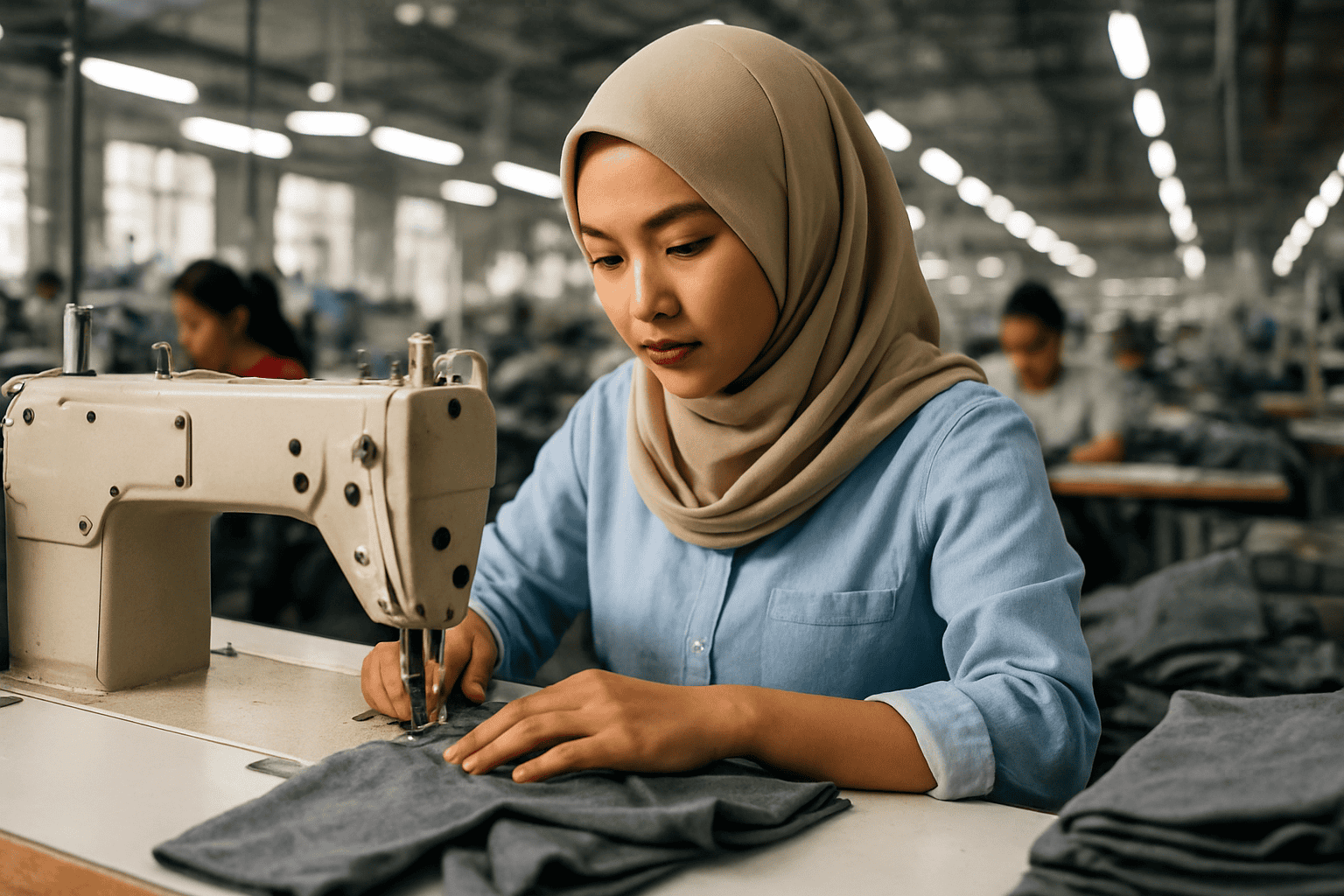
For decades, China has been the dominant force in global apparel production. Many fashion brands built their entire supply chain around Chinese factories because of scale, speed, and infrastructure. For a long time, it made commercial sense.
But the global manufacturing landscape is changing.
Tariff pressures, geopolitical tensions, rising labour costs, and overexposure to a single sourcing country have pushed brands to rethink their strategy. Today, many sourcing managers and brand owners are actively reviewing alternatives to China, especially within Asia.
That is where Indonesia enters the conversation.
If you are evaluating a garment factory for long term production, it is no longer just about price. It is about stability, structure, and strategic risk management. Increasingly, brands are turning to a clothing manufacturer Indonesia as part of a broader diversification plan.
Let us explain you why.
The Risk of Relying on One Country
For years, concentrating production in China was efficient. The ecosystem was mature, vertically integrated, and technically advanced. However, relying too heavily on one manufacturing base creates vulnerability.
Recent years have shown that:
• Trade disputes can dramatically increase import costs
• Tariffs can wipe out margins overnight
• Political decisions can affect supply chains without warning
• Currency fluctuations can impact landed cost
• Labour and compliance standards continue to tighten
For brands selling into the United States, Europe, or Australia, tariff exposure has become a major commercial factor. Even brands not directly affected by tariffs are diversifying simply to reduce geopolitical risk.
That is why many companies are now searching for a clothing manufacturer in Asia that can complement or partially replace their China production.
Indonesia is one of the strongest candidates.
Indonesia’s Position in Asian Garment Manufacturing
Indonesia is not a new entrant to apparel production. The country has been exporting garments for decades to major global markets. Many international brands already produce here.
When brands search for a garment factory outside China, they typically evaluate:
Vietnam
Bangladesh
India
Indonesia
Each market has its strengths. However, Indonesia occupies a unique middle ground.
A garment manufacturer in Indonesia offers:
• Competitive labour costs compared to China
• Strong garment expertise
• Established local textile suppliers
• Large, skilled sewing workforce
• Experience exporting to the US, EU, and Australia
Indonesia delivers a balance of cost, quality, and operational stability.
For brands that value long term partnerships rather than transactional price hunting, that balance matters.
Cost Structure Compared to China
One of the primary reasons brands look beyond China is cost pressure.
Over time, Chinese wages have increased significantly. Environmental regulations, compliance costs, and factory overheads have also risen. For complex products, China remains technically advanced, but for many garments, the cost advantage has narrowed or disappeared.
A clothing manufacturer Indonesia typically operates with:
• Lower labour cost base
• Competitive overhead structure
• Strong efficiency in mid to large scale production
This does not mean Indonesia undercuts China in every product category. However, for many garments such as shirts, trousers, jackets, blouses, and dresses, Indonesia can provide competitive service while maintaining affordable prices.
The key difference is that Indonesia offers cost competitiveness without sacrificing structure.
A serious garment factory in Indonesia is not a small workshop. It is an organised production facility with defined sewing lines, quality control teams, and export documentation experience.
Diversification Strategy, Not Full Replacement
It is important to be realistic. Most brands are not moving 100 percent of production out of China.
Instead, they are building a dual country or multi country sourcing strategy.
This is where Indonesia fits strategically.
Rather than asking, “Should we leave China completely?” brands are asking, “Where can we shift part of our production to reduce risk?”
In that scenario, working with a clothing manufacturer in Asia that offers stability and technical competence is essential.
Indonesia allows brands to:
• Reduce overdependence on one country
• Hedge against tariff exposure
• Create supply chain redundancy
• Maintain garment quality
A garment manufacturer in Indonesia can complement existing suppliers rather than replace them entirely.
Technical Strength in Garments
One area where Indonesia stands out is garment production.
While some countries dominate knitwear basics or ultra high volume items, Indonesia has developed strong expertise in structured products. This includes:
• Shirts and T-shirts
• Structured jackets
• Trousers and tailored pants
• Blouses
• Dresses
A well organised garment factory in Indonesia typically has experienced pattern makers, sample rooms, finishing departments, and quality inspection teams that understand construction details such as collar stands, plackets, waistbands, lining structures, and reinforced seams.
For brands focused on apparel, technical capability is critical. Cutting corners in construction leads to returns, reputational damage, and lost customers.
A reliable garment manufacturer will prioritise consistency over aggressive cost cutting.
Factory Structure and Professionalism
One of the misconceptions about Southeast Asia is that production is informal or loosely managed. That may be true for very small workshops, but established garment factories in Indonesia operate with formal systems.
A structured garment factory should provide:
- Clear production lines
- Defined capacity planning
- Sampling departments
- In line and final quality control
- Export documentation experience
- Compliance standards where required
When evaluating a clothing manufacturer Indonesia, brands should request clarity on:
- Minimum order quantity
- Lead times
- Production capacity per month
- Quality control procedures
- Material sourcing options
A professional garment manufacturer will answer these questions directly and transparently.
This level of structure reduces miscommunication and production risk.
Communication and Export Experience
One of the practical concerns when shifting away from China is communication.
Chinese factories often have long experience dealing with international brands. Any alternative must match that level of professionalism.
Established garment factories in Indonesia have extensive export experience. Many have been shipping to the United States, Australia, and Europe for decades.
English communication is generally strong at management level. Export documentation, shipping coordination, and compliance paperwork are standard practice for experienced manufacturers.
When brands search for a clothing manufacturer in Asia, communication clarity is just as important as price.
A garment manufacturer that responds slowly or avoids direct answers creates operational friction.
Indonesia’s experienced factories understand international expectations.
Political and Economic Stability
Manufacturing decisions are not just operational, they are strategic.
Indonesia is one of the largest economies in Southeast Asia with a stable political structure and long standing trade relationships with global markets.
For brands concerned about long term planning, this stability matters.
Working with a garment factory in a country with predictable regulations and established export channels reduces long term uncertainty.
While no country is risk free, Indonesia offers a relatively stable environment for garment manufacturing.
Scaling With the Right Partner
As brands grow, their production needs become more complex.
Small workshops may handle early stage sampling, but scaling requires structured systems.
A capable garment manufacturer should be able to handle:
- Bulk production of 1,000 pieces and above
- Repeat seasonal orders
- Consistent sizing standards
- Quality control across multiple runs
Our clothing manufacturing is equipped with organised sewing lines and trained operators can support medium to large scale brands.
The goal is not just producing one collection. It is building a repeatable, stable supply chain.
Long Term Partnership Over Short Term Pricing
Many sourcing decisions fail because brands focus purely on lowest unit cost.
This approach often results in:
- Inconsistent quality
- Delayed shipments
- Poor communication
- Hidden costs
When evaluating a garment factory, brands should assess the total business relationship.
Is the garment manufacturer transparent about production timelines?
Do they explain cost breakdown clearly?
Are they willing to discuss long term planning?
A reliable clothing manufacturer in Asia should act as a production partner, not just a transactional supplier.
Indonesia’s structured factories are well positioned for this partnership model.
The Strategic Case for Indonesia
To summarise the strategic logic without oversimplifying it:
China remains strong, but risk concentration is real.
Tariffs and geopolitical tensions create unpredictability.
Labour costs continue to rise.
Indonesia offers:
- Competitive cost base
- Strong garment capability
- Experienced export systems
- Operational stability
- Scalable production structure
For brands building a multi country sourcing strategy, a clothing manufacturer Indonesia provides balance.
It is not about chasing the cheapest market. It is about securing a reliable garment factory that can support long term growth.
If your brand is currently reviewing manufacturing options in Asia, Indonesia deserves serious consideration as part of your diversification plan. Contact us here if you’d like to know more.